

 2026-01-15
 Author: Lennon
 Page view: 3060
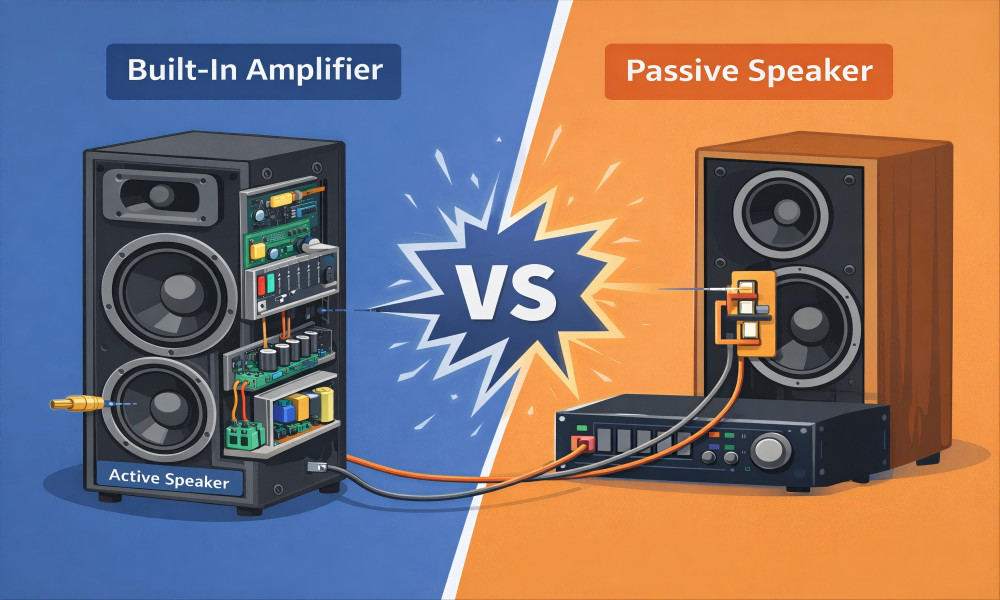
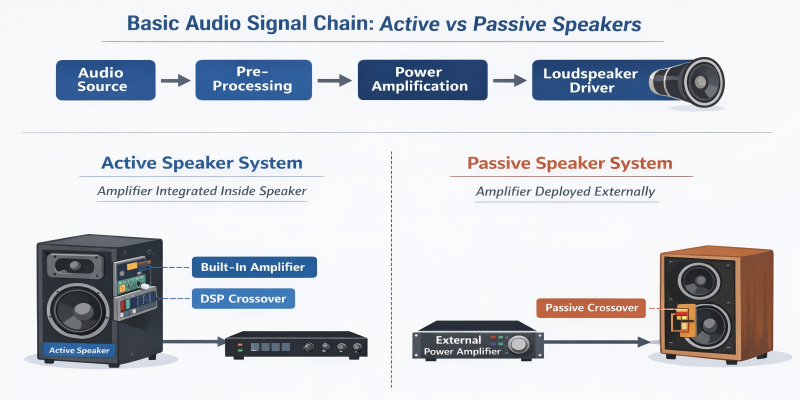
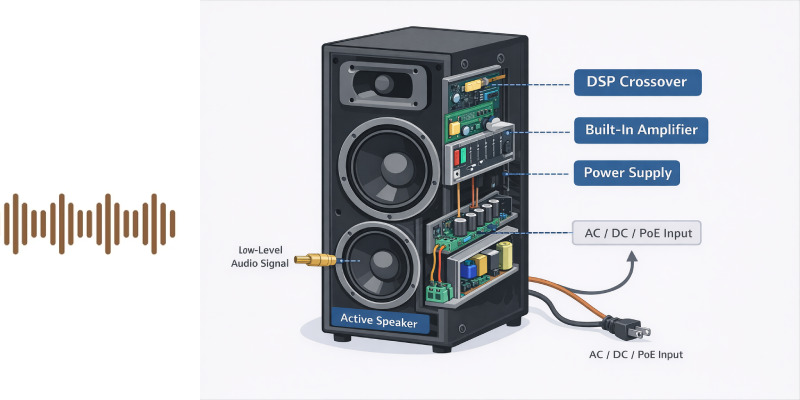
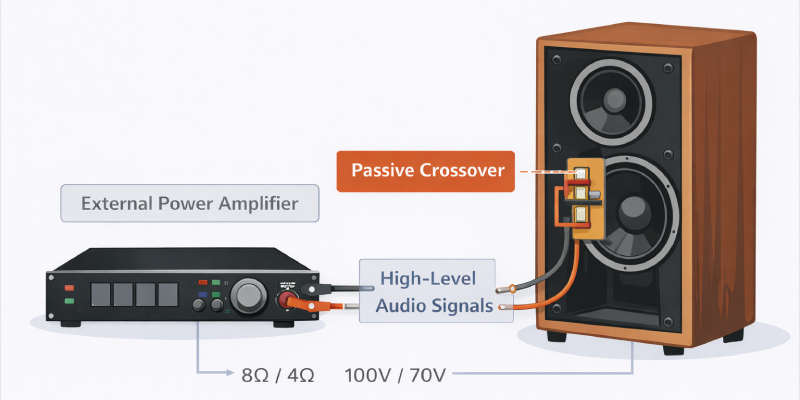
| Category | Active Speaker | Passive Speaker |
| Amplifier Configuration | Power amplifier is built into the speaker | Power amplifier is deployed externally |
| Signal Chain Architecture | Source → Preamp/DSP → Speaker (Amplifier + Drivers) | Source → Preamp/DSP → Power Amplifier → Speaker |
| Crossover Method | Primarily active crossover (DSP or electronic crossover) | Passive crossover using capacitors, inductors, and resistors |
| Power Matching | Optimized and matched at the design stage, ensuring consistent performance | Requires manual calculation and matching of amplifier power and speaker impedance |
| Sound Consistency | High consistency due to fixed system design and controlled amplification | Performance may vary depending on amplifier selection, cabling, and load conditions |
| Installation & Deployment | Plug-and-play installation; simplified cabling (signal + power) | More complex wiring with high-power speaker cables |
| System Scalability | Easy to deploy individually, but higher cost in large-scale systems | Highly scalable for large and multi-zone installations |
| Maintenance Strategy | Failure often requires replacing or repairing the entire speaker unit | Centralized amplifier maintenance; speaker cabinets are mechanically simpler |
| Signal Transmission Loss | Low-level signal transmission with minimal loss | High-power long-distance transmission requires careful loss calculation |
| Environmental Adaptability | Higher requirements for temperature, ventilation, and power stability | Suitable for harsh environments such as high temperature, dust, and outdoor areas |
| System Reliability | Single-point failure affects one speaker | Amplifier failure may affect an entire zone or multiple speakers |
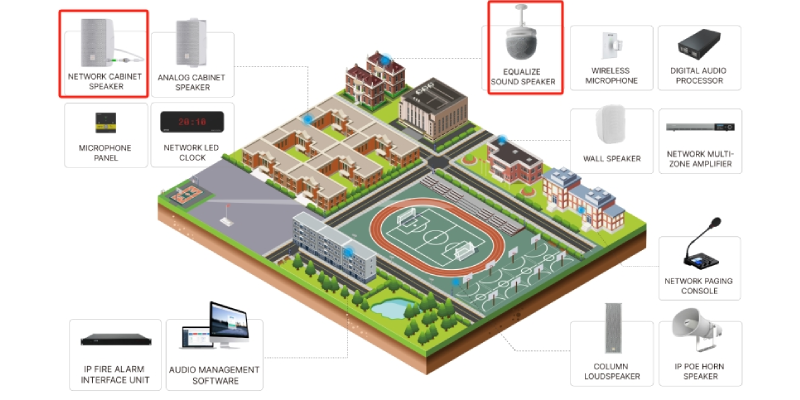
| Typical Applications | Conference rooms, control rooms, education, commercial spaces | Factories, campuses, airports, stations, and large venues |


 AR
AR
 EN
EN

.png)