Cookies Setting
We use cookies to improve your browsing experience, analyze traffic, and personalize content. By using this site, you agree to our use of cookies. For more details, please check our Cookie Policy.
Home News

Airport Emergency Broadcast System Guide 2026

Airport Emergency Broadcast System Guide 2026
2026-06-05 Author: SPON Page view: 784
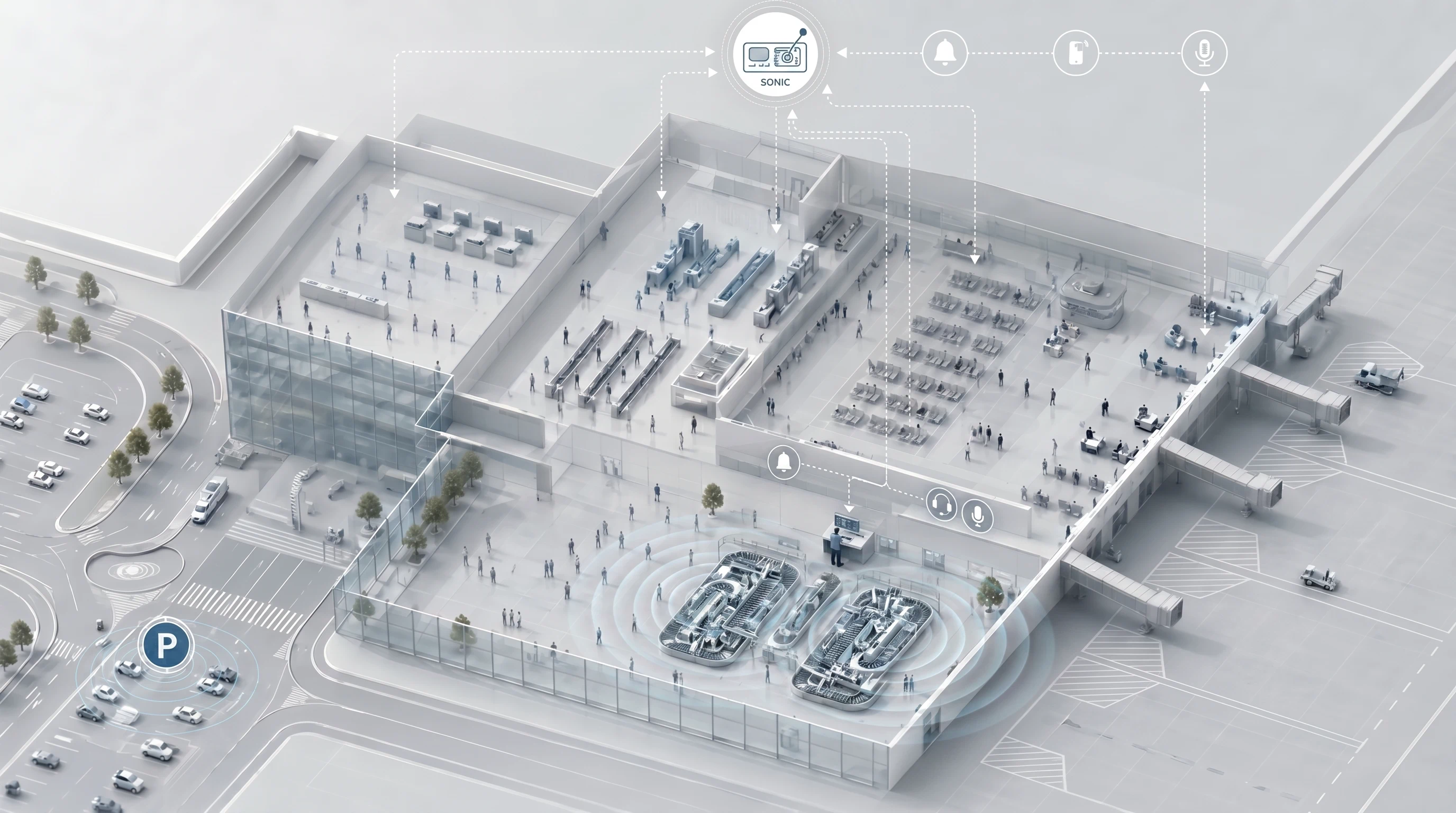
Airports depend on clear communication all day. Passengers need boarding calls and gate updates. Staff need paging. Security teams need fast alerts. During an emergency, people need clear voice instructions, not only alarms or sirens.These messages run through the airport paging system, public address system, and emergency broadcast system. If the audio is too quiet, delayed, or hard to understand, passengers may miss flights and staff may lose time. In a serious event, poor audio can create a real safety risk. That is why an airport emergency broadcast system should be planned as safety and operations infrastructure, not as a simple speaker system.According to Grand View Research, the global airport systems market was estimated at USD 31.67 billion in 2024 and is expected to reach USD 59.41 billion by 2033 at a 7.4% CAGR. This growth reflects a wider airport trend: better safety, smarter operations, and improved passenger experience. For airport PA and emergency broadcast projects, the shift is also clear. Airports are moving from separate analog audio racks to integrated IP communication platforms that connect paging, voice alarm, flight data, visual displays, and remote monitoring.This blog is for airport operators, AV system integrators, security contractors, EPC contractors, and transport project owners. It explains what a modern airport emergency broadcast and paging system should include, how it works, and what to check before design, upgrade, or procurement.

Table of Contents

What Is an Airport Emergency Broadcast System?

An airport emergency broadcast system is a voice communication system for routine messages and safety-critical alerts. It sends announcements to terminals, gates, concourses, outdoor areas, and staff zones. In an emergency, it can override lower-priority audio and send urgent instructions to the right areas immediately.It is more than a loudspeaker network. A complete system brings together airport PA, zone paging, voice alarm, fire alarm integration, flight information, and emergency command in one managed platform.A complete airport emergency broadcast system usually supports:
  • Emergency evacuation instructions — live or pre-recorded voice messages for fire, security, medical, or evacuation events.
  • Security alerts and lockdown messages — targeted alerts for one terminal, one zone, or the whole airport.
  • Boarding calls and gate announcements — manual or automatic messages for specific gates, often linked with AODB or airline systems.
  • Flight status and baggage updates — announcements for delays, arrivals, gate changes, and baggage belt changes.
  • Queue management — clear guidance for check-in halls, security checkpoints, and busy passenger areas.
  • Outdoor and drop-off area paging — weather-resistant audio coverage for entrances, car parks, bus stops, and kerb-side areas.
  • Staff coordination paging — internal messages for operations rooms, maintenance teams, and back-of-house areas.
  • Passenger assistance paging — calls for lost passengers, unaccompanied minors, and passengers who need help.
An airport PA system must make announcements clear, not just loud. Research published in Buildings (2025) recommends a minimum SNR of 10 dB(A) and an STI of at least 0.45 for pier-style departure lounges. In noisy spaces such as check-in halls and baggage claim, ambient noise sensing and careful acoustic design help keep speech easy to understand throughout the day.

Airport Paging System vs Public Address vs Announcement System: What's the Difference?

These terms are often mixed together. In real airport projects, they describe different jobs inside the same communication system. Knowing the difference helps operators and integrators choose the right architecture, control logic, and priority settings.
Term Who Uses It Primary Function Typical Scenario
Airport Paging System Ground staff, gate agents, operations Live paging to a person or selected zone Paging a passenger to Gate A12; calling staff to the control room
Airport Public Address System (PA) Airport operators and passengers Wide-area public audio broadcast Safety notice, public information, or background music in a terminal
Airport Announcement System Airlines, operations, IT platforms Scheduled or automatic flight messages Boarding calls, delay notices, gate changes, or baggage updates from AODB/FIDS
Airport Emergency Broadcast System Airport operations, fire, security, emergency teams Highest-priority emergency voice communication Evacuation instructions, lockdown messages, or fire alarm voice alerts
PAVA System (PA + Voice Alarm) Fire safety engineers and compliance teams Public address combined with certified voice alarm Voice evacuation in projects that require EN 54-16 / EN 54-24 compliant equipment
In most modern airports, these functions run on one converged IP audio platform. The core hardware may be similar: IP matrix controller, amplifiers, speakers, network devices, and paging consoles. The difference is in the software rules. The system decides who can send a message, which zones receive it, and which message has priority during normal operation or an emergency.

Why Airports Cannot Use a Standard PA System

A standard commercial PA system — the kind used in a retail store or an office building — cannot meet the operational and safety demands of an airport environment. Here is why.
The acoustic environment is extreme
Airport terminals are acoustically hostile. Hard surfaces including glass facades, stone floors, and metal ceilings create long reverberation times. Background noise is high and variable, especially in check-in halls, baggage claim, and kerb-side areas. ACRP research on airport terminal PA systems reports typical terminal ambient noise data and recommends a minimum design goal of about 10 dB signal-to-noise ratio, where other design factors are favorable. A PA system that is not designed for this environment may be technically operational but practically unintelligible.
The scale and complexity are exceptional
A major international airport terminal can cover hundreds of thousands of square metres across multiple levels. Messages must reach departure lounges at gate 94 without being heard at gate 12 next door. An emergency evacuation of Terminal 2 must not cause panic in Terminal 1. This level of zone granularity — tens or hundreds of independently controllable zones — requires an IP audio matrix architecture that no simple PA system can provide.
Emergency integration is legally required
When an airport PA system is used for fire evacuation or other life-safety communication, it must follow the standards and approval process required in the project location. In Europe, this often means EN 54-16 for voice alarm control equipment and EN 54-24 for loudspeakers. In the United States, NFPA 72 includes Chapter 24 for Emergency Communications Systems. The final compliance route should always be confirmed with the local authority having jurisdiction (AHJ), fire consultant, and project specification.
Flight information must drive audio automatically
Airports process hundreds of flight events per hour. Manual announcement of every boarding call, gate change, delay, and arrival is not operationally viable. Modern airport announcement systems must connect to the Airport Operational Database (AODB) or Flight Information Display System (FIDS) and generate voice announcements automatically — in multiple languages — the moment a flight event is logged.Using an uncertified or inadequately designed PA system in a life-safety role at an airport is not just an operational risk — it is a regulatory and liability risk. Any system used for emergency evacuation broadcast must be certified to the applicable standard in the project's jurisdiction. This should be confirmed before procurement, not after installation.

How an Airport Emergency Broadcast System Works

A modern airport emergency broadcast and paging system is built on a layered IP architecture. Each layer has a specific role, and the integration between layers is what makes the system capable of handling both routine daily announcements and high-speed emergency response.
Layer 1: Control and Management
The Airport Operations Centre (AOC) or control room houses the core system management tools: the IP audio matrix controller, the emergency paging microphone console, and the system management software. Operators can initiate live broadcasts, trigger pre-recorded messages, manage zone groups, and monitor the entire speaker network from this layer.In a critical event, the emergency microphone gives authorised operators a direct, single-press broadcast to any zone or all zones simultaneously. The system logs every broadcast with timestamp, operator ID, zone list, and audio content — creating an automatic audit trail for post-incident review.
Layer 2: Input Sources and Triggers
Audio inputs to the system come from multiple sources simultaneously. Live microphone pages from the control room, gate-level paging consoles, or any SIP phone on the network. Pre-recorded message files stored on the media server. Automated announcements generated by the AODB or FIDS integration engine. Text-to-speech conversion for dynamic multilingual announcement generation. And automated triggers from integrated systems — fire alarm panels, access control events, CCTV analytics, or building management systems (BMS).Emergency priority is managed at this layer. Every audio input is assigned a priority level. When the fire alarm fires, its audio stream carries the highest priority and automatically overrides all lower-priority content — BGM, scheduled flight announcements, even live operator pages in non-affected zones — across the zones specified in the fire alarm integration logic.
Layer 3: Distribution and Amplification
The IP audio matrix routes audio streams to distributed IP amplifiers located in equipment rooms or riser cabinets throughout the terminal. In a PoE endpoint architecture, IP speakers can receive both power and audio data through Ethernet. In higher-power 70V/100V speaker zones — such as outdoor areas, large halls, and long concourses — local IP amplifiers or network audio terminals drive the speaker lines while still being managed by the IP platform.Zone isolation is enforced at this layer: the audio stream destined for Departure Gates A12–A20 is completely separate from the stream serving the arrivals hall, even if the same physical network infrastructure carries both.
Layer 4: Speakers and Endpoints
IP ceiling speakers, wall speakers, column arrays, and outdoor horn speakers are the final acoustic output stage. Each device is individually addressable, remotely monitored, and capable of reporting its health status — volume level, connectivity, temperature, and fault conditions — to the central management dashboard. If a speaker goes offline, the fault is flagged in the management system within seconds, enabling rapid corrective action before it becomes a safety gap.The full signal path — from an emergency trigger to audio output in the affected zones — must be fast, reliable, and verified during commissioning. Exact timing requirements depend on the project specification, the applicable PA/VA standard, and the local authority having jurisdiction. Airport operators should specify, test, and document emergency trigger response time as part of handover.
 

Airport Terminal Paging Zone Design Guide

Zone design is the single most important technical decision in airport PA system planning. It determines which messages reach which spaces, ensures emergency broadcasts cover every area without unnecessary disruption, and makes the daily operation of the system manageable for non-technical staff.The table below maps each major airport area to its broadcast requirements, recommended speaker types, and zone-specific technical considerations.
Airport Zone Main Broadcast Need Recommended Speaker Special Requirement
Control Room / AOC Emergency command; full-zone broadcast IP paging console; emergency mic; matrix controller Redundant control paths; priority override access
Check-in Hall Queue guidance; flight status; flight notices Ceiling speaker; noise-adaptive wall speaker Ambient noise sensor; verify SNR/STI during busy periods
Security Checkpoint Safety notices; staff paging; queue management Ceiling speaker; directional column speaker Clear speech despite alarm and scanner noise
Departure Lounge Boarding calls; gate changes; public notices Column speaker; ceiling array; wall speaker Use measurable STI/SNR target; 0.45+ minimum reference for pier-style lounges
Boarding Gates Gate-specific boarding calls Ceiling/wall speaker; local paging panel Zone isolation — message must not bleed to adjacent gates
Arrival Hall Passenger guidance; connecting flight info Ceiling speaker; wall speaker High passenger density and movement noise
Baggage Claim Belt allocation; lost baggage notice Ceiling speaker; display integration Coordinate with FIDS screen for visual confirmation
Outdoor Entrance Traffic guidance; emergency instructions IP horn speaker; weatherproof column speaker IP65 minimum; automatic volume with noise sensor
Car Park / Drop-off Emergency alerts; vehicle guidance Weatherproof horn speaker; outdoor speaker;IP Intercom Wide SPL range; weather and UV resistant
Staff / Back-of-House Internal operations; emergency alerts IP ceiling speaker; SIP paging endpoint Separate zone from public areas
Zone design principles for airport projects
  • Every occupied room or area needs independent audio coverage. Relying on sound bleeding from adjacent zones leaves gaps that become safety liabilities during emergencies.
  • Emergency zones must be nested within operational zones. A fire alert for Terminal 2 Gate Hall should be able to broadcast to all zones within that area simultaneously while leaving Terminal 1 unaffected.
  • Outdoor zones require separate amplification from indoor zones. Outdoor SPL requirements, weatherproofing, and ambient noise levels are different enough to warrant a dedicated outdoor zone design.
  • Check-in halls and baggage claim are usually among the hardest zones acoustically. These large open spaces with hard reflective surfaces require careful speaker layout, column or directional speakers where needed, and STI/SNR verification during commissioning. A recent airport departure-lounge study recommends STI 0.45 as a minimum reference value, while critical life-safety zones may require higher project targets.
  • Staff and back-of-house zones should be operationally separate from public zones but still receive emergency override broadcasts. Paging a staff member should not disturb the departure lounge. A fire alarm should reach every zone without exception.
A professional airport PA system design begins with an acoustic survey and zone map, not a speaker schedule. Before any equipment is specified, the acoustic characteristics of each zone — volume, surface materials, ceiling height, expected ambient noise level — should be documented. This data determines speaker type, quantity, amplifier power, and STI target for each zone.

IP Airport PA System vs Traditional Analog PA System

Many airports around the world still operate legacy analog PA systems installed in the 1990s or early 2000s. The question of whether to upgrade — and how — is a central procurement decision for airport operations and facilities teams.
Feature Traditional Analog PA IP Airport PA System
Wiring Dedicated 70V/100V speaker cable to every device Standard Cat5e/Cat6 Ethernet — shared IP network
Zone management Fixed zones; changes require physical rewiring Software-defined zones; reconfigure in minutes
Emergency priority Manual trigger at main amp; limited automation Auto-trigger from fire alarm, CCTV, BMS, or access control; instant full-campus override
FIDS / AODB link Requires custom interface hardware Native SIP/API integration with flight databases and announcement platforms
Noise adaptation Fixed volume; manual adjustment needed Ambient noise sensors adjust output automatically in real time
Fault monitoring Physical fault-finding required on site Remote health dashboard; device-level fault alerts and event logs
Scalability New speaker = new cable run from amplifier Add any IP speaker anywhere the network reaches
Redundancy Limited; single amp failure affects whole zone Server failover, PoE redundant switches, backup power per zone
Multilingual TTS Requires pre-recorded playback hardware Software-based TTS with real-time generation in any language
Best for Small legacy terminals; limited IT infrastructure Modern terminals; new builds; upgrade projects
The most important advantage of an IP-based airport PA system is not only audio quality or zone flexibility — although both are significant. It is emergency integration. A modern IP system can receive a trigger signal from a fire alarm, access control, or CCTV platform and broadcast a specific pre-recorded message to a specific set of zones automatically, without waiting for a human operator. In an analog system, this level of automated emergency response requires substantial additional hardware and is harder to monitor and maintain.Key insight for upgrade projects: Many airports do not need to replace their existing speaker infrastructure when upgrading to IP. In a hybrid migration, existing analog 70V/100V speakers and amplifiers are retained and connected to the new IP matrix controller via IP audio gateways. The airport gains software-managed zone control, automated scheduling, FIDS integration, and emergency priority capability while keeping capital expenditure lower than a full replacement.

How to Upgrade an Existing Airport PA System to IP

For airports operating legacy analog systems, an upgrade to IP-based emergency broadcast infrastructure does not have to happen all at once. The following step-by-step approach allows airports to phase the upgrade while keeping the existing system operational throughout.
  • Audit the existing system. Document all amplifier locations, speaker positions, cable routes, zone wiring, and current fault conditions. Identify which components are still serviceable and which have reached end of life.
  • Retain usable analog speakers where possible. Ceiling and wall speakers in good condition can typically be retained and connected to the new IP architecture via analog-to-IP gateways or IP amplifiers with analog inputs.
  • Install the IP audio matrix controller. This is the core of the new system — it manages all zone routing, priority logic, scheduling, and third-party integrations. It replaces the legacy central amplifier rack as the system brain.
  • Deploy IP audio gateways for analog speaker continuation. Where existing speaker cable runs are retained, IP audio gateways bridge the new matrix controller to the 70V speaker lines, allowing legacy speakers to receive IP-routed audio.
  • Add fire alarm and emergency integration interface. Connect the fire alarm panel, access control, and any other life-safety systems to the IP matrix via relay contacts or IP API. Define the automatic override logic for each emergency scenario.
  • Install ambient noise sensors in high-noise zones. Check-in halls, baggage claim, and kerb-side areas benefit most from noise-adaptive volume control. Add noise sensors to these zones as part of the upgrade.
  • Add FIDS / AODB integration for automated announcements. Connect the announcement system to the airport's flight information platform so boarding calls, delays, and gate changes are generated and broadcast automatically.
  • Commission and test. Measure STI at key listening positions throughout each zone. Test emergency override response times. Verify backup power failover. Document the commissioning results for compliance and handover.

SPON Airport Emergency Broadcast and PA System Architecture

SPON has designed and deployed IP-based matrix PA and emergency broadcast systems for airport and transportation hub projects including Mohe Airport, where the system combines IP audio matrix control, distributed IP amplifiers, network paging consoles, ambient noise detection, indoor and outdoor speakers, and automated emergency priority switching into a unified management platform.The SPON airport PA architecture is built around the following core components:
  • IP Audio Matrix Controller — the central management and routing platform. Manages all zone groups, priority levels, scheduling, automation rules, and system health monitoring from one interface.
  • Network Paging Microphone Console — operator-facing paging hardware for the control room, gate level, or security stations. Supports zone selection, priority override, live broadcast, and pre-recorded message playback.
  • IP Amplifiers — distributed rack or wall-mount amplifiers deployed throughout the terminal, each managing multiple speaker zones with individual fault monitoring and remote power management.
  • Ambient Noise Sensors — calibrated microphones placed in high-variability zones that feed real-time noise level data to the IP matrix for automatic output adjustment.
  • Indoor Speakers — ceiling speakers, wall speakers, and column arrays specified by zone based on room dimensions, ceiling height, acoustic surface characteristics, and STI targets.
  • Outdoor Horn Speakers — weather-rated horn speakers for kerb-side, car park, and outdoor terminal areas, remotely managed from the same platform as indoor speakers.
  • Third-party Integration Interfaces — SIP/API connections to FIDS, AODB, fire alarm panels, access control systems, CCTV platforms, and BMS.
See how SPON deployed an IP Matrix PA System for Mohe Airport. View the case study at sponcomm.com/cases-detail/ip-matrix-pa-system-for-mohe-airportExplore SPON's Railway Station & Airport Matrix PA System solutions at sponcomm.com/solution-detail/railway-station--airport-matrix-pa-system

How to Choose the Right Airport Emergency Broadcast System Supplier

Airport PA and emergency broadcast projects are long-cycle, high-stakes procurement decisions. The supplier you choose will be a technical partner through design, installation, commissioning, and ongoing maintenance. Use the checklist below to evaluate any vendor before shortlisting.
Evaluation Criterion What to Ask or Verify
Airport / transport hub project experience Can they provide references or case studies from airports, railway stations, or transit hubs?
IP audio matrix and zone control capability Does the system support software-defined zones with instant re-routing and priority override?
Emergency broadcast and fire alarm integration Does the system support the emergency standard required by the project, such as EN 54 in Europe or NFPA 72 / UL-listed ECS requirements in the US?
FIDS / AODB / BMS / CCTV / SIP integration What third-party platforms have they integrated with? Can they show technical documentation?
Multilingual and TTS announcement support Does the system generate multilingual announcements in real time, or only play pre-recorded audio?
Ambient noise detection and volume control Is noise-adaptive output included, and how is the noise sensor calibrated and maintained?
Redundancy and system resilience design What fails over to what? Is there hot-standby server, redundant amplifiers, and UPS per zone?
Legacy system upgrade capability Can they connect existing analog speakers to a new IP matrix without full replacement?
Full project deliverables Can they supply system diagrams, equipment schedules, zone plans, and commissioning support?
B2B project and integrator support Do they work with EPC contractors, systems integrators, and airport operators directly?

Conclusion

In an airport, every announcement matters. A boarding call helps passengers move on time. A gate change reduces confusion. An emergency broadcast helps people leave safely and quickly.That is why an airport emergency broadcast system cannot be treated as a basic speaker system. It must be clear, reliable, and easy to control. It also needs to send different messages to different zones, such as check-in halls, gates, baggage claim areas, car parks, and outdoor entrances.SPON provides IP-based matrix PA and emergency broadcast systems for airports, railway stations, and transportation projects. Our solutions include IP audio matrix control, network paging consoles, IP amplifiers, noise detection, indoor and outdoor speakers, and integration with major airport systems.Contact SPON for a customized airport paging and emergency broadcast solution. Get a free system design proposal at sponcomm.com.
FAQS
Q1: What is an airport emergency broadcast system?
An airport emergency broadcast system is a voice communication platform that delivers safety-critical announcements, evacuation instructions, security alerts, and public information across all areas of an airport campus. It differs from a standard PA system in that it integrates with fire alarms, access control, CCTV, and flight databases, supports automatic emergency override of all other audio content, and is designed to meet life-safety standards such as EN 54 or NFPA 72.
Q2: Why do airports need dedicated zone paging?
Different areas of an airport require different messages at the same time. A boarding call for Gate A7 should not be heard at Gate B22. An emergency evacuation of one terminal should not trigger panic in another. Zone paging allows the system to send the right message to the right place — from a single gate to a whole campus — without unnecessary interference between areas.
Q3: How does emergency priority override work in an airport PA system?
Emergency audio is assigned the highest priority level in the system. When an emergency trigger is received — from a fire alarm panel, a manually pressed emergency button, or an automated system event — the PA matrix immediately interrupts lower-priority audio, such as background music, scheduled announcements, or live gate paging, in the affected zones and broadcasts the emergency message. The trigger-to-output response time should be defined, tested, and documented during commissioning.
Q4: Can an existing analog airport PA system be upgraded to IP?
Yes, in most cases. Existing 70V or 100V analog speakers and cable runs can be retained and connected to a new IP audio matrix via IP audio gateways. This hybrid approach significantly reduces capital cost compared to a full replacement while delivering all the operational benefits of IP management — software-defined zones, automated scheduling, FIDS integration, and emergency override capability.