


 2025-10-30
 Author: Michael
 Page view: 5191
When setting up a sound system for live performances, a conference room or studio recordings, one critical decisions is choosing the right mixer. Should you go with analog? or digital? Both have unique strengths and limitations, but which one truly suits your needs? This guide breaks down their differences in sound quality, functionality, ease of use, and cost to help you make an informed choice.
What Are Analog Mixers?
Analog mixers are the classic component in any sound system and have been around for decades. They work by manipulating audio signals directly through physical circuits. Every twist of a control knob and push of a fader physically alters the electrical signal running through components like resistors and capacitors.Because of this direct control, the analog mixer is very easy to learn and operate. Their straightforward design makes them ideal for beginners, small venues, or events where quick setup and intuitive operation are key.
Many professional artists and engineers still stick to analog mixers for one main reason: their renowned warm, rich, and natural sound. This unique character comes from small harmonic distortions the analog circuitry introduces. However, they often lack built-in effects, requiring external gear like reverb units or compressors, which can add cost and complexity.

Close-up of the faders and knobs on a professional analog audio mixer
What Are Digital Mixers?
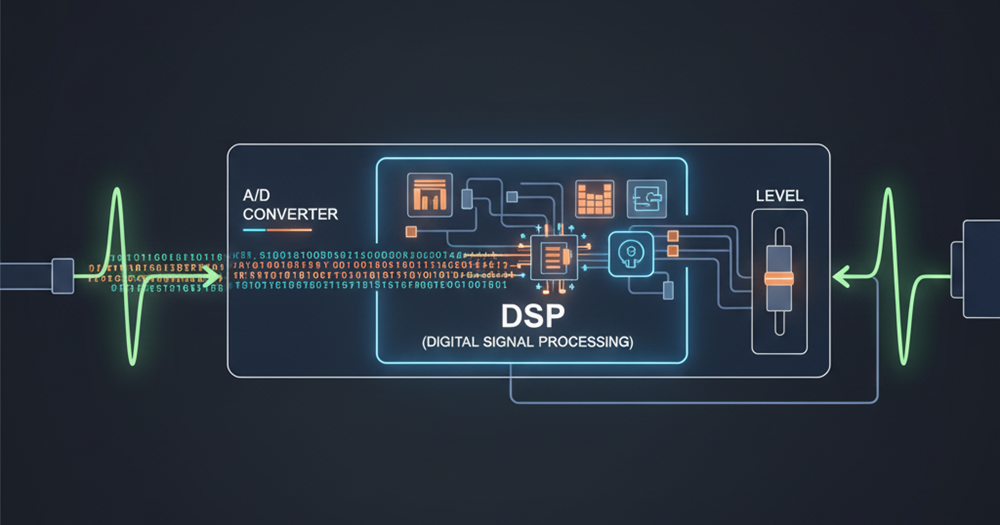
Digital mixers has different working principal than analog mixer. Instead of manipulating the sound signal directly, a digital mixer first converts incoming analog signals into digital data. It then processes this data using internal software and algorithms before converting the signal back to analog for output.
This digital workflow enable the user powerful features, such as built-in effects (EQs, filters, compression), preset scene recall, and remote control via tablets or laptops(Some has their own mobile application). Their versatility makes digital mixers ideal for complex applications like studio recording, large live performances, and streaming.
For example, in a large concert, an engineer might use a Behringer X32 to save and recall settings ("scenes") for different bands instantly. A professional podcaster might use a RØDE Rodecaster Pro to apply noise reduction presets with a single tap. The digital processing delivers incredibly clean, precise, and noise-free audio.
However, the learning curve can be steep for those used to analog's physical controls, as navigating menus can be frustrating for newcomers.

Key Differences Between Analog and Digital Mixers
1. Signal Processing Method
Analog mixer process continuous analog audio signals, which are amplified, attenuated, and equalized through a variety of analog circuit components, such as resistors, capacitors, inductors, and other operations. The signal maintains its analog characteristics during transmission and processing, and this processing gives the sound a unique warmth and natural texture. However, analog circuits are susceptible to external interference, such as electromagnetic interference and temperature changes, which may affect the stability of sound quality.
Digital mixing consoles, on the other hand, convert analog audio signals into digital signals, and use digital signal processing (DSP) chips to perform a variety of operations and processing of digital signals. Digital signals have the advantages of strong anti-interference ability, the signal is not easy to distort, etc., can accurately process the audio signal to achieve complex audio effects. The processing of digital signals is based on algorithms and software, so it can be easily adjusted and stored parameters.
2. The Richness of the Function
Analog mixing consoles are relatively fixed, mainly including basic volume adjustment, equalization adjustment, mixing and other functions. Although some high-end analog mixing consoles also have a certain effect processing functions, but usually a limited variety, and the operation is relatively complex. For example, the analog mixer's equalizer is generally only a few fixed frequency bands, the adjustment range and precision is relatively limited.
Digital mixing consoles have a wealth of features, in addition to the basic volume, equalization and mixing functions, but also integrates a variety of audio effects, such as reverb, delay, compression, limiting and so on. The equalizer of the digital mixing console usually has more frequency bands and can be adjusted with precise parameters to meet a variety of complex audio processing needs. Digital mixing consoles also support the scene storage and recall function, you can save different settings to facilitate rapid switching in different occasions.

3. Operation Difficulty
Analog mixing consoles are mainly operated by knobs, faders and other physical controls, the operation is intuitive and simple, and the mixer can directly feel the changes in parameters. However, when complex settings or adjustments are required, the operation of an analog console can be cumbersome and difficult to make precise parameter settings.
Digital consoles are typically operated through a combination of touchscreens, knobs, and buttons for a more intuitive and concise interface. Digital consoles can be set up in detail through menus and parameter lists, and can display parameter changes in real time. Some digital mixing consoles also support remote control through the network, which is convenient for operators to operate in different locations.

4. The sound quality characteristics
Analog mixer sound quality has a unique sense of warmth and nature, which is due to the analog circuitry in the processing of signals will produce some small harmonic distortion, these distortions give the sound a unique flavor. The sound quality of analog consoles may be preferred for situations where sound quality is a particular requirement, such as music recording and live performances.
The sound quality of digital mixing consoles is much clearer, cleaner and more precise, and can accurately restore the original state of the audio signal. Due to the continuous development of digital signal processing technology, the sound quality of digital mixing consoles is also improving, has been able to meet the needs of most occasions.

5. Price and Maintenance costs
Analog mixing consoles are cheaper upfront, making it accessible for hobbyists, beginner engineeror or small events.
But for some high-end analog mixers, it can also comes with the relatively high price, due to its use of high-quality analog circuit components and exquisite craftsmanship. Maintenance costs for analog consoles are also relatively high because analog circuit components are prone to aging and damage and require regular maintenance and replacement.
Digital mixers have higher initial costs but offer long-term savings. A digital mixer that includes effects, recording capabilities, and wireless control—features may only cost you $1000-$2000, the same setup on analog system would require thousands in outboard gear. With a high cost-effective. The maintenance cost of digital mixing consoles is relatively low, because the digital signal processing chip has a long life, and the software of digital mixing consoles can be upgraded to increase functionality and repair vulnerabilities. For events like touring acts, digital mixers reduce freight costs due to their compact size and lighter weight.

Quick-Reference Comparison Table
| Feature | Analog Mixer | Digital Mixer |
| Sound Quality | Warm, natural | Clean, precise |
| Effects | Requires external gear | Built-inreverb,compression, EQ |
| Portability | Heavy, bulky | Lightweight, compact |
| Ease of Use | Simple knobs/faders | Software menus,Touchscreen |
| Cost | Affordable for small setups | Upfront cost, Lower long-term costs |
| Best For | Studios, Conference, Small events | Live events, podcasts, Complex productions |
FAQs
Q: Is digital mixing has overall better than digital?
A: Not likely, although digital mixer has overall more features than analog mixer; it depends on the application and desired sound. Analog mixers provide a warm, organic sound with natural saturation, while digital mixers offer precision, flexibility, and advanced features like automation and recall. Each has its strengths.
Q: Which is better for a beginner?
A: For fresh beginner, it’s recommended to start with analog mixer, such as the classic MG series, remember to start small, start with 8 or 10 channels first.
Q: Do analog mixers sound different?
A: Yes, the circuitry and components of the analog mixer add warmth and harmonic distortion to the audio. Give listener a more “fuller” or “richer” experiences. For digital mixers, it focus on audio clarity and precision, so both of them has different purpose.
Q: Should I get a digital or analog mixer?
A: That depends entirely on your needs, budget, and desired sound.
Choose an analog mixer if: You are a beginner , need a simple and intuitive setup for a small event , have a lower upfront budget , or specifically want the "warm, rich, and natural sound" that analog circuitry provides.
Choose a digital mixer if: You need a wide variety of built-in effects (like reverb, compression, etc.) , the ability to save and recall settings (scene memory) , remote control via a mobile devices, or handling complex audio productions like studio recording or large live events.
Q: What are the disadvantages of digital mixing consoles?
A: Longer Learning Process: For those used to analog's simple, visible controls, the menus and sub-menus of a digital mixer can be frustrating and take longer to learn.
Higher Initial Cost: Digital mixers generally have a higher upfront cost compared to basic analog models.
Software/Hardware Dependency(Low availability): Since digital mixers are mostly software based, it has same potential failure like PC or any smart devices, such as system glitch or software, system crashes, makes it less reliable then analog mixer.
Conclusion
Analog and digital consoles have their own advantages and disadvantages. Analog consoles are suitable for users who have special requirements for sound quality and pursue warm and natural sound, while digital consoles are suitable for users who have higher requirements for feature richness, ease of operation and price. Choosing the right mixer can be a critical decision for your PA system or studio setup. If you need expert advice tailored to your specific needs, contact the audio professionals at SPON today. We’ll help you select the perfect equipment to achieve the best possible audio effects for your project.


 AR
AR
 EN
EN


