


 2024-10-11
 Author: SPON COMM
 Page view: 835
Introduction
In the ever-evolving landscape of banking, ensuring the safety and security of both customers and staff is paramount. One innovative solution designed to address urgent situations is the Remote IP Emergency Intercom System. This state-of-the-art system is specifically engineered for bank self-service equipment, including customer operation areas, vaults, cash handling rooms, and business halls. It enables a seamless one-button emergency assistance call to a remote monitoring center, ensuring swift response and communication during critical incidents.
System Overview

The Remote IP Emergency Intercom System is crafted to meet the demands of unexpected events or emergencies. With just a single button press, relevant personnel can alert the remote monitoring center for two-way voice communication. The clarity of sound and the capability to record conversations in real-time ensure effective responses to emergencies.
Security Requirements for Banking Operations
To bolster security in bank business areas, full-duplex intercom devices are required at the control isolation doors. These devices must connect seamlessly with the vault room or the remote monitoring center, guaranteeing crystal-clear audio communication.
System Deployment and Configuration
Monitoring Center
In the monitoring center, several components are deployed:
System Service Software
This software manages all terminals, providing unified oversight for registration, naming, data distribution, and status display.
Audio-Video Storage Array
This setup records and stores remote conversation content for later review.
IP Microphone
This component receives emergency calls from the self-service equipment's customer operation area, vaults, and cash handling rooms.
IP Telephone Interface
This interface allows customer operation area calls to be redirected to the customer service center.
Self-Service Bank Setup
Intercom Terminals
Located in cash handling rooms, these terminals facilitate emergency assistance and business inquiries.
Ceiling Speakers
They deliver voice prompts and remote audio output.
Warning Lights
These devices serve as deterrents to potential threats.
Business Hall Configuration
IP Wireless Intercom Host
This device enables two-way communication between security personnel and the remote monitoring center.
Multi-Mode Wireless Intercom Terminals
These terminals support both public and private communication modes.
Key Features of the System
One-Button Calling and Hands-Free Communication

The system allows customer operation area intercom panels and IP terminals in vaults to initiate calls to the IP network microphone with one button. This feature enables automatic answering and full-duplex hands-free conversations, enhanced by echo cancellation technology.
High-Definition Visual Intercom

The intercom panels and IP terminals are equipped with HD wide-angle cameras, allowing monitoring centers to see the faces of those requesting assistance. When environmental cameras are linked, additional video feeds can be accessed during calls.
Integration with Customer Service Centers
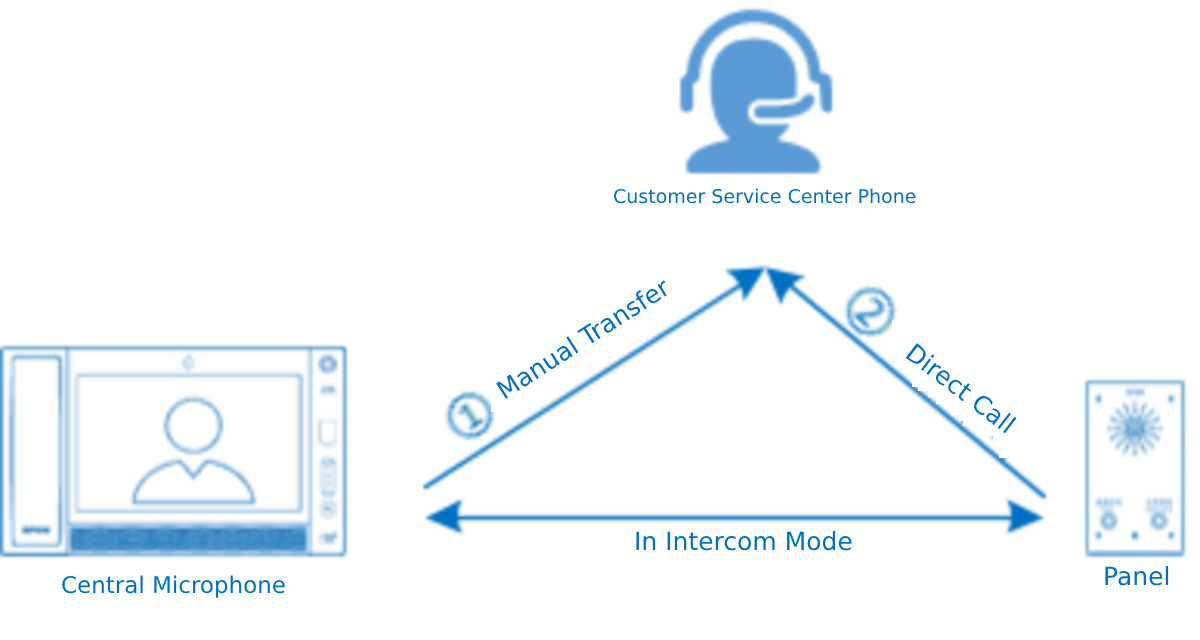
The intercom system includes dedicated buttons for "Emergency Assistance" and "Business Consultation." The latter directly connects to customer service, providing timely support.
Call Prioritization
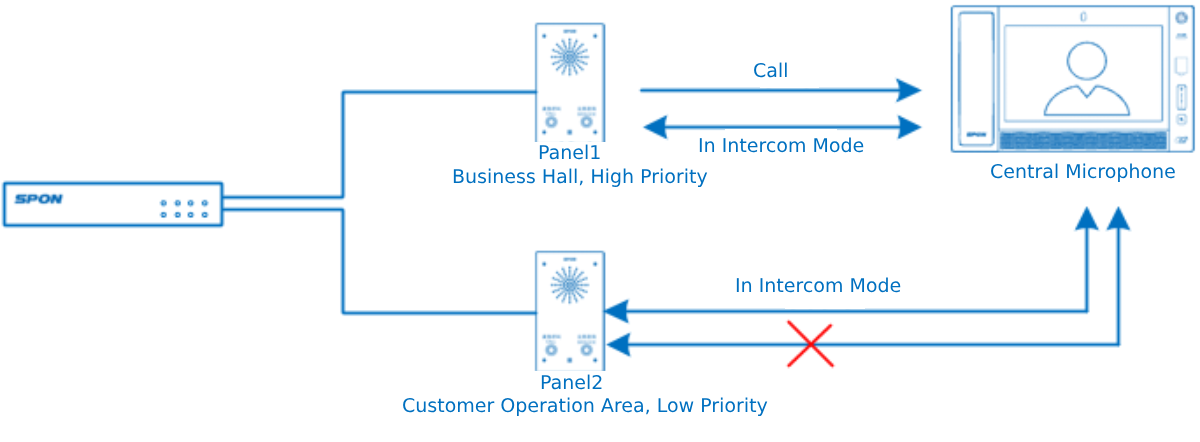
Intercom panels support customizable call prioritization. For instance, a designated panel can be set as the highest priority, ensuring clear communication during emergencies.
Multi-Channel Voice Broadcasting
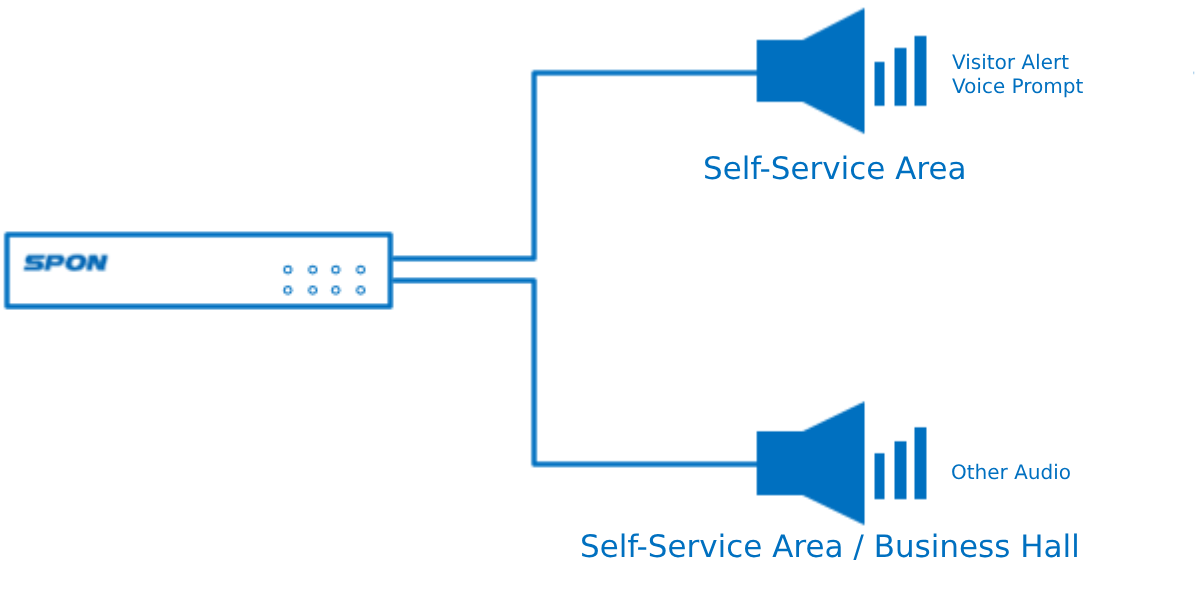
The system can broadcast warnings about potential threats, enhancing customer awareness and safety. Additionally, it can play other audio files simultaneously, ensuring that service calls are not interrupted.
Customizable Intercom Naming
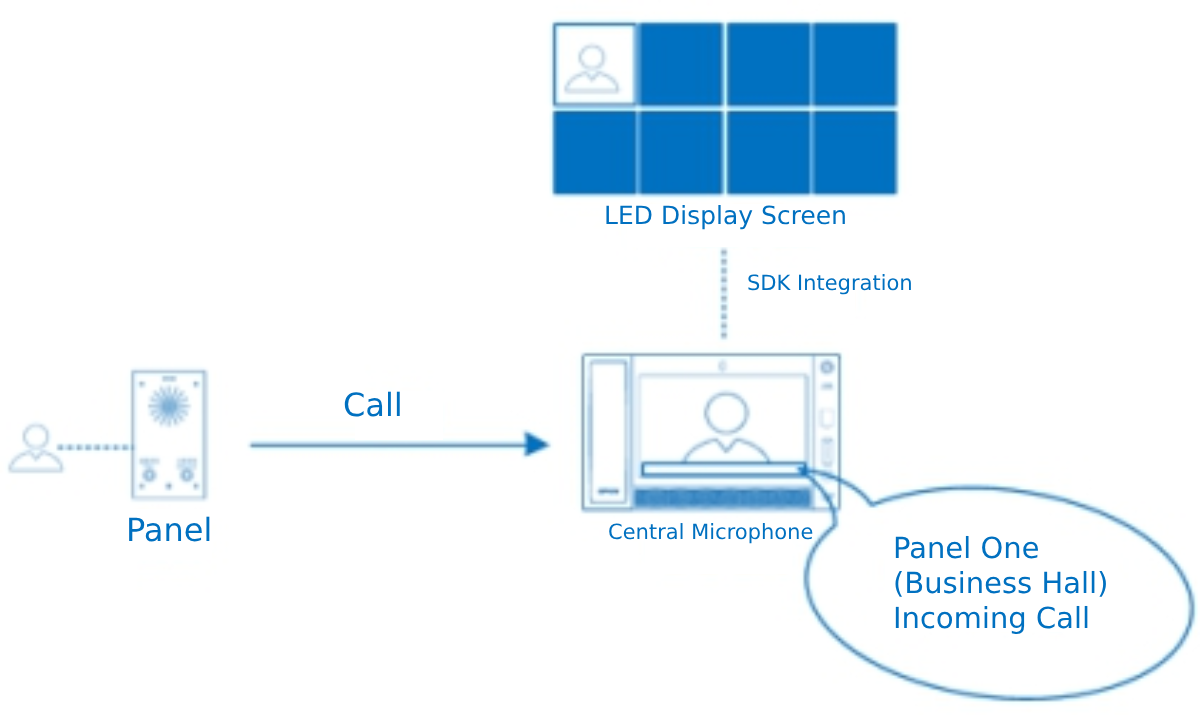
Intercom panels can be named according to their locations, allowing monitoring centers to quickly identify where a call originates.
Emergency Broadcasting Capability

In critical situations, staff can trigger an emergency broadcast that alerts nearby panels and speakers.
Real-Time Monitoring and Recording
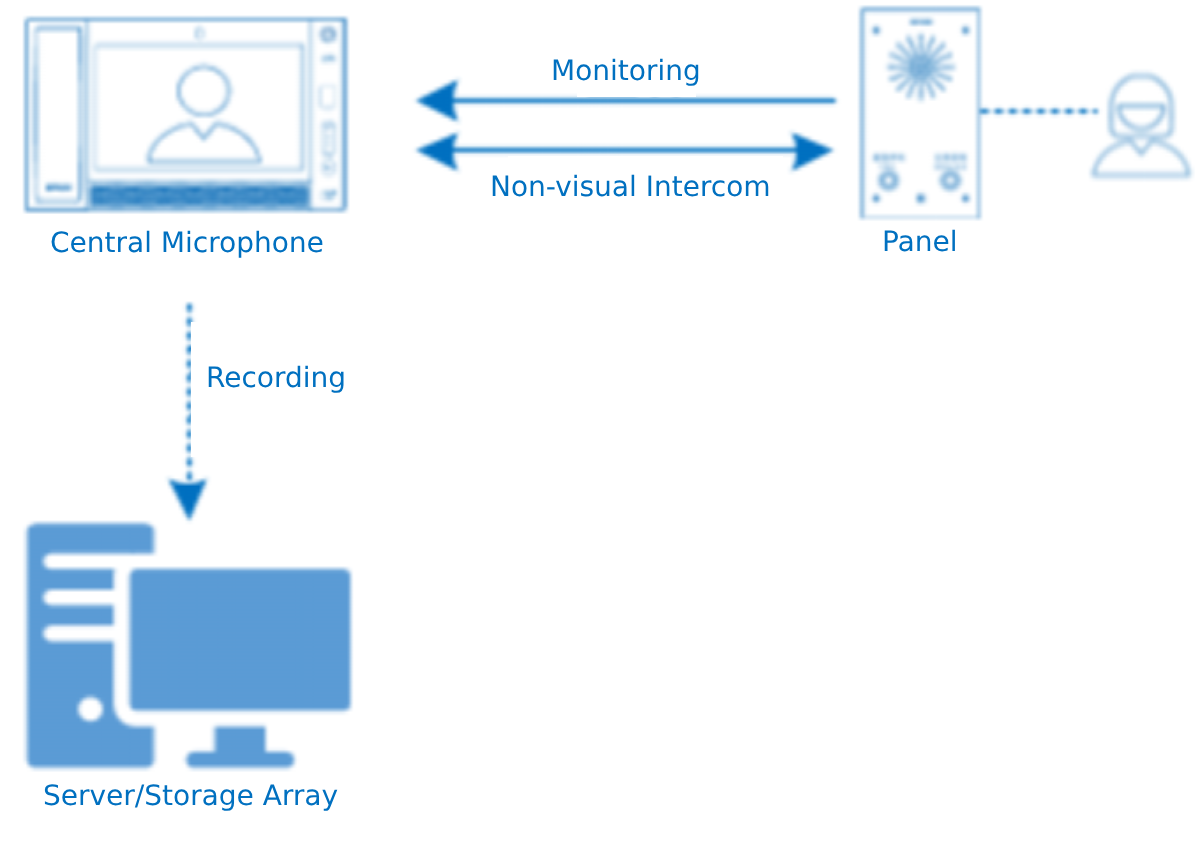
The monitoring center can listen to surrounding sounds in customer operation areas, vaults, and cash handling rooms. The system supports automatic digital recording of all conversations for documentation and future reference.
System Benefits
Implementing a Remote IP Emergency Intercom System in banks brings numerous advantages that significantly enhance overall security and customer experience:
Immediate Emergency Response
The one-button emergency assistance feature allows customers and staff to quickly alert security personnel or monitoring centers during emergencies. This immediacy can be crucial in life-threatening situations, enabling faster responses to incidents like robberies or medical emergencies.
Enhanced Communication
The full-duplex communication technology ensures that both parties can speak and listen simultaneously, reducing misunderstandings and improving the efficiency of communication during critical situations.
Comprehensive Monitoring
Real-time audio and video capabilities allow monitoring centers to assess situations as they unfold. This functionality provides valuable information to responders, helping them make informed decisions quickly.
Increased Customer Trust
Knowing that a robust emergency communication system is in place can increase customers' confidence in a bank's commitment to their safety. This trust can lead to higher customer retention and satisfaction rates.
Integration with Existing Security Systems
The intercom system can seamlessly integrate with other security measures in place, such as surveillance cameras and alarm systems, creating a comprehensive security ecosystem that enhances overall safety.
Customizable Features
Banks can tailor the system to meet their specific needs, including naming intercom panels based on location, adjusting call priorities, and programming emergency broadcast messages. This flexibility ensures that the system fits seamlessly into the bank's operational structure.
Training and Usability
The user-friendly interface of the intercom system ensures that both staff and customers can operate it easily. Additionally, training programs can help staff familiarize themselves with the system, maximizing its effectiveness.
Case Study
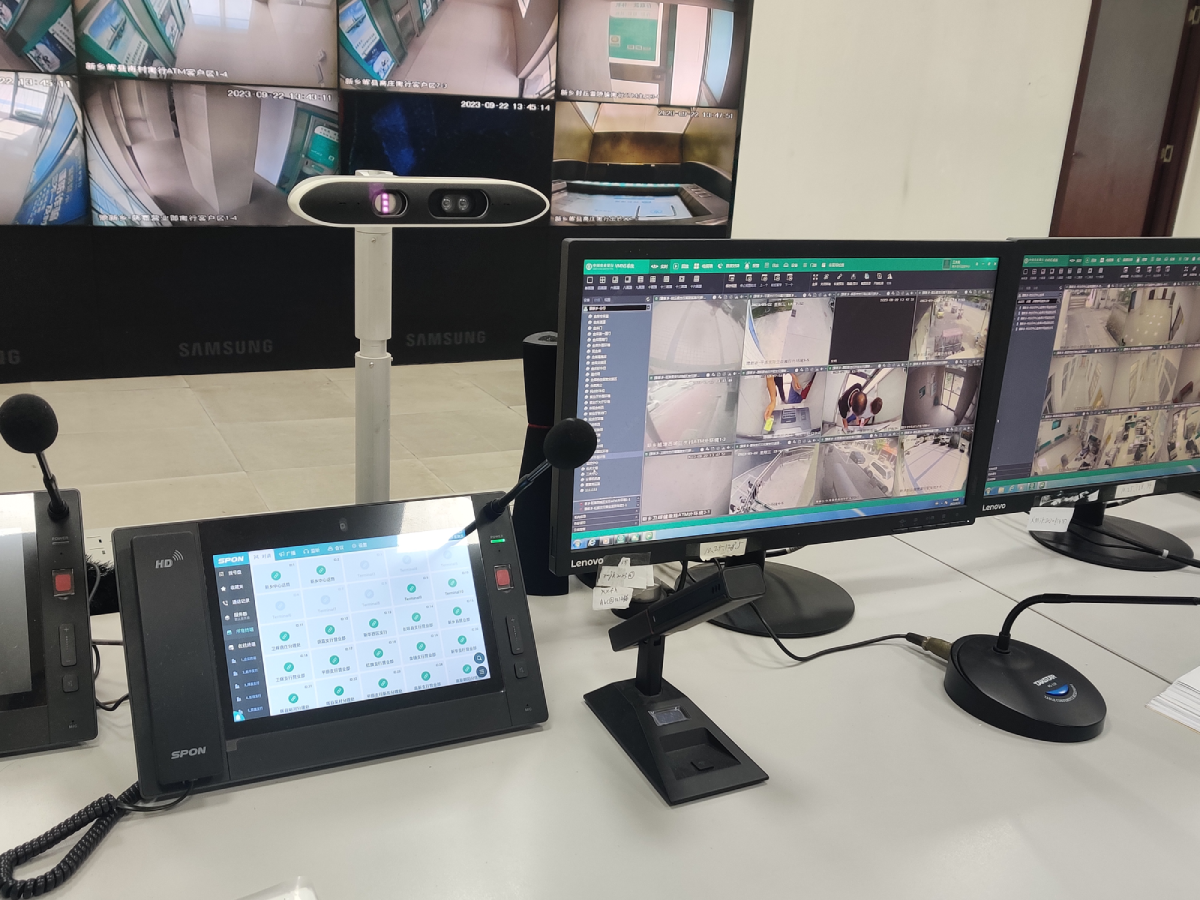
China Agricultural Bank
Nationwide Intercom System Integration for Enhanced Security and Efficiency
Objective:
To establish a unified management system across the city for rapid information dissemination, comprehensive control, and prompt response during emergencies.
Challenges:
China Agricultural Bank required an integrated communication system to link multiple critical locations such as the vault, cash handling rooms, banking halls, and self-service branches with a centralized monitoring center. The existing resources, including intercom and alarm panel systems, needed to be utilized to enable efficient communication across these dispersed locations. The goal was to create a robust solution that could provide early warnings, handle alerts swiftly, ensure business continuity, and offer seamless multi-network interoperability.
Solution:
SPON Communications implemented an IP-based intercom system capable of managing up to 100,000 intercom devices, making it suitable for the bank's scale and need for city-wide control. The system was designed to facilitate remote connectivity between the bank's monitoring center and various branch locations, ensuring constant communication and effective emergency response.
Key features of the solution included:
Dual IP Network Consoles:
Each branch monitoring center was equipped with two IP network visualization consoles for redundancy. In case of an emergency trigger (such as in the vault, cash counter, or self-service area), the system would immediately call Console 1 at the central monitoring center through the TCP/IP network. If Console 1 was unavailable, the system would automatically redirect the call to Console 2, ensuring uninterrupted communication.
Early Warning & Alert Handling:
The system enabled early warnings and real-time alert handling, crucial for managing emergencies and business diversions across the network of branches.
Scalability & Interoperability:
The system was built to support multi-network interoperability, allowing for the seamless integration of various communication channels and the management of a large number of devices.
Outcome:
The successful integration of this IP intercom system has significantly enhanced the bank’s ability to monitor and manage security operations across its branches. The ability to handle up to 100,000 devices within a single network ensures comprehensive coverage and future scalability. The dual-console setup has improved reliability, ensuring that emergency communications are handled smoothly even during peak periods or technical issues. This setup has also contributed to improved operational efficiency, allowing the bank to provide faster response times and better customer service.
Conclusion
The Remote IP Emergency Intercom System represents a significant advancement in bank security technology. By integrating cutting-edge features with user-friendly functionality, this system not only enhances the safety of banking environments but also ensures that help is just a button away. As banks continue to face emerging threats, investing in reliable communication solutions like this intercom system is essential for maintaining trust and security.
In a world where safety cannot be compromised, the Remote IP Emergency Intercom System stands out as a vital tool for enhancing bank security and improving the overall experience for customers and staff alike.


 AR
AR
 EN
EN


