


 2025-10-30
 Author: cora
 Page view: 3569
Speakers are mainly divided into two types: IP speakers & analog speakers.IP speakers use network cables for transmission, making them more stable and scalable.Analog speakers rely on older wiring methods and are more budget-friendly.If you’re wondering which type of speaker fits your needs best, this blog will help you.Let’s dive in.
Contents
1. What is an IP Speaker?
2. What is an Analog Speaker?
3. 12 Key Differences Between IP and Analog Speakers
4. When to Choose an IP Speaker?
5. Summary
6. FAQ
What is an IP Speaker?
IP speaker is also network speaker, just like your computer or phone connects to the internet. The "IP" stands for Internet Protocol, which is the set of rules that lets speaker talk to each other over a network. So, IP speakers make sound signal is transmitted in digital form via Ethernet cables.
Imagine a public address (PA) system in a big building. With IP speakers, you can control everything from a central computer. You plug the speaker into a network switch, and it gets power and audio all through one cable, often using something called Power over Ethernet (PoE). This makes setup easy because you don't need separate power outlets for each speaker.
IP speakers like smart devices. They can do more than just play sound. For example, they have built-in amplifiers, microphones for two-way talk, or even sensors to detect noise levels. They work well in systems for paging, where you announce messages to specific areas, or for emergency alerts. Because they use digital signals, the sound stays clear even over long distances, without getting weaker or picking up static.
IP speakers are common in modern setups like offices, schools, and factories. They integrate with other tech, such as security cameras or phone systems. If you have a VoIP phone system, IP speakers can connect right to it, making announcements as easy as making a call.If you need to add more speakers later, you just connect them to the network. No need to run new wires everywhere. However, they do require a good network setup.
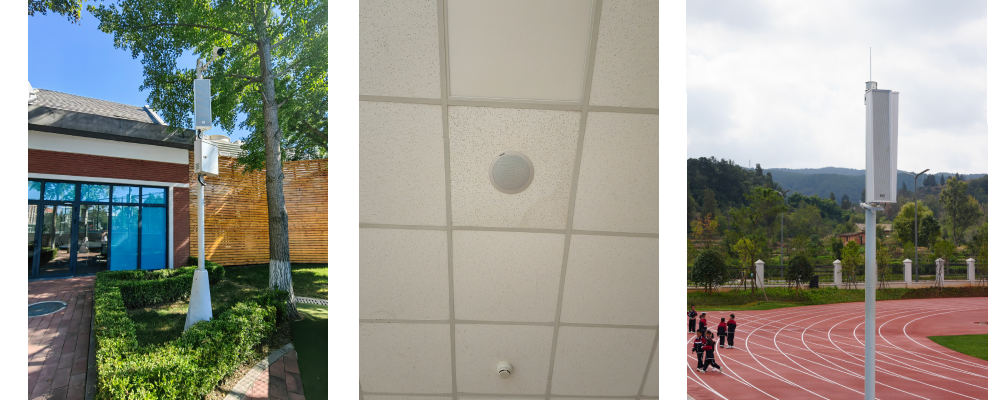
In short,IP Speaker offers a wide range of functions, flexible and convenient, and the digital signal ensures a more stable and clear sound.
What is an Analog Speaker?
An analog speaker is the traditional kind of speaker that has been around for decades. It works by sending audio signals as electrical waves through wires. Think of it like an old telephone line – the sound is captured, turned into varying electrical voltages, and then sent directly to the speaker to make the cone move and produce noise.
In a basic setup, you connect analog speakers to an amplifier using special audio cables, like speaker wire or RCA cables. The amplifier boosts the signal so it can travel to the speakers without losing too much strength. These systems are often called "70-volt" or "100-volt" systems in PA setups, which help send audio over longer distances without needing thick wires.
Analog speakers don't need a network or internet connection to work. If the power is on and the wires are connected, they play sound. This makes them great for basic needs, like background music in a small store or announcements in a single room.
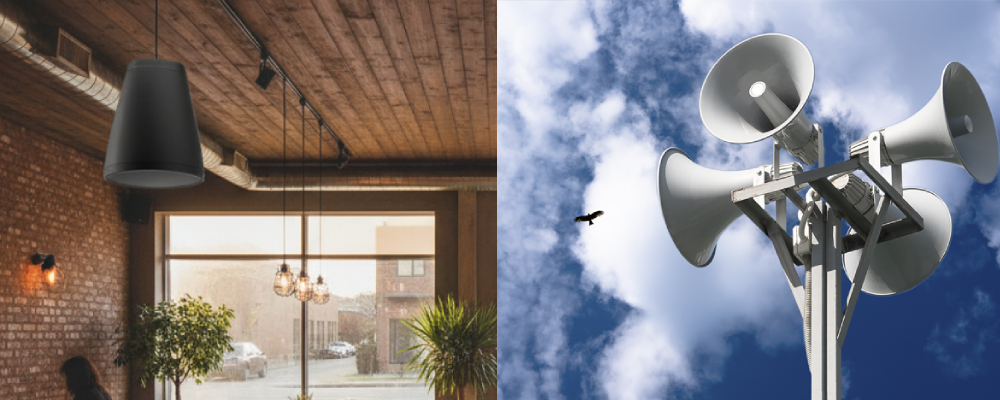
However, they have limits. The audio can pick up interference from other electrical devices, causing hums or static. Over long distances, the signal weakens, so you might need more amplifiers. Adding new speakers means running more wires, which can be messy and costly.
12 Key Differences Between IP and Analog Speakers
Now that we know what each type is, let's look at how they differ.
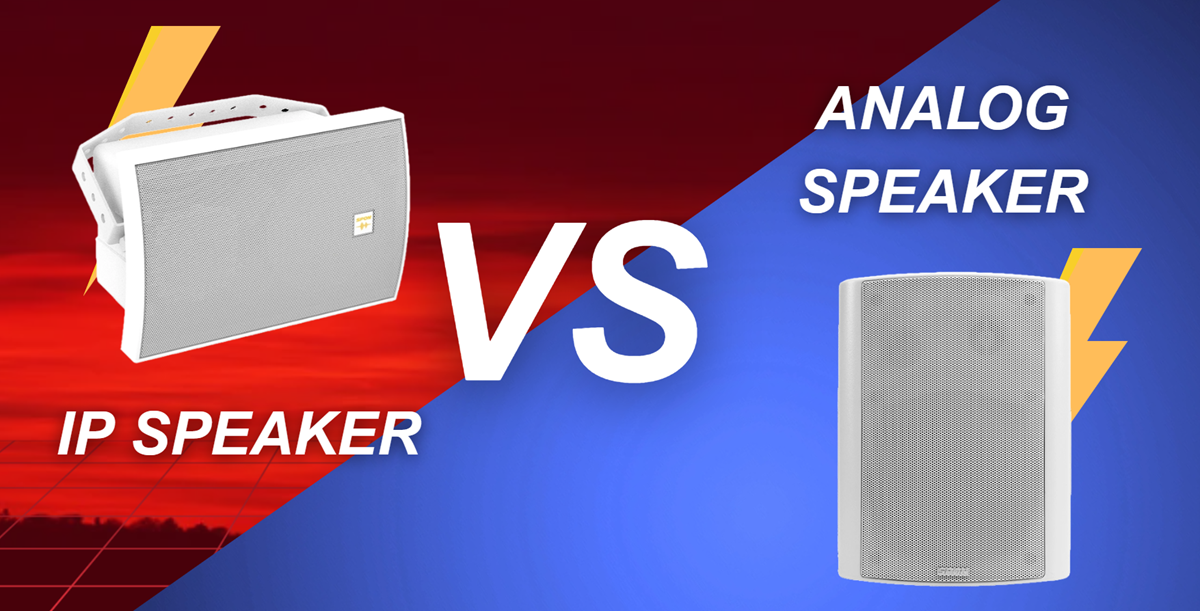
1. Connectivity Method
• IP speakers connect using Ethernet cables and network switches, like plugging into the internet.
• Analog speakers use dedicated audio wires, often in a daisy-chain setup where one speaker links to the next.
2. Audio Transmission
• IP speakers send sound digitally as data packets, which keeps quality high without loss.
• Analog speakers transmit as continuous electrical signals, which can degrade over distance or pick up noise.
3. Scalability
• Adding IP speakers is simple – just connect to the network and configure via software.
• Analog systems require new wiring and possibly more amplifiers for expansion.
4. Management and Control
• IP speakers allow remote control from a computer or app, with features like scheduling or zoning.
• Analog speakers are controlled locally, often with physical switches.
5. Power Supply
• Many IP speakers use PoE, getting power through the same network cable.
• Analog speakers need separate power sources or shared lines. This reduces clutter in IP setups.
6. Audio Quality
• IP provides consistent, high-fidelity sound because it's digital.
• Analog can have warmth but is prone to distortion and interference.
7. Installation Cost and Effort
• Initial setup for IP might cost more in hardware, but wiring is simpler using existing networks.
• Analog often needs custom wiring, which can be labor-intensive but cheaper for small systems.
8. Integration with Other Systems
• IP speakers easily link to security, phones, or IoT devices.
• Analog is standalone or requires adapters.
9. Distance Limitations
• IP can cover unlimited distances via networks, even across buildings.
• Analog is limited to a few hundred feet before signal loss.
10. Features and Functionality
• IP speakers can play stored messages, detect sounds, or prioritize alerts.
• Analog is basic playback only.
11. Maintenance and Reliability
• IP systems have centralized monitoring for quick fixes.
• Analog is durable but harder to diagnose issues remotely.
12. Cost Over Time
• IP has higher upfront costs but saves on expansions and energy.
• Analog is cheaper initially but can cost more to upgrade. For long-term use, IP often pays off.
These differences show that IP speakers are more advanced, while analog keeps things simple. Your choice depends on your setup size and needs.
When to Choose an IP Speaker?
Sometimes, analog speakers just aren't enough. IP speakers shine in places where you need more control, better sound, or easy growth. Let's look at examples:
1. Chain Supermarkets
In a big store chain with multiple locations, IP speakers are ideal for announcements like sales or closing times. You can zone audio – play different messages in the produce section versus the checkout area. IP's remote management lets headquarters control all stores from one place, saving time. Plus, integration with security systems means automatic alerts for theft.
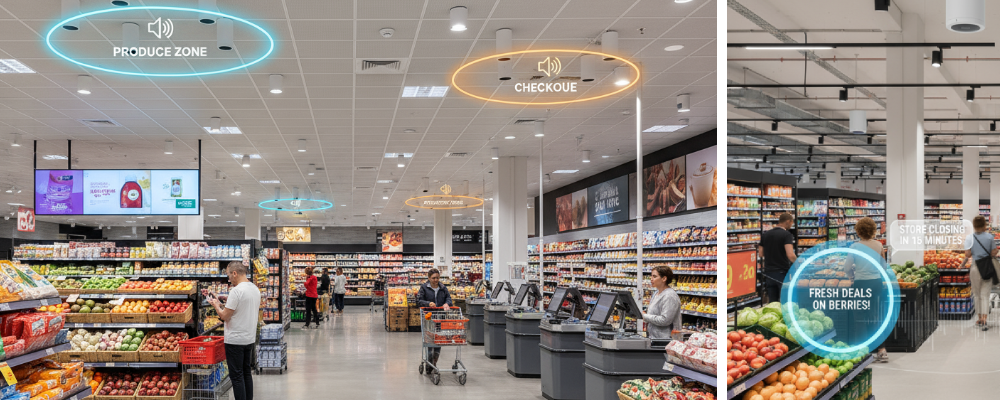
In supermarkets, the need for clear, zoned audio without wiring mess makes IP superior. Features like scheduling (for daily promotions) and high-quality sound (to cut through shopper noise) are key. Scalability helps when adding new stores – just plug in more IP speakers.
2. Large Factories or Workshops
Factories are noisy and spread out, so speakers must be loud and reliable. IP speakers, especially horn types, provide clear audio over distances without degradation. They integrate with safety systems for emergency evacuations or machine alerts. Analog speakers might work but struggle with noise interference and require more amplifiers.
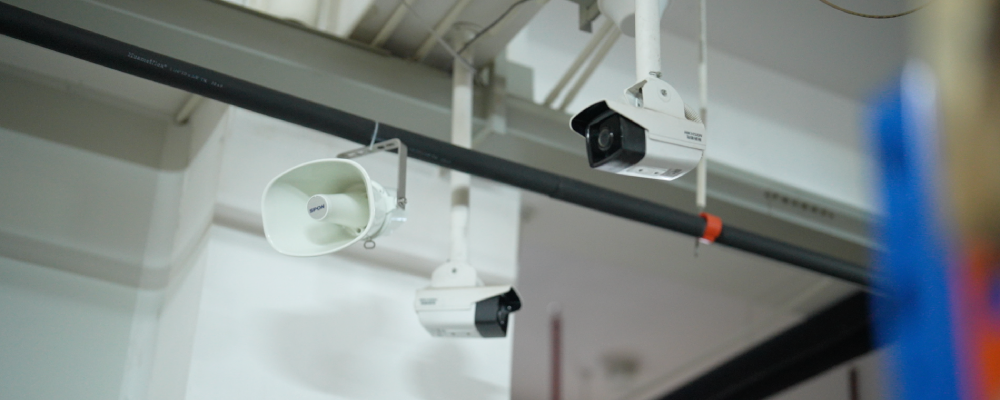
For example, in a car manufacturing plant, IP allows live announcements to specific zones, like warning workers near a conveyor belt. Remote monitoring ensures speakers are always working, crucial for safety. Analog systems are harder to expand in huge spaces. The functionalities that make IP better include PoE for easy power, digital clarity in high-noise areas, and seamless integration with industrial controls.
3. Schools
Schools need bells, announcements, and emergency paging. IP speakers let you schedule bells automatically and send messages to classrooms without interrupting others. In lockdowns, they broadcast alerts quickly. Analog systems are basic and hard to customize for different buildings.
A large campus benefits from IP's zoning – announce lunch in the cafeteria only. Integration with phones means teachers can page from classrooms. Audio quality ensures clear instructions during drills. Compared to analog, IP reduces wiring costs and allows easy additions for new wings. Key needs like flexibility, reliability in emergencies, and low maintenance make IP the smarter choice.
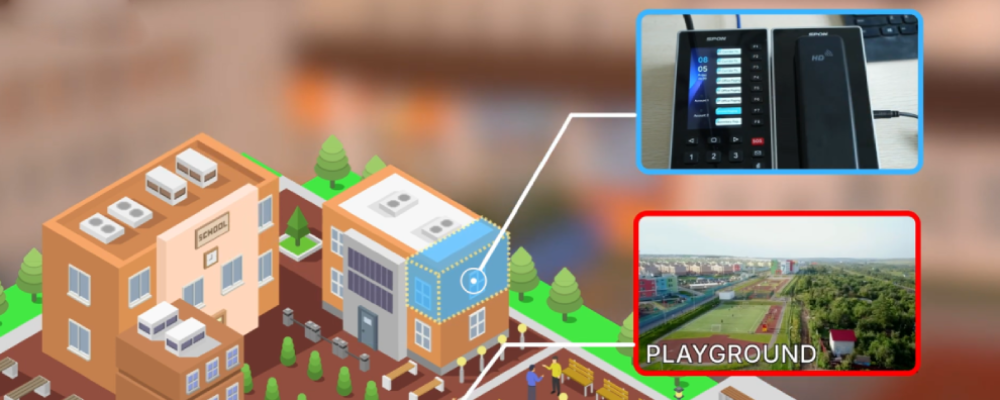
In all these cases, choose IP when you have a network in place, need advanced features, or plan to grow. If your setup is small and simple, analog might suffice. But for modern demands, IP's functionalities like zoning, integration, and remote control win out.
Summary
IP speakers are digital, network-based, and packed with features for big or complex environments. Analog speakers are simple, wired, and cost-effective for basic needs.
If you're in a supermarket, factory, or school needing zoned audio, remote control, or integration, go with IP. For small setups, analog works fine. Think about your current setup and future plans when deciding. Both have their place, but IP is the future for connected spaces.
FAQ
1. Are IP speakers more expensive than analog?
Yes. IP speakers usually cost more because they have built-in amplifiers, decoders, and network features. But they can save money in installation and future upgrades.
2. Can I mix IP and analog speakers?
Yes, you can. Many systems use both. You can connect analog speakers through an IP amplifier or adapter so they work together with IP speakers.There is an IP Audio Bridge that can convert analog speakers into digital audio.
3. Do IP speakers need internet?
Not necessarily. They need a local network (LAN) to work, but not the public internet. Internet access is only needed if you want remote control or cloud management.
4. How reliable are IP speakers in power outages?
They stop working if the power is off, just like most electronic devices. However, if your system has a backup power supply (UPS or PoE switch with backup), they can still run during outages.
5. What's the main drawback of analog speakers?
They need more wiring and can’t be easily managed or controlled remotely. Large projects become harder to maintain and expand.
6. Can IP speakers handle outdoor use?
Yes. Many IP speakers are built for outdoor use with waterproof and dustproof designs (usually rated IP65 or higher).
7. How long IP speakers last?
Typically 6 to 10 years, depending on the quality and environment.


 AR
AR
 EN
EN


