Microphone Polar Patterns: Cardioid, Omni & Supercardioid
When it comes to the selection of a microphone, we often compare them with these parameters: Wired or wireless? Dynamic or Condenser? But what if I told you these are not the most important specifications you need to pay attention to when choosing a microphone for your PA (Public Address) system?Microphone polar pattern, also known as the directionality of the microphone. It is the factor that will eventually determine the microphone sound pickup clarity and also the chances that it might get feedback or pick up unwanted noise on site.After this article, you will learn the three most common microphone polar patterns: omnidirectional microphone, cardioid microphone, and supercardioid microphone.Moreover, for those who are having trouble comparing microphone directionality, you will also have a basic knowledge of how to choose them for your PA system.
What Is Microphone Directionality?
A microphone polar pattern describes how sensitive a microphone is to sound arriving from different directions around the capsule. It’s usually shown as a circular diagram (a “polar plot”), where 0° represents sound coming from the front of the microphone.
Why polar patterns matter in PA and speech:
- Speech Clarity: An appropriate pattern captures a greater amount of direct voice and a lesser degree of room reflection.
- Noise Control: Directional patterns can diminish the pickup of HVAC noise, crowd noise, and machinery noise.
- Feedback Control: The more effectively one can reject loudspeaker and reflective energy, the higher the gain - before - feedback.
- User Movement: In the context of wearable usage, the pattern influences the consistency of the perceived voice level when an individual turns their head.
Most microphones used for speech and PA fall into two broad categories:
- Omnidirectional microphone(picks up evenly from all directions)
- Unidirectional microphone(picks up mainly from one direction, typically cardioid or supercardioid)
Omnidirectional Microphones
Omnidirectional microphone definition
An omnidirectional microphone picks up sound equally from all directions (360°) around the capsule. This is the classic microphone pattern and also the main reason you’ll see this pickup pattern in most of the mainstream microphone.If you’re asking “what are omnidirectional microphones?”, the simplest answer is: they hear everything around them fairly evenly, therefor placement for this kind of microphone can be important for best pickup quality.”
Omnidirectional microphones application scenario
Omnidirectional microphones are often chosen for consistent speech pickup when the talker moves or turns their head. Because they do not rely on “aiming” the capsule toward the mouth as strictly as directional mics, they tend to be forgiving in real-world use—especially on wearables.
Advantages of omnidirectional microphones
- Consistent audio pickup for head movement
- Less “off-axis coloration” than many directional mics
- Less sensitive to wind noise
Disadvantages of omnidirectional microphones
- Less rejection of background noise: they will capture room sound, crowd noise, HVAC, or machinery more readily.
- More room reflections: in reverberant spaces, speech can lose intelligibility if gain is too high or distance is too far.
- More feedback risk in some layouts: since they don’t reject loudspeakers by direction, system gain must be managed carefully.
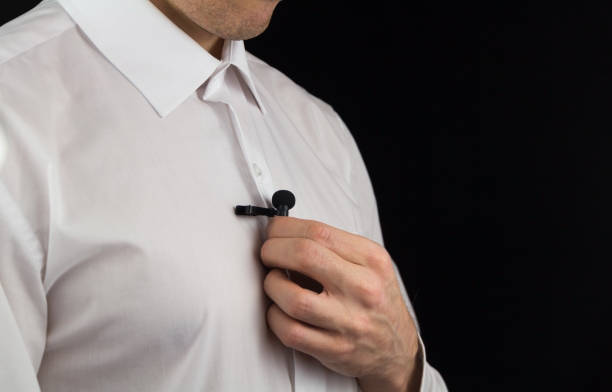
Practical tips for omnidirectional lavalier/lapel mics
- Keep the mic as close as practical to the mouth area (usually upper chest) to improve speech-to-noise ratio.
- Prevent clothing friction and rubbing.
- When PA loudspeakers are close, your system setup (speaker placement and EQ) matters more because the mic pattern will not “hide” mistakes.
Cardioid Microphones (The Most Common Unidirectional Pattern)
What is a cardioid microphone?
Now that we know what an omnidirectional microphone that picks up sound from 360° is, let’s take a look at the unidirectional microphone: the cardioid microphone.Unlike omnidirectional, it will only focus on picking up the sound in front of the microphone; the sound from the rear or sides will be mostly filtered out. Based on its polar pattern, you can clearly see that it looks like a heart shape; that’s the reason they call them cardioid.
Why cardioid microphones are popular in PA
One word: Low feedback probability amount for all other polar patterns. Due to its unidirectional pattern, as long as the microphone is not directly in front of the speaker, the sound around them will most likely not get picked up by the mic. That being said, it also helps with the microphone placement; the speaker can easily carry around the mic without worrying about feedback. Typical use cases:Handheld vocal mics in PA and live speechPodium/lectern microphonesTalkback and paging in noisier environmentsSpeech reinforcement in reflective rooms
Cardioid dynamic microphone vs cardioid condenser microphone
Both can be cardioid, but their behavior differs:
Durable, handles loud sources well, often forgiving in live use. Great for handheld speech and tougher environments.
More sensitive and detailed, potentially clearer speech—but can also pick up more ambient sound if gain is pushed too high. Excellent when properly positioned and tuned.
Cardioid mics can exhibit proximity effect (more bass when very close), which can be good for warmth or bad for muddiness depending on use.The voice can change if the user moves off-axis; good technique and consistent placement matter.
Supercardioid Microphones (Tighter Front Pickup)
What is a super cardioid microphone?
A super cardioid microphone is a more directional version of cardioid. It captures a narrower “front” area and can reject side noise more effectively. However, it typically has a small rear pickup lobe, meaning it can pick up some sound from directly behind. undefined
When supercardioid is a good choice
High-noise environments where you need more isolationSituations where microphone aiming is stable (fixed position)Higher gain-before-feedback targets (with proper loudspeaker placement)
Watch-outs in PA layouts
Due to the rear lobe, a loudspeaker positioned directly behind the microphone can, at times, perform more poorly than in a cardioid configuration. The placement and orientation of the speaker still hold significance.
Omnidirectional Microphone vs Unidirectional (Cardioid/Supercardioid): How to Choose
Quick decision rule
Select omnidirectional microphones when the primary objective is consistent sound pickup during movement and the environment is reasonably regulated.Opt for cardioid or supercardioid microphones when the main priority is noise rejection and feedback control, and the microphone can be appropriately aimed or positioned.
| Factor |
Omnidirectional Microphone |
Cardioid Microphone |
Supercardioid Microphone |
| Pickup area |
360° |
Front-focused |
Narrow front + small rear lobe |
| Background noise pickup |
Higher |
Lower |
Lower (best side rejection) |
| Feedback resistance |
Medium (depends on system) |
Good |
Potentially best (with correct placement) |
| User movement tolerance |
Best |
Medium |
Lower (needs consistent aiming) |
| Typical wearable use |
Very common |
Sometimes (more placement-critical) |
Less common (more placement-critical) |
Pattern Selection for Lavalier, Lapel, and Headset Microphones
Omnidirectional lavalier microphone / omnidirectional lapel microphone
For many presenters, an omnidirectional lavalier microphone is preferred because it stays consistent when the talker turns their head. This is particularly helpful for teachers, tour guides, and presenters who naturally move.
The space is not extremely loudYou want the most stable voice levelThe user does not want to “think about microphone direction”
Cardioid lavalier microphone / cardioid lapel microphone
A cardioid lavalier microphone (or cardioid lapel microphone) can help in noisier environments or when loudspeakers are close, but it is more sensitive to placement and orientation. If the mic shifts on clothing, voice level can change more than with omni.
Ambient noise is highYou need extra isolationYou can control placement carefully and keep orientation stableOmnidirectional headset microphoneAn omnidirectional headset microphone is common in active use (fitness, presentations) because the mic stays at a consistent distance from the mouth. Even with an omni pattern, the close placement typically gives strong speech clarity.
The speaker moves frequentlyYou want consistent voice without constant adjustmentsYou need stable speech pickup with minimal technique
Practical PA Tips: Better Results With Any Polar Pattern
Even the “right” polar pattern can perform poorly if the system layout is wrong. These are high-impact tips that improve results in PA systems:
- Keep loudspeakers in front of the microphone when possible, and avoid aiming speakers toward the mic position.
- Use zoning and sensible levels: don’t try to cover huge spaces with one zone at one volume.
- If you’re fighting feedback, fix placement and gain structure first, then apply EQ as needed.
- For wearable microphones, prioritize distance to mouth and reduce clothing noise.
Conclusion
Microphone directivity is a crucial competency for ensuring reliable speech and public - address (PA) performance. An omnidirectional microphone exhibits stable and natural sound pickup capabilities, rendering it frequently the optimal choice for wearable devices such as omnidirectional lavalier microphones, omnidirectional lapel microphones, and omnidirectional headset microphones. A cardioid microphone offers enhanced isolation and superior feedback control in numerous PA and speech reinforcement applications. In contrast, a super - cardioid microphone can achieve even more focused sound pickup when its placement and orientation are precisely managed.When designing the system with appropriate placement, gain configuration, and zoning, the polar pattern transforms into a potent instrument rather than a speculative element.

FAQS
Q1: What are omnidirectional microphones? 

Omnidirectional microphones pick up sound equally from all directions.They are often used for microphone types like: Lavalier, lapel or headset, because it can pickup the speaker’s audio clearly even when they are moving their head or walking.
Q2: What is a cardioid microphone?
A cardioid microphone is a unidirectional microphone that mainly focusing captures the sound from the front, and reduce all the sounds from the back. In PA system, it’s commonly used since it has very low chance to causing feedback, and can clearly captures the speaker’s voice due to its pickup pattern.
Q3: Cardioid microphone vs omnidirectional: which should I choose?
If you need stable pickup with movement (wearables), omnidirectional is your best choice. If you need more noise rejection and better feedback control near loudspeakers, cardioid is better than omnidirectional microphone since it focus on the sound from the front.
Q4: Cardioid vs supercardioid microphone: what’s the difference?
Both are unidirectional, but supercardioid is tighter in front and stronger on the sides, while also having a small rear pickup lobe. Pickup angle: Cardioid is wider (~120–130°). Supercardioid is narrower (~100–110°). Rear sensitivity: Cardioid rejects best at 180° (directly behind). Supercardioid has a rear lobe (often ~–8 to –12 dB vs front), with nulls around ~125–135°. Feedback behavior: Supercardioid can give higher gain-before-feedback but the speaker placement must be strictly avoid microphone rear area; and same time, cardioid is usually more forgiving in typical PA layouts. If you need a safe “works in most rooms” choice, pick cardioid. If you need more isolation and can control placement, pick supercardioid.



 2026-02-09
 Author: Michael
 Page view: 2541










 AR
AR
 EN
EN


