


 2025-10-14
 Author: Michael
 Page view: 5906
In the mosque, the minaret will use a horn speaker for long-distance sound traveling.Prayer Hall is best for using Hi-Power wall-mounted speakers.
For Mihrab, both the dynamic and wireless microphones are great, with an adjustable microphone pole to satisfy different prayer postures.
And Minbar, a wireless headset microphone, is preferred due to the Imam needing to sit or stand next to the Minbar.In the Control Room, amplifiers, mixer, media player and wireless microphone receiver are all placed here, usually inside a rack.
What is a Mosque (masjid)?
First of all, for all non-Muslim readers that are interested in this knowledge, let me explain what a mosque is and its purpose.
A mosque is specially built for Muslim prayers; it’s the place for Muslims to study the Quran, celebrate certain events, or accomplish their obligatory daily prayer, which is called Salah.
Every Friday, worshippers are required to gather in the mosque for congregation; they will need to take a bath, dress in their best clean clothes, wear perfume, and assemble in the mosque for Friday Prayer, also known as Ṣalāh al-Jumu'ah.

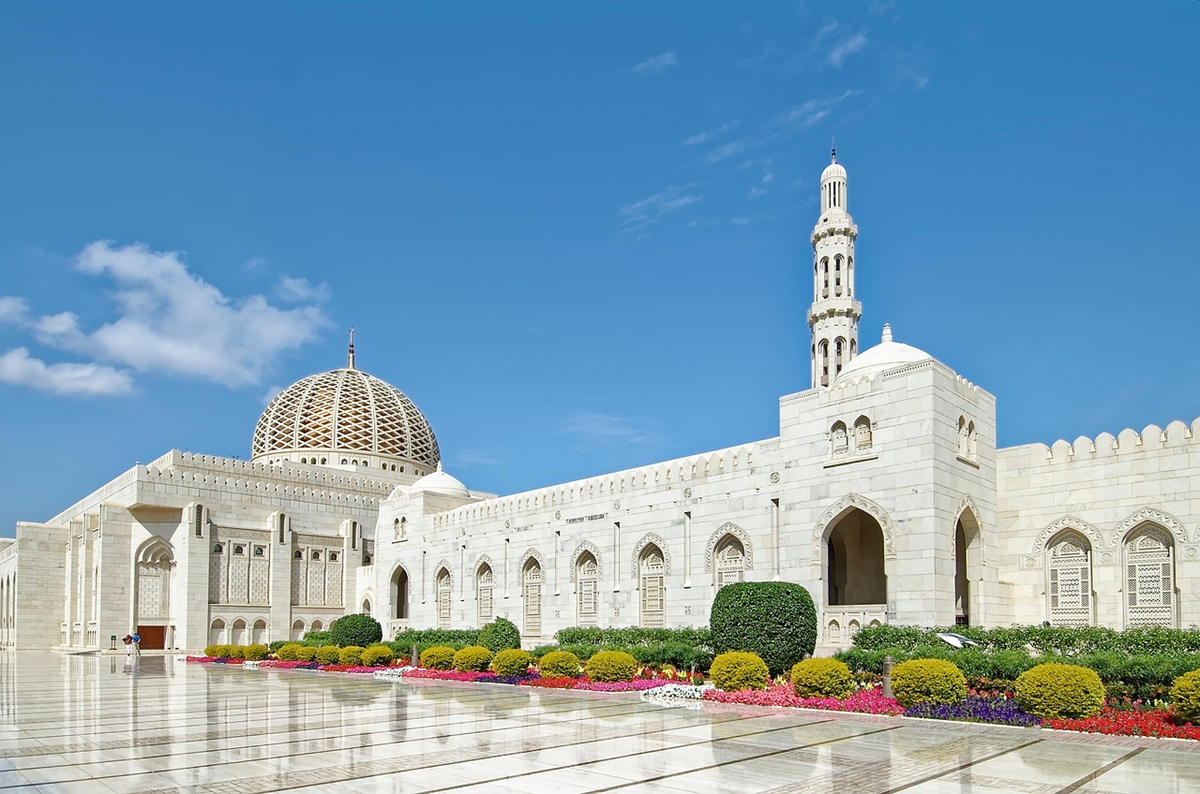
The mosque was built with 5 significant structures. When we’re entering the mosque, we can see there are large hemispherical Domes above the buildings; these domes cover the prayer hall and serve as a symbol of heaven.
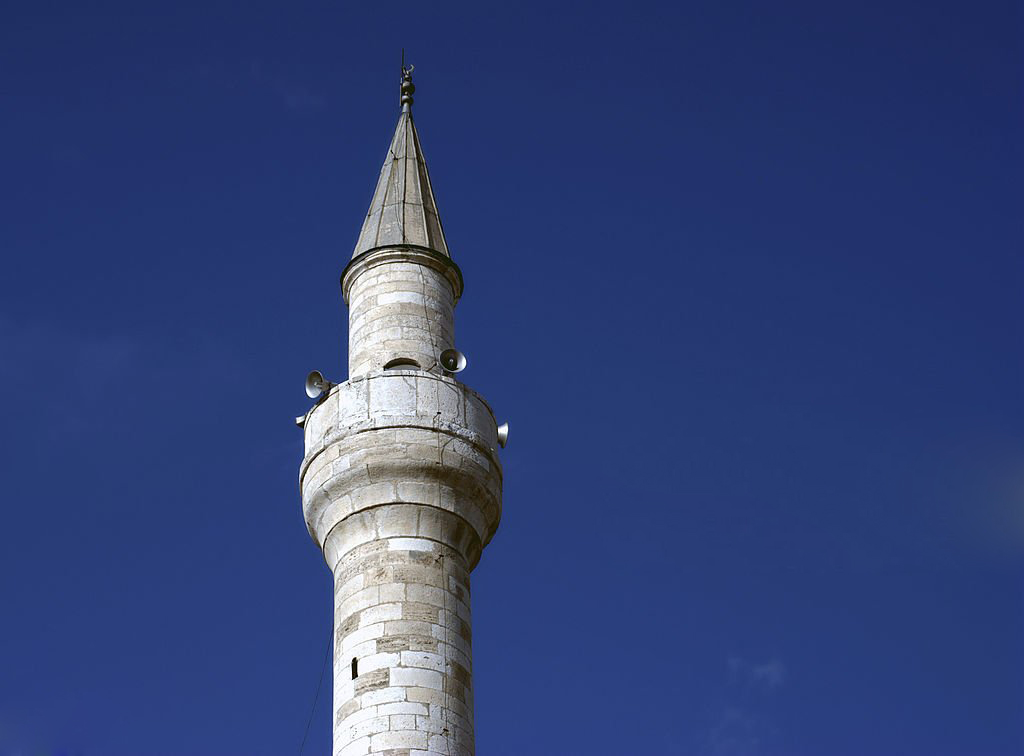
And next to the main building, we can see one or multiple tower-like structures. These towers are called Minarets, which are used to call the worshippers to come to the mosque to pray, usually 15 minutes before prayer time starts.
Inside the mosque, there is a Prayer hall, an open area where worshippers stand in rows on mats or carpets, facing the Mihrab, which is the niche in the wall.
Lastly, on the right side of the Mihrab, there will always be a podium, or stairway-like structure, also called Minbar. The leader of the prayers (Imam) will sit or stand next to it and begin education (khuṭbah) or lead the prayer process in the Friday prayer or special religious occasions.
What is Azan (Adhan)?
Now that we understand what a mosque is, let’s get into the most common ritual in the mosque: Azan, or Adhan.
So as we mentioned before, every time before the prayer starts, the minaret will call the prayers, usually by a muezzin, who is the caller who has a good voice and character, who will stand on the top of the tower and start the calling. This process will only last for a few minutes and 5 times a day, since every Muslim needs to pray 5 times a day.
Why Do You Need a Sound System?
Next let’s break down the reason why the sound system is so important for the mosque. I will start with the Azan, the call to prayer, and go all the way to Friday Prayer.
First of all, in the traditional Azan, there will always be a requirement for a muezzin to call to prayer, which is ok, but the challenge will come if the muezzin is taking a day off or sick, since it’s not an easy task to call to prayer 5 times every day.
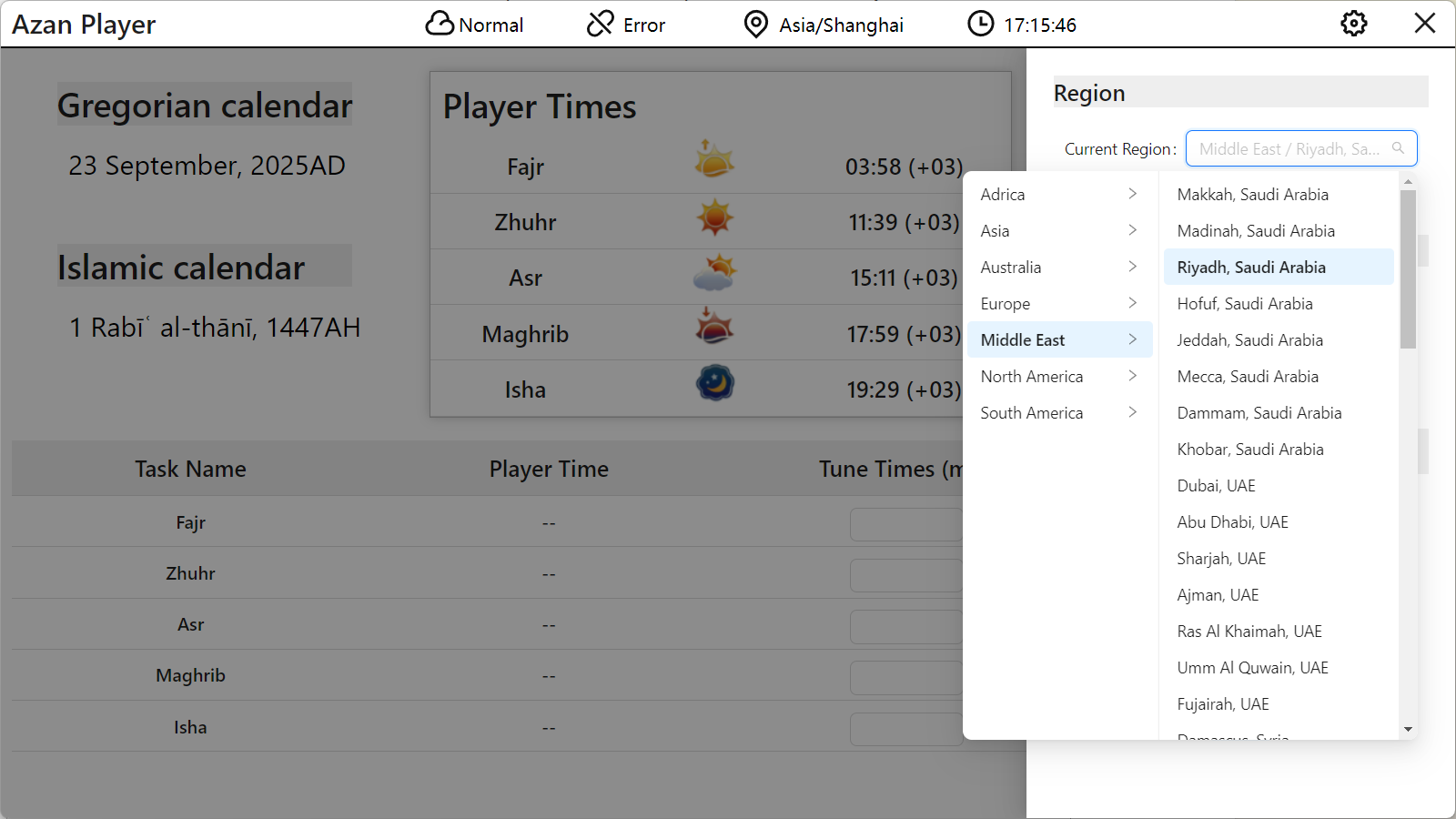
When we implant the sound system, everything will become intelligent. First of all, the Azan can be played automatically via specific Azan player hardware or software, such as a delicate Azan player that stores a preset Azan audio and algorithm to calculate Azan time daily and plays the audio when the time arrives.
Or software like the SPON Azan Plugin that supports user-customizable Azan audio and now also supports more than 50 cities of prayer time in the Middle East.
The audio will be broadcast through the speakers in the sound system, creating a hands-free, louder, and clearer call to prayer process.
Plus, if some mosques like to keep tradition, the muezzin can still use the microphone so the voice can be sent to the speaker and cover even further distances.
After Azan, next let’s talk about the next step: Prayer (Salah) and Friday prayer (Ṣalāh al-Jumu'ah).
No matter if it’s the daily prayer or Friday prayer, there’s usually an imam leading the worshipper during the prayer process. Since the prayer hall is usually a large room, if there’s no sound system, worshippers will have a hard time hearing the Imam speaking, especially the person in the back. Additionally, some mosques might have multiple floors; that way, it will require an Imam for each floor, but with the sound system, one Imam could use the microphone to send the voice to all the floors.
How to Design a Component for Each Structure?
So we’ve understood the importance of the sound system in the mosque, but how do we design the system? And which speaker and microphone should I choose? I will break it down according to the major structures inside the mosque.
Start with the Minaret. We’ve already talked about the usage of this structure. The purpose of this structure is for calling; the sound needs to travel a long distance. A weatherproof horn speaker would be your perfect decision. First of all, horn speakers are known for their ability to focus and direct sound waves, allowing them to travel further and remain intelligible even in areas with significant background noise. Second, since it’s installed outside the tower, weatherproof is definitely essential; most of the horn speakers can reach up to an IP65 or IP66 rating and are made with ABS plastic, aluminum, or stainless steel, combined with waterproof membranes. So no matter what the weather is, worshippers in the neighborhood can hear the calling.

For the prayer hall, large power wall-mount speakers are usually placed on both sides of the prayer hall wall, so no matter if in the front or back row, worshippers can hear the sound clearly.
And next to the Mihrab, where the Imam needs to face the Mihrab, praying with different postures and speaking at the same time. A wired dynamic microphone or a handheld wireless microphone should be used here; both have their own strong suits. A wired microphone can provide a stable connection, while a wireless microphone avoids the messy wire and lowers the installation difficulty.
Plus, to make sure the Imam's voice can still be picked up by the microphone while standing, bowing, or prostrating, we could use 3 microphones combined with a microphone pole and adjust the pole to three different heights.
Moving on to Minbar, there are usually two situations. One is for some special events; Imam will be standing at the podium to give a speech. For this, a wired 48V phantom power condenser desktop microphone can be implanted on the podium. Second, for daily prayer, the Imam sometimes will be standing next to the stair-like Minbar or sitting on the Minbar; for this situation, a headset microphone is the perfect choice for speakers that need to walk around in the room.
Lastly, in the mosque’s control room, where all the rack-mounted devices are located, such as amplifiers for the minaret’s horn speakers and prayer hall’s wall-mounted speakers, the wireless microphone’s receiver unit, a music player to play the Azan or some other media, and a mixer that connects all the audio sources together. The input channel of the mixer should be considered based on how many audio sources need to connect to the mixer.
In modern mosque sound systems, there are some devices that integrate the function of mixer and amplifier, such as SPON GEN-5101P50. This device has a built-in 2-channel 240W amplifier, which indicates the indoor and outdoor areas of the mosque, so after Azan, you can simply turn off the outdoor area to avoid noise contamination in your neighborhood. Besides, it has 6 channels of microphone input, and each channel can provide 48V phantom power and volume control. Additionally, it also comes with a built-in effector to create a reverb environment by just a simple click, making this device extremely user-friendly compared to the traditional mixer that takes a long time to learn.

| Structures | Minaret | Prayer Hall | Mihrab | Minbar | Control Room |
| Products | Horn Speaker | Hi-Power Wall Mount Speaker | Dynamic Microphone | 48V Condenser Desktop Microphone | Amplifiers |
| Mixer | |||||
| Wireless Handheld Microphone | Wireless Headset Microphone | Media Player | |||
| Wireless Microphone Receivers |
Conclusion
In conclusion, a sound system is now an essential component of a mosque. The new technology makes it possible to deliver sermons or calls to prayer (Azan) to worshippers with greater clarity, improving the congregation's overall experience while lowering the need for human labor.
Every component is crucial, from the high-power wall-mounted speakers that guarantee clarity in the prayer hall to the weatherproof horn speakers on the minaret that transmit the Azan over great distances. With wireless, condenser, or dynamic microphones for the Minbar and Mihrab that offer excellent audio pickup and microphone stands that adapt to the Imam's various movement and prayer positions.
In the end, incorporating a contemporary PA system not only maintains tradition but also increases efficiency by enabling automated Azan playback and guaranteeing that all worshippers, whether they are in the back of the prayer hall or on different floors, can clearly hear every word of instruction and prayer.
FAQ
Q: What is the audio system for mosques?
A: For small- to medium-sized mosques and masjids. SPON provides an affordable digital mixer amplifier, the GEN-5101P50, that combines strong reliability, user-friendly control, and excellent audio quality. This system can make sure every prayer, every Adhan, can be delivered to the worshipper clearly.
Q: What speakers are best for mosques?
A: For outdoor areas like Minaret, high-power and weatherproof horn speakers should be considered, like the SPON NAC-2510 IP66 50W Horn speaker. For indoor areas, high-power wall-mount speakers are required for clear prayer sound delivery, for example, the SPON NAC-2314 60W two-way wall-mount speaker.
Q: What is the sound from a mosque?
A: Adhan, Adhan is what Muslims use to call the worshipper when prayer time is about to arrive.


 AR
AR
 EN
EN


