Outdoor PA System/Outdoor Speaker - A guide 2026
Clear and reliable communication is very important in outdoor environments. Large areas such as parks, factories, campuses, and tourist attractions often need a system that can broadcast announcements, music, or emergency alerts over long distances.
An Outdoor PA System is designed for exactly this purpose. It allows organizations to deliver clear audio messages across open spaces, even in harsh weather conditions.
This blog explains what an outdoor PA system is, how it works, how to design it, and how to choose the right system for your project.
What Is an Outdoor PA System
An Outdoor PA System (Outdoor Public Address System) is a sound system designed to broadcast voice announcements, music, or alerts in outdoor areas.Compared with indoor systems, an outdoor system must handle:
- Long transmission distances
- High background noise
- Wind and weather exposure
- Large coverage areas
A typical outdoor public address system can be used for daily announcements, background music, security alerts, or emergency evacuation messages.It is also commonly called:outdoor sound system,outdoor paging system,outdoor announcement system,outdoor audio systemBecause outdoor environments are unpredictable, most modern systems are built as a weatherproof PA system, using equipment that can resist rain, dust, and temperature changes.
Core Components of an Outdoor PA System
PA Speakers
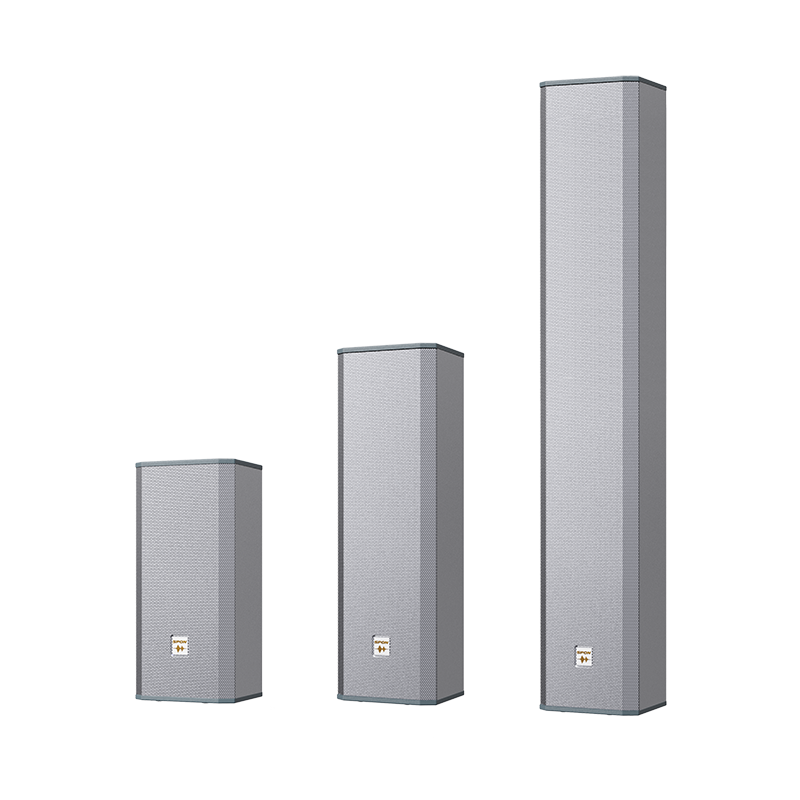
PA speakers are the main sound output devices in an outdoor PA system. They reproduce the full audio range, including low, mid, and high frequencies. In outdoor environments, commonly used types include column speakers, projector speakers, and wall-mounted speakers designed for wide coverage and clear speech.
Horn Speaker
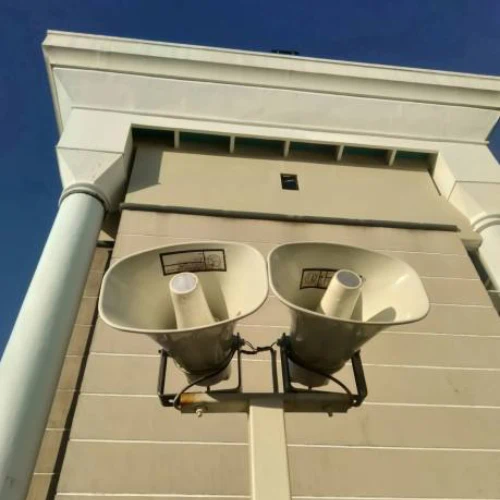
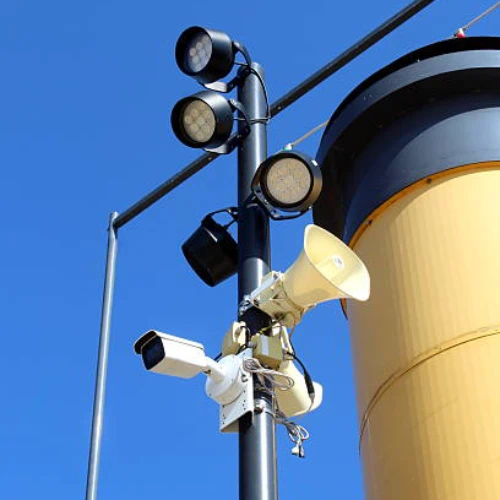
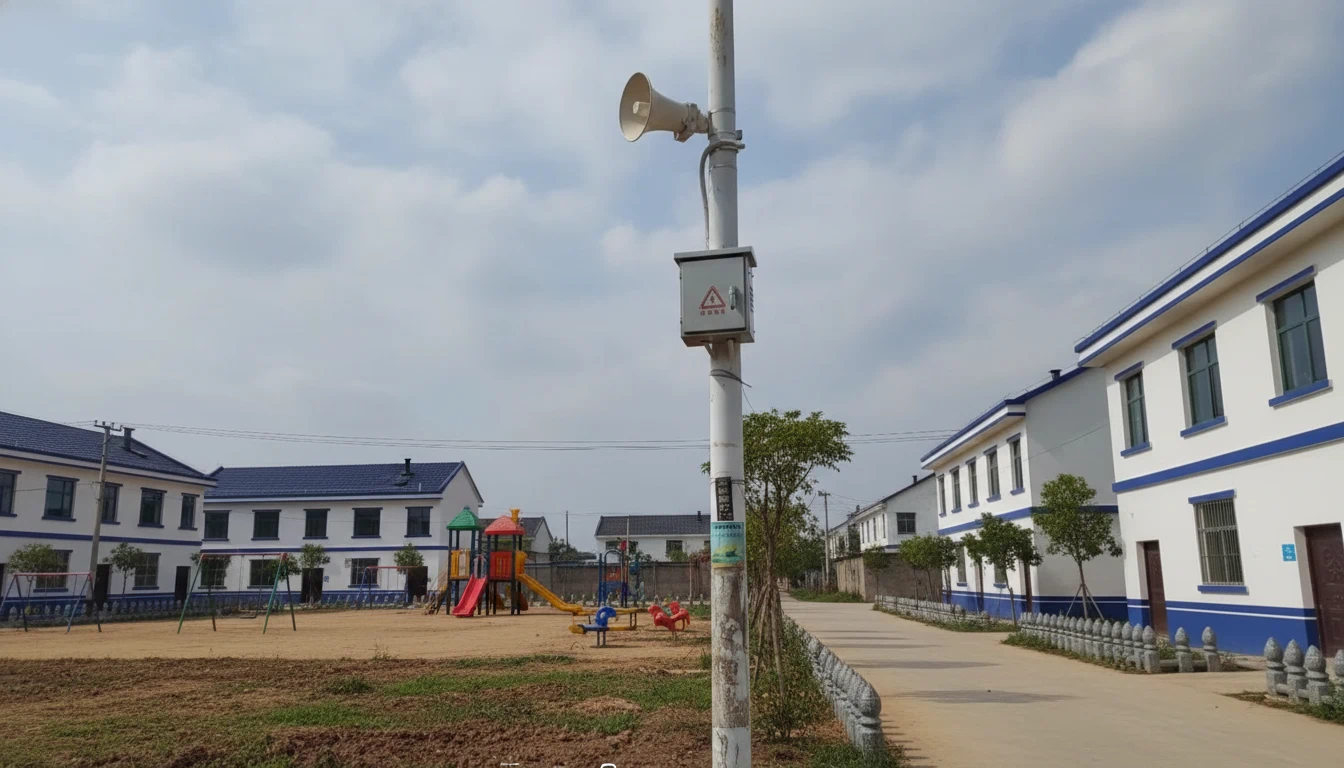
In many outdoor public address systems, a horn speaker is widely used for voice announcements. It has a horn-shaped acoustic structure that focuses sound in a specific direction, allowing the audio to travel farther with higher efficiency. This makes horn speakers ideal for outdoor paging systems and outdoor announcement systems in places such as factories, schools, transportation hubs, and large open areas where clear speech over long distances is required.
Subwoofers
Subwoofers reproduce low-frequency bass. They are mainly used in outdoor sound systems for concerts, events, or music playback where strong bass is required. In many voice-focused outdoor paging systems, subwoofers are usually not necessary.
Power Amplifier
The power amplifier drives the speakers by increasing the audio signal strength. In most fixed outdoor PA systems, centralized amplifiers are used together with passive speakers through 70V or 100V constant-voltage speaker lines, allowing long-distance audio transmission and multiple speaker connections.
Mixer / Mixing Console
A mixer combines and controls multiple audio inputs such as microphones, music players, and other audio sources. In some outdoor audio systems, especially event or live sound setups, a mixer is used to adjust levels, equalization, and audio effects before sending signals to the amplifier.
Microphones
Microphones are used for live announcements and paging. Dynamic microphones are commonly used for speech because they are durable and resistant to environmental noise. Wireless microphone systems can also be used when flexible operation is needed.
How an Outdoor PA System Works
An outdoor public address system works through a structured audio signal flow. The system captures sound, processes it, transmits it across a large area, and finally broadcasts it through outdoor speakers.
Step 1 Audio Input
The process begins with audio input devices. These may include:
- Paging microphones
- Wireless microphones
- Media players
- Computers or control software
- Emergency alert systems
Operators can make live announcements or play pre-recorded messages through the outdoor announcement system.
Step 2 Signal Processing and Control
The audio signal is then sent to the system controller or digital signal processor (DSP).At this stage, the system can:
- adjust volume levels
- improve speech clarity
- manage multiple broadcast zones
- schedule automatic announcements
In many modern systems, a central controller manages the entire outdoor paging system.
Step 3 Signal Transmission
After processing, the audio signal is transmitted to different areas of the site.There are two common transmission methods:
- Traditional Analog Transmission
Audio signals travel through dedicated speaker cables, often using 70V or 100V constant-voltage lines, which are ideal for long-distance outdoor installations.
- Network Transmission (IP System)
In an IP outdoor PA system, audio is converted into digital data and transmitted through a standard Ethernet network. This allows flexible system expansion and remote management.
Step 4 Amplification
Before reaching the speakers, the audio signal must be amplified.Power amplifiers increase the signal strength so it can drive multiple outdoor PA speakers across large outdoor areas.In some IP systems, amplification may be built directly into the network speaker.
Step 5 Sound Output
Finally, the amplified signal is delivered to the outdoor loudspeaker system, including devices such as:Horn speakers for long-distance announcementsColumn speakers for balanced sound coverageWall-mounted outdoor speakersThese outdoor PA speakers convert electrical signals into sound waves and broadcast announcements clearly across the target area.Through this process, an outdoor sound system can deliver clear voice communication and alerts over large open spaces while supporting zone control, scheduled broadcasts, and emergency notifications.
How to Design an Outdoor PA System
Designing an outdoor PA system requires more than simply increasing the volume. Outdoor environments have wind, background noise, long distances, and open spaces. A well-designed outdoor public address system must ensure clear speech, even coverage, and reliable operation in all weather conditions.
Acoustic Pressure vs. Ambient Noise
Your outdoor loudspeaker system must be louder than the surrounding environment so that announcements remain clear.A common rule in PA system design is:The broadcast sound level should be at least 10–15 dB higher than the background noise.Example:
- If the ambient noise level is 70 dB (busy street or industrial area)
- The outdoor speaker system should deliver 80–85 dB at the listener position.
This ensures that announcements from the outdoor announcement system can be clearly understood.In noisy environments such as factories or transportation hubs, Horn speakers are often used because they provide higher sound pressure levels and longer projection distance.
Speech Transmission Index (STI)
Clear voice communication is the main goal of most outdoor paging systems.The Speech Transmission Index (STI) measures how clearly speech can be understood. Higher STI values mean better intelligibility.To achieve good STI in an outdoor audio system, designers should:
- Aim speakers toward listeners
- Avoid directing sound toward reflective surfaces
- Reduce echo and reverberation
- Use directional outdoor PA speakers such as Horn speakers
Proper speaker orientation significantly improves speech clarity in large outdoor areas.
Speaker Coverage and Placement
Speaker placement directly affects sound coverage.For large outdoor areas, designers typically follow these guidelines:
- Mount speakers 3–6 meters above the ground
- Keep consistent spacing between speakers
- Avoid pointing speakers directly at each other
- Ensure coverage overlaps slightly to prevent silent zones
In many projects, Horn speakers are spaced evenly to create a consistent outdoor loudspeaker system across the entire site.Good speaker layout ensures that the outdoor PA system delivers uniform sound levels without excessive volume in certain areas.
Zoning and Grouping
A modern outdoor paging system should support zoning.Zoning allows different areas to receive different audio content.For example:
- A park zone may play background music
- A parking area may receive security announcements
- A stadium entrance may broadcast event information
With an IP outdoor PA system, operators can control zones remotely and broadcast announcements to specific locations without disturbing the entire facility.This improves operational efficiency and enhances the flexibility of the outdoor announcement system.
Weather Resistance and Equipment Selection
Outdoor environments can be challenging. Equipment used in an outdoor PA system must be designed to withstand weather conditions.Important factors include:
- IP-rated outdoor PA speakers (IP65 or higher)
- Corrosion-resistant speaker enclosures
- Waterproof connectors and cables
- Lightning protection and grounding
A weatherproof PA system ensures long-term reliability and reduces maintenance costs.
Applications: Success Case
1. Enhancing Tourism in VietnamIn the misty hills and vibrant tourist attractions of Vietnam, we implemented an outdoor audio system that blends perfectly with the landscape. It provides relaxing background music for visitors while remaining ready to broadcast safety announcements instantly during sudden weather changes.
2. Campus Safety in SloveniaEducational institutions in Slovenia required a robust outdoor announcement system. We installed an IP outdoor PA system across school grounds, allowing administrators to trigger bell schedules and emergency lockdowns from a single tablet interface.
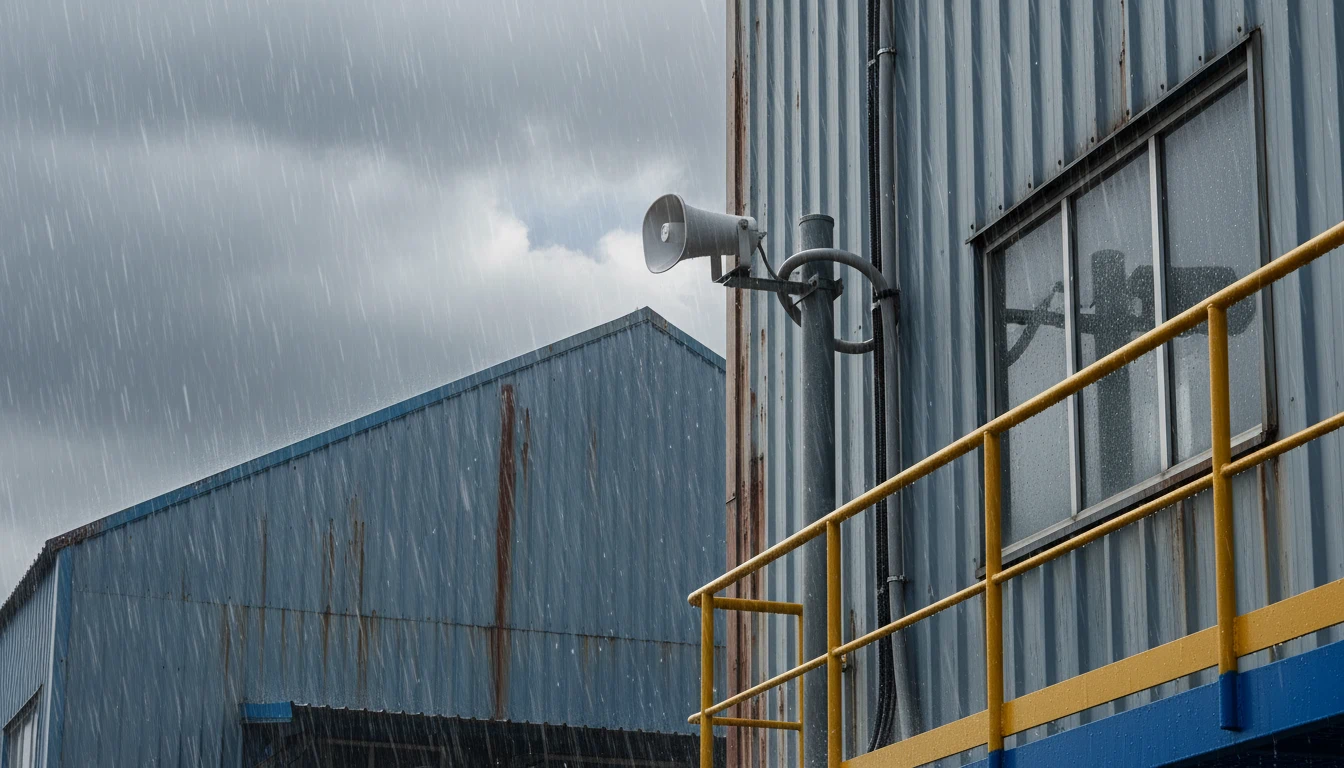
3. Community Paging in the PhilippinesIn the Philippines, where community coordination is vital during typhoon seasons, our outdoor paging system utilizes high-decibel Horn speakers. These ensure that even in heavy rain, evacuation orders are heard clearly across coastal villages.
Outdoor PA System Installation Tips
Installing an Outdoor PA System requires proper planning and correct installation methods. Outdoor environments expose equipment to rain, wind, dust, and temperature changes. A well-installed outdoor public address system ensures clear sound coverage and long-term reliability.Here are several key installation tips.
1. Install Speakers at the Proper Height
Speaker height has a direct impact on sound coverage. In most projects, outdoor PA speakers should be mounted about 3–6 meters above the ground so that sound can travel farther and avoid obstacles such as people, vehicles, or structures. Higher placement also helps distribute sound more evenly across large open areas. For long-distance announcements, Horn speakers are often installed on poles or building walls because their directional design allows sound to project clearly over wider spaces.
2. Ensure Even Speaker Placement
Proper speaker placement is essential for a balanced outdoor loudspeaker system. Speakers should face the main listening area and be installed with consistent spacing to ensure uniform sound coverage. Avoid aiming speakers directly toward each other, as this may cause sound overlap or echo. Slightly overlapping coverage areas helps eliminate dead zones and ensures that announcements from the outdoor announcement system can be heard clearly throughout the site.
3. Use Weatherproof Equipment
Outdoor systems must be able to operate in changing environmental conditions. A reliable weatherproof PA system should use IP-rated outdoor PA speakers, usually with an IP65 or higher protection level. Equipment should also include waterproof connectors, sealed junction boxes, and corrosion-resistant mounting brackets. These protective features help the outdoor sound system continue working properly even in rain, dust, or strong sunlight.
4. Protect Cables and Connections
Cables are often the most vulnerable part of an outdoor audio system, so proper protection is necessary. Outdoor-rated cables should be used and installed inside protective conduits or pipes to prevent damage from moisture, sunlight, or physical impact. All outdoor connections should be sealed to prevent water from entering the wiring. In many installations, 70V or 100V speaker lines are used because they allow long-distance signal transmission and support multiple speakers in a large outdoor paging system.
5. Provide Grounding and Surge Protection
Electrical protection is important for outdoor installations. Proper grounding helps stabilize the system and reduces the risk of electrical damage. Surge protection devices and lightning protection should also be included, especially for equipment installed on poles or rooftops. These measures help protect the outdoor PA system and ensure stable operation during storms or power fluctuations.
6. Test the System After Installation
After installation is complete, the entire outdoor speaker system should be carefully tested. This includes checking speaker wiring, verifying sound coverage, and adjusting volume levels in different areas. Testing also ensures that announcements are clear and evenly distributed across the site. A full system check helps confirm that the outdoor PA system operates reliably in real working conditions.
Conclusion
This blog introduced the basic concept of an Outdoor PA System, including its main components, working principles, and key considerations for design and installation. We hope this blog helps you better understand outdoor public address systems.If you have a project that needs support, feel free to contact SPON, a trusted public address system manufacturer from China with successful projects around the world.



 2026-04-23
 Author: cora
 Page view: 2037





 AR
AR
 EN
EN