


 2024-09-14
 Author: SPON COMM
 Page view: 1990
Solution Overview
1.1、Industry Background

As a modern transportation hub, high-speed railway stations play an irreplaceable role in enhancing the urban image and promoting local economic development. To meet the needs of constructing modern stations and improving the station environment, an effective broadcasting system can be utilized for station management, promoting spiritual civilization, and handling emergency situations. Additionally, considering the large passenger flow at stations, it can be used for urban image promotion, tourism information, and accommodation recommendations.
The PA system must have three basic functions: emergency broadcasting, operational broadcasting, and background broadcasting. During normal operations, it functions as an operational and background PA system, receiving control signals from the passenger service platform to automatically broadcast real-time train dynamics and railway service information to passengers. In the event of a fire alarm signal, it switches to fire emergency broadcasting, organizing passenger operations, directing passenger flow, ensuring travel safety, and effectively managing and serving passengers.
1.2、Demand Analysis
1)High-speed rail PA system primarily broadcasts railway dynamics in public areas of high-speed rail stations.
2)The PA system provides travel information and serves as a fire PA system, while interfacing with the passenger service system to provide real-time train dynamic information.
3)The system automatically plays various train dynamic and railway service information. It broadcasts in multiple languages (such as Chinese, English, etc.) to meet the needs of passengers from different countries and regions.
4)The system supports both automatic and manual broadcasting, as well as paging, announcements, background music, and emergency broadcasting.
1.3、Construction Goal
A Complete & Mature System
As technology evolves, it's increasingly integrated into various aspects of smart buildings, streamlining operations, enhancing efficiency, and ensuring technological support for building intelligence.
Digital technology development enables essential prerequisites for smart building public broadcast systems. Designing these systems requires using mature, leading-edge product technologies and high-quality products to support smart building development.
System design should incorporate advanced concepts, technologies, and methods while also considering user-friendly aspects such as system architecture, product design, and installation wiring.
A Reliable & Feature-rich System
In addition to technological advancement, it's crucial to focus on functional design, system architecture, performance metrics, manufacturing processes, and after-sales maintenance to ensure smooth and sustainable operation, maximizing user benefits.
Functions depend on mature technology platforms and rigorous manufacturing processes.
During operation, all failures should be promptly detected and resolved, with core components featuring automatic redundancy. System administrators should easily access fault and operation logs.
Distributed Installation, Centrally Managed System
Building intelligence, whether in large or medium-sized structures, requires distributed intelligence and resource sharing.
The main control equipment of PA systems can be flexibly installed throughout buildings and connected via standard Ethernet. This setup enables system administrators to centrally monitor and manage resources using management software. This approach boosts management efficiency and reduces equipment wiring costs compared to traditional methods. Thus, a digital PA system capable of Ethernet-based expansion and centralized monitoring is essential.
System Introduction
2.1、System Overview
The SPON IP Audio Matrix PA System is built on standard TCP/IP network technology, offering high integration and flexible configuration to meet various broadcasting needs. Specifically designed for emergency, business, and background broadcasting, this product ensures reliable performance in diverse broadcasting scenarios.
The same PA system enables emergency, business, and background broadcasting. Equipped with emergency call microphones at the fire control center, it facilitates emergency evacuation broadcasts to designated areas during emergencies. Additionally, IP Paging Microphones at the broadcasting center serve for both routine business broadcasts and emergency evacuation broadcasts.
Broadcasting equipment can be installed in designated locations, prioritizing space-saving and environmental harmony. Amplifiers are configured according to design specifications and include redundancy.
The system operates independently, combining audio playback, zone control, fault monitoring, log recording, automatic volume control, and primary/backup amplifier switching functions for easy management.
2.2、 Topology Diagram

Note:
The IP Matrix PA System leverages modern computer software engineering, TCP/IP networks, and automatic control technologies for multi-network integration. It establishes an innovative, multi-level, and open area guided by new management theories to enhance quality and efficiency, surpassing traditional models.
2.3、 Selection & Design
The high-speed railway station PA system covers all station areas, including a main equipment room, fire duty room, and multiple broadcasting substations. Each room has broadcasting equipment, and on-site zones have speakers, noise detectors, and volume controllers. Additionally, fire control interfaces and manual call stations are in the broadcasting room and fire control center. Rooms and equipment are interconnected via a network, forming a complete system.
PA Central Control Room Design
Set up an IP PA central control in the control center, utilizing computer network transmission for unrestricted digital bidirectional network transmission regardless of space and distance.
Within-station PA zone Design
Utilize IP Audio matrix, amplifier units, and speakers to partition station areas based on their layout and functionality, allowing for the playback of different audio sources in different zones.
PA Sub-control Center Design
Deploying IP network paging microphones enables paging, announcements, safety notices, temporary broadcast notifications, etc., in designated broadcast zones.
System Wiring Instructions
Zone Wiring: Different zones are connected to the broadcasting center via the network. Within each zone, a bus wiring method is used with high-quality dedicated RVV two-core power cable to minimize power attenuation.
Cabling Installation Requirements
Lay pipelines inside the building alongside construction if possible. Use PVC pipes for areas where laying inside the building is inconvenient, with a minimum gap of 20 centimeters between each pipeline.
2.4、System Advantages
2.4.1、System Technical Advantages
Distributed Deployment, IP Interconnection
The system is based on standard TCP/IP network technology, supporting multiple IP Audio Matrices interconnected. It allows simultaneous transmission and reception of multiple network audio signals and flexible centralized or decentralized management via configuration management software.
High Integration and Stability
The system combines audio storage, network audio access, matrix switching, automatic volume control, fault monitoring, redundant backup, monitoring, dual network ports, and CPU OFF functions. It occupies minimal rack space, easing installation and wiring, reducing costs, facilitating maintenance, and ensuring network stability.
Diverse PA Modes
The system automatically broadcasts train arrival, departure, and skip station announcements obtained from the ATS system.
It supports various tasks such as local, network, and scheduled tasks, enabling multi-zone and multi-source playback.
In emergencies, pressing the emergency button activates emergency broadcast mode within 3 seconds, allowing priority announcements through handheld microphones.
Multiple Audio Sources Input
The system supports balanced and unbalanced audio inputs, which can be switched independently to play different sources in different zones. It also allows receiving network audio sources via Ethernet. This enables concurrent real-time voice broadcasting in multiple areas, like playing different boarding announcements simultaneously at various gates.
Support for open API interfaces enables integration with third-party platforms
The system provides an SDK for further development, allowing seamless integration with the user's management platform. This boosts operational efficiency and prevents data isolation.
Logging
The system logs device failure events and operation activities, allowing users to search for information based on time, device, operator, or log type.
2.4.2、System Products Advantages
Rigorous Testing and Certification Ensure Stability and Reliability
The XC-9501 type emergency PA equipment complies with the requirements of the National Fire Electronic Products Supervision and Inspection Center and meets the requirements of the implementation rules CCCF-CPRZ-15:2019 for fire products certification.
Input/Output Trigger Interfaces
The device has dry contact trigger input/output interfaces, enabling external device control of broadcast playback. It can connect to fire alarm systems, with output triggers for controlling external devices. Additionally, it offers various emergency broadcast plans(e.g., peak passenger flow during Spring Festival, fire emergency plan, earthquake emergency plan, etc.).
Diverse Digital Power Amplifiers
Utilizing Class D digital amplifiers, offering advantages such as low power consumption, high signal-to-noise ratio, and high conversion efficiency. Available in three power options: 125W, 250W, and 500W amplifier units, featuring modular design for flexible configuration based on specific requirements.
Intelligent Volume Adjustment Module
The device can collect ambient broadcast sound and noise using sensors, then separate them through AI processing on the platform, calculate the level of ambient noise, and automatically adjust the volume levels to ensure clear broadcasting. Technical challenges include detecting the broadcast process and automatically adjusting the volume.
Automatic Reverb Processing
During installation, the room's reverb time is measured to adjust the parameters of the audio equalization module. During playback, the system intelligently analyzes the current room reverb time changes and adaptively adjusts the equalization module parameters to ensure playback clarity. (By generating filters based on the reverb time of each frequency band, the audio to be played is filtered before playback, improving the clarity of the indoor PA system and enhancing the audio playback effect.) This technology has been patented.
key Products Introduction

3.1、IP Matrix Controller
Main Device Parameters
4.3-inch LCD screen displays operational, fault, and device information.
4-channel ANC automatic volume adjustment.
Handheld broadcasting microphone with recording function.
4 audio inputs, 4 audio outputs.
8 control inputs and outputs, 4 audio controller outputs.
Power backup, amplifier backup, network backup.
Analog line full-area broadcasting (CPU OFF) function.
Log saving and export.
4 independent amplifier channels + 1 backup amplifier channel.
Supports balanced audio input mode.
Automatically limits output voltage.
Supports primary/backup power supply.
Features power protection, over-temperature protection, overload and short-circuit protection, fault detection, and self-check functions.

3.2、IP Paging Microphone
1.Sturdy professional console design with aluminum alloy panel and full metal body.
2.Features a 7-inch digital color display and capacitive touch screen with 800*480 resolution.
3.Users can customize network parameters, key expansion, and function keys using the matrix configuration tool.
4.Capable of broadcasting external line input or dynamic microphone audio signals over the network to each zone.
5.Allows seamless switching between audio sources like line inputs, dynamic microphones, and audio lists.
6.Supports up to 100 customizable function keys, configured via the matrix configuration tool.
7.Supports task execution control. When the function keys of the IP paging microphone are defined as task keys in the matrix configuration tool, pressing the corresponding key can control the corresponding task.
3.3、Zone Expander
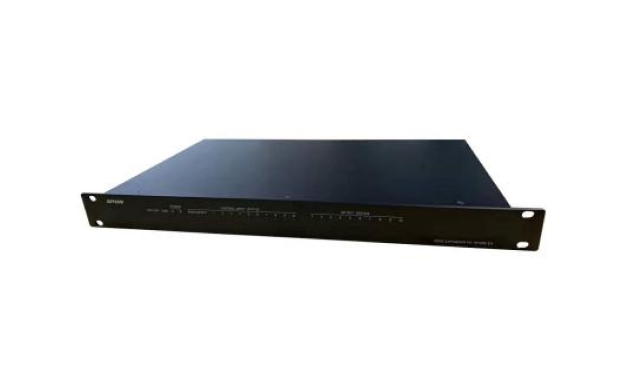
1.Compact 1U rack-mount design, durable and space-saving.
2.Expandable to 10 speaker zones per unit, with a maximum connection of 16 units.
3.Supports 10 control inputs + 1 emergency control input.
4.Front panel with status indicator lights for easy monitoring.
5.Supports monitoring functions such as speaker line open circuit, short circuit, and amplifier faults based on the matrix controller. Features built-in protection, including fuse fault detection with indicator lights.
Cases


 AR
AR
 EN
EN


