


 2025-01-22
 Author: cora
 Page view: 2854
A preamplifier, also called a "preamp," makes weak signals from microphones, musical instruments, and other audio sources louder so that they can be used by other audio devices.
A virtual preamplifier is a software plug-in that does the same thing as a traditional hardware preamplifier. It can be used by the user to amplify and process signals in a digital audio workstation (DAW).
I'll introduce it to you in this blog:
► What is a preamp?
► How Does a Mic Amplifier Work?
► Types of Preamplifiers
► Virtual Preamp Collection: What Does It Include?
► Different Types of Virtual Preamps
► Benefits of Using Virtual Preamp Collection
► How to Choose the Right Virtual Preamp for You
A preamp is a device that makes weak audio signals stronger so they can work with other equipment. Many audio sources, like microphones or guitars, produce signals that are too weak to use directly with other gear. This can result in poor sound or unclear processing.
Preamplifiers boost these signals to a level where the rest of the equipment can use them. In the audio signal chain, the preamp sits between the source and the processing gear. It strengthens the signal using a feature called "gain." This ensures that the next equipment can handle the signal properly.
Gain is the key part of an amplifier. It controls how much the signal is amplified. For example, a microphone turns sound into an electrical signal, but this signal is too weak for recording equipment or a mixing console to process directly. A preamp boosts the signal so the recording or playback is clear and good quality. The stronger signal is then sent to the next device, like a mixing console, audio interface, or digital converter.
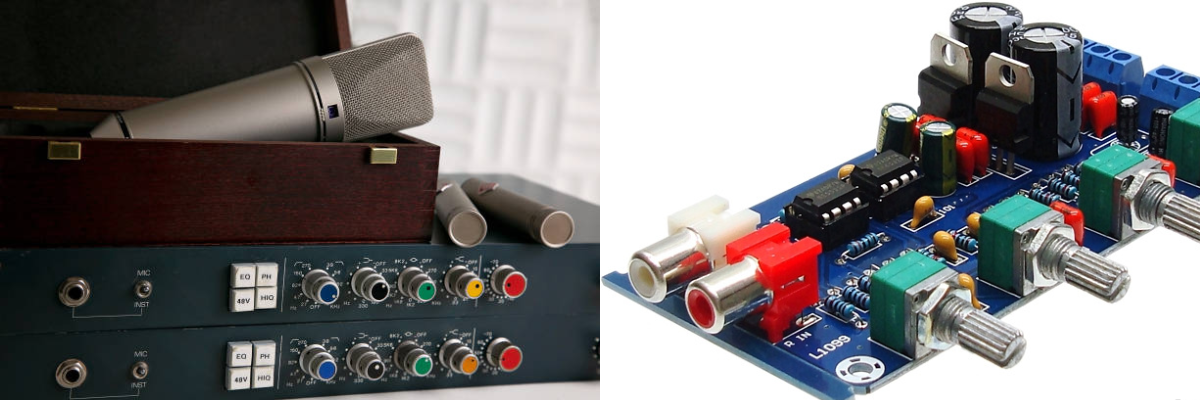
The microphone amplifier (mic amplifier) makes the weak audio signal from the microphone loud enough for other audio equipment (like mixing consoles and recording interfaces) to use. This is usually done after the following steps:
1.The microphone converts the sound picked up into an electrical signal and sends it to the amplifier through the input port.
2. Signal amplification processThe core of the microphone amplifier is the gain control circuit. Gain is usually realized through an operational amplifier (Op-amp) or transistor. The specific process includes:
A. Op-amp operation: the op-amp will receive the input signal and control the gain through a feedback loop. The amplifier makes the signal stronger by increasing the current, which makes the signal's strength increase.
B. Gain control: The gain value determines how much the signal is amplified. You can change the amplitude of the input signal by adjusting the gain resistor. If the gain is high, the signal will be amplified more, but there may be more noise or distortion. If the gain is low, the signal will be amplified less.
3. Current and Voltage AmplificationAmplifiers do two things: they increase the voltage of a signal through a gain circuit, and they increase the current strength of the signal. This is done by using electronic components like operational amplifiers or transistors. This helps to make sure that the signal is sent without losing any of its details.
4. Output Signal The signal that is made stronger by the gain circuitry is sent out through the output port to other audio devices, like mixing consoles, recording interfaces, or digital converters. The amplified signal is strong enough for more processing.
5.DC Bias and Noise ManagementSome microphone amplifiers also perform DC biasing to make sure that the input signal is stable and doesn't have any distortion. Additionally, high-quality microphone amplifiers use filters to reduce noise and prevent signal distortion or interference from current noise.
1.Current-Sensitive Preamplifier
This type amplifies signals based on current variations. It is commonly used in sensors or photodetectors where detecting small current changes is critical. The advantage of current-sensitive preamplifiers is their high accuracy for current-based signals. However, they are less effective for amplifying voltage signals.
2.Parasitic-Capacitance Preamplifier
On the other hand, the parasitic-capacitance preamplifier relies on parasitic capacitance to amplify signals. This type is ideal for high-frequency circuits, such as in RF applications. Its main strength lies in its simple and compact design. However, it is sensitive to capacitance changes, which can sometimes cause signal distortion.
3.Charge-Sensitive Preamplifier
Lastly, the charge-sensitive preamplifier amplifies signals based on the charge they carry. This makes it perfect for applications like particle detectors or imaging systems. It offers very high sensitivity to charge variations, ensuring accurate signal amplification. The downside is its complex design, which may require additional filtering to minimize noise.

reference:https://www.ortec-online.com/-/media/ametekortec/other/preamplifier-introduction.pdf?la=en
In summary, each preamplifier type serves specific needs, whether it's for current, capacitance, or charge-based signals. The choice depends on the required sensitivity, accuracy, and the nature of the signals being processed.
A virtual preamp is a software version of a traditional hardware preamplifier. It mimics the functionality of a physical preamplifier but operates within a digital audio workstation (DAW) or as a plugin in recording software. Virtual preamps are used to amplify audio signals in digital audio production, offering the same effects as hardware preamps, but without the need for physical equipment.
Virtual Preamp vs. Hardware Preamp
| Feature | Virtual Preamp | Hardware Preamp |
| Type | Software-based | Physical device |
| Cost | More affordable | More expensive |
| Convenience | Easy to use, no setup needed | Requires physical setup |
| Portability | Works on any system | Not portable, needs space |
| Sound Quality | Simulates analog sound | Warm, natural analog sound |
| Flexibility | Adjustable with presets | Limited controls |
| Durability | Dependent on software | Long-lasting, built to last |
| Usage | Ideal for digital production | Common in professional studios |
While virtual preamps replicate the sound of hardware preamps, they might lack some of the warmth and depth that comes from analog circuitry.
1. Plugins
Virtual preamp plugins are digital versions of hardware preamps that can be used within DAWs. They are commonly available in formats like VST, AU, or AAX. These plugins often allow users to choose from a variety of preamp models, each offering different tonal characteristics (e.g., tube, solid-state, vintage, etc.).
2. Simulators
These are software tools that simulate the behavior of specific hardware preamplifiers. For example, you might find simulators based on iconic models like the Universal Audio 610 or API 512c. These simulators are designed to replicate the exact tonal qualities and behavior of their hardware counterparts, often adding warmth, distortion, or coloration.
3. Amp Modeling Software
Some virtual preamps come as part of amp modeling software, commonly used in music production for electric guitars and basses. These programs simulate the entire signal chain, including virtual preamps, amplifiers, and effects.
In short,The virtual preamp collection includes a variety of tools, from plugins to simulators and amp modeling software. These digital alternatives to hardware preamps offer flexibility, cost-effectiveness, and convenience for audio producers. While they may not perfectly replicate the analog warmth of hardware preamps, they come close and provide a wide range of tonal options suitable for many audio production environments.
These benefits make virtual preamps a practical choice for modern audio production:
1. Cost-Effective: They are more affordable than hardware preamps.
2. Space-Saving: No need for physical equipment, freeing up space.
3. Flexibility: You can use multiple virtual preamps for different needs.
4. Easy Integration: They work smoothly with existing audio software and hardware.
When choosing a virtual preamp, consider these factors:
1. Budget
Choose a preamp that fits your budget. There are both affordable and premium options.
2.Sound Quality
Decide what sound you want. Some preamps offer warm, analog sound, while others are clean and digital.
3.Compatibility
Ensure the preamp works with your DAW and audio software (VST, AU, AAX).
4.Features
Look for features that suit your needs, like presets or extra effects.
5.Use Case
Think about what you'll use it for. If you need versatility, choose a preamp with multiple models. For specific instruments, pick a specialized one.
By considering these factors, you can choose the right virtual preamp for your needs.
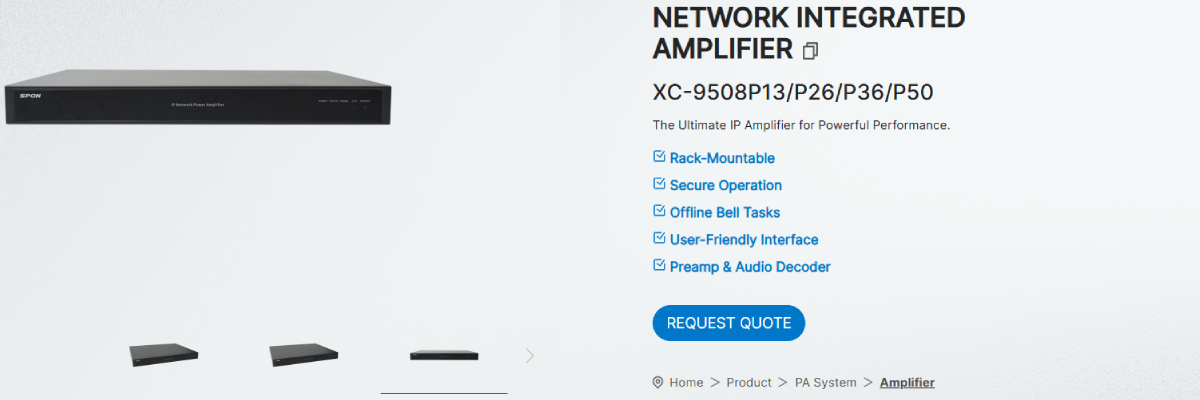
This article explains what preamplifiers do, how microphone amplifiers work, and the difference between hardware and virtual preamplifiers. SPON, a top audio brand, offers preamps for many uses, from public systems to high-quality conference setups. SPON’s preamps (including IP/PA systems) provide great sound quality, stability, and excellent amplification and clarity for audio signals.
♦ What is the difference between preamp and passive?
♦ A preamp amplifies weak audio signals, while a passive device does not amplify signals and relies on the input signal's strength.
♦ What is an integrated amplifier?
♦ An integrated amplifier combines both a preamplifier and a power amplifier in one unit, handling both signal boosting and amplification for speakers.


 AR
AR
 EN
EN


