


 2025-06-13
 Author: cora
 Page view: 6329
VoIP phone and SIP phone are two terms that come up a lot in modern telecom talks.Although they are occasionally used interchangeably, they pertain to distinct aspects of communication technology. SIP is one of the most popular protocols for setting up VoIP communication. It outlines how VoIP calls are initiated, managed, and terminated. VoIP is a broad word that refers to a variety of technologies and protocols for voice communication over the internet.
Quick Concept Overview
♦ IP Telephone: Any phone device or service that sends voice data over IP networks like LAN (Local Area Network) or the internet.
♦ VoIP Telephone: An IP phone that utilizes "Voice over Internet Protocol" technology. It specifies how voice is transformed to data and transmitted across an IP network.
♦ SIP Telephone: A VoIP/IP phone that uses the Session Initiation Protocol (SIP) to initiate, control, and terminate multimedia sessions such as voice calls, video calls, or instant messaging. SIP is the most widely used signaling protocol in VoIP systems.

What is an IP Telephone?
An IP telephone uses the Internet Protocol to transmit voice. Unlike traditional analog phones that rely on the public switched telephone network (PSTN), IP phones work over local networks or the internet.IP phones offer high audio quality, lower costs, easy scalability, and system compatibility.
Instead of using analog phone jacks, IP phones use Ethernet ports to connect to a network. This allows easy relocation, remote registration, and integration with business tools. Many IP phones support useful features like company directories, do-not-disturb, call forwarding, and speed dial—helping businesses improve communication efficiency.
IP telephony comes in both hardware form (IP desk phones) and software form (softphone apps). It uses VoIP technology to convert voice into data packets and send them over the network. A single IP phone can handle multiple extension numbers. In global companies, users can even select a remote line to make calls—saving on international calling costs.
What is a VoIP Telephone?
VoIP stands for “Voice over Internet Protocol.” A VoIP phone is a device or system that transmits voice calls over the internet instead of using traditional phone lines.
It works by converting voice into digital data, splitting it into packets, and sending it over the network. The receiving device reassembles the packets into sound. VoIP supports several protocols such as H.323 or SIP, with SIP being the most commonly used.
VoIP phones offer many benefits: lower call costs, support for multimedia communication, and flexibility for remote work. Many businesses use VoIP-based call centers to manage customer service and sales.
VoIP refers to the technology itself, and VoIP phones are the devices that apply it. They are a type of IP phone, with a focus on how voice is transmitted.
What is a SIP Telephone?
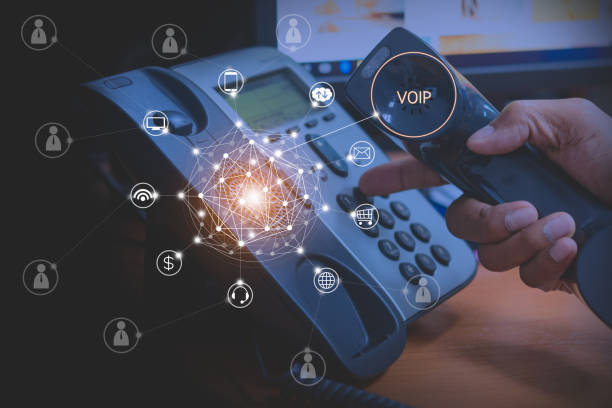
A SIP phone is a type of IP phone that specifically uses the SIP protocol for making calls. SIP stands for Session Initiation Protocol. It’s used not just for voice, but also video calls and instant messaging.
SIP phones can be physical devices or software-based applications. After registering with a SIP server or PBX system, they can send and receive calls. While SIP handles the signaling process, the actual voice is usually transmitted using Real-Time Transport Protocol.
SIP phones support advanced features like call hold, call transfer, conference calling, and presence status. They also integrate well with unified communication platforms like Microsoft Teams or Zoom.
SIP phones are VoIP phones that use SIP as the signaling protocol. They’re also a type of IP phone. Because of their rich features and strong compatibility, SIP phones are often used in business environments. Understanding SIP phones is key to building modern communication systems.
Differences Between VoIP and SIP
VoIP is a technology that turns your voice into digital signals and sends them over the internet. VoIP can work with different rules called protocols, like SIP, H.323, and MGCP. With the help of VoIP service providers, users can also call or get calls from regular phone networks (called PSTN). The biggest advantage of VoIP is that it removes the limits of traditional phone systems. It makes calling more flexible, easier to grow, and cheaper for users.
SIP is a set of rules (a protocol) that helps start, control, and end things like voice calls, video calls, or messages. It doesn’t carry the voice itself. Instead, it manages how the call is set up and handled. SIP controls every step of a call. It sends the request to start a call (INVITE), handles ringing, answers the call (OK), and ends it (BYE). Since SIP is an open standard, it allows phones and apps from different companies to work together. This makes communication systems more reliable and easier to use across different platforms.
| VS. | VoIP | SIP |
| Definition | A technology for transmitting voice over networks |
A communication protocol used to control sessions |
| Function | Handles encoding, transmission, and decoding of voice data |
Handles the initiation, management, and termination of sessions |
| Layer |
Media transport layer |
Signaling control layer |
| Supported Content |
Primarily voice; may also support video and messaging (depending on the protocol) |
Supports voice, video, messaging, and other multimedia sessions |
| Protocol Dependency |
Can be based on SIP, H.323, WebRTC |
A protocol used to implement VoIP |
| Independence |
Can operate without SIP |
Commonly used to support VoIP, and also applicable to video and other services |
| Application |
Widely used in internet voice services |
Commonly used in enterprise IP phone systems and UC platforms |
Key Features of SIP Phones
SIP phones are more than just phones. They combine voice calling, smart office features, and easy control. Here are their main features and how they help in real work situations:
1. Call Forwarding
Whether you're at your desk or on the go, SIP phones can forward calls so you don’t miss anything important. You can send calls to another phone number, voicemail, or ring multiple devices at once. Modes like "busy forward," "no answer forward," or "always forward" give flexible options.
2. On-Hold Music
Waiting is easier with music. When a call is on hold, the system plays background music or a custom message. This improves the customer’s experience and makes your business sound more professional.
3. Wi-Fi Calling
SIP phones can connect to Wi-Fi, making them great for wireless setups or places without Ethernet ports. You can make and receive calls at home, in a coffee shop, or shared office—just like you would at your desk.
4. HD Audio
SIP phones support HD voice, making calls sound clear and natural. Using wideband codecs like G.722 or Opus, they send more voice detail than traditional phones. This is important in call centers and sales teams where clear talk matters.
5. Call Recording
SIP phone systems can record calls, either automatically or manually. The audio files can be saved locally or in the cloud. They are useful for training, checking conversations, or solving customer issues.
6. Shared Call Appearance
One phone number can ring on many phones. Once someone picks up, the others stop ringing. This avoids missed calls and confusion. It’s perfect for shared desks or team call handling.
7. Custom Caller ID
You can show your company name, department, or title instead of just a number. This helps the person answering know who’s calling and builds trust.
8. App Integration
SIP phone users can also use mobile or desktop apps. These apps allow calls, call history, and contacts to sync with desk phones. It’s easy to manage and great for remote teams.
Most SIP phones use PoE (Power over Ethernet), which means they get both power and data from one cable. This makes setup easier, especially in meeting rooms, receptions, or wall-mounted spots.
SIP Phone vs. Traditional Phone
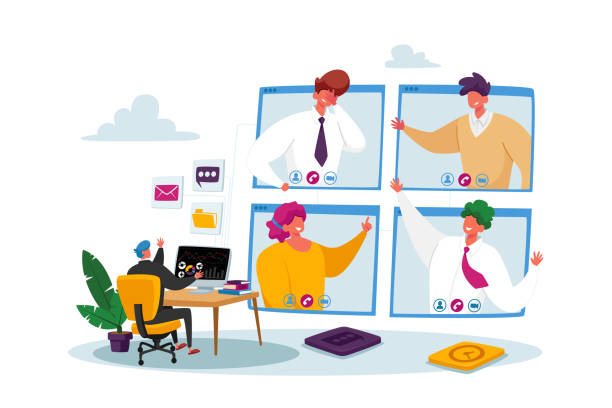
SIP phones offer more features, lower costs, and better system integration. They are ideal for offices, remote work, and team collaboration. Traditional phones are still useful in places with good signal but limited internet. Here's a look at the differences:
1. Network Connection
SIP phones work through Wi-Fi or wired internet. They don’t need a SIM card or cell network. You can use them at home or the office with no monthly fees. Traditional phones need SIM cards and mobile signal to work.
2. Communication & Cost
SIP phones send voice as internet data. If both users are on Wi-Fi, the call is free. Regular phones use mobile networks and charge per minute or per text.
3. Data Usage
SIP calls use about 4KB of data per second. A text message uses only about 0.2KB. This makes SIP very cost-efficient. Traditional phones don’t use data but charge for every call or message.
4. Usage Limitations
SIP phones need internet to work. Without it, they can’t make calls. Traditional phones only need a mobile signal, so they are better for remote areas without Wi-Fi.
Core Application Scenarios for SIP Phones
SIP phones are flexible and work well in many settings:
1.Hospitals
In medical settings, SIP phones help doctors and nurses talk clearly and fast. They can also connect with speakers and CCTV for alerts or announcements.
2.Offices
SIP phones are common in businesses. They support call hold, transfer, and group meetings. They also integrate with tools like Microsoft Teams, Zoom, and more.
3.Call Centers
SIP phones help call centers work better. They support call queues, agent monitoring, and connect to CRM systems. This boosts service quality and speed.
4.Multi-Branch Businesses
Companies with offices in different places can use SIP phones over private lines or VPN. This allows free internal calls and central control over SIP lines.
SIP phones can bring together voice, video, chat, status updates, and file sharing—all on one platform.

SIP Trunking: The Bridge to PSTN
To call or get calls from normal phone numbers using SIP phones, you need SIP Trunking. This links IP systems with the traditional Public Switched Telephone Network (PSTN).
SIP Trunking is a virtual phone line over the internet. It connects your IP PBX or UC system with public phone networks. You don’t need real phone lines—just internet access. Providers help move VoIP traffic into the regular phone system for global calling.
SIP Trunking not only allows SIP phones to make calls to and from the PSTN, but also saves a lot of line rental costs and improves communication flexibility. It is a core component of modern enterprise voice systems.
Summary
SIP, VoIP and IP telephony are three closely related but independent concepts in modern network communications. IP telephony is the broadest term, referring to all devices or services that transmit voice over the Internet Protocol; VoIP is a core technology for implementing IP telephony, focusing on how to package voice and transmit it over the network; and SIP is the most commonly used signaling protocol in VoIP, responsible for establishing, managing and terminating multimedia sessions such as voice and video. In short, VoIP provides a communication method, SIP regulates the communication process, and IP telephony is the embodiment of the application layer. Together, they build an efficient and flexible modern voice communication system.
FAQs
1. Are SIP and VoIP the same in the enabled media?
SIP trunking can support communications of various media, including voice, video and data. VoIP refers only to voice communications sent over the Internet.
2. What is the difference between IP and SIP?
IP is the foundational network protocol for data transmission, while SIP is an application-layer protocol used to establish and manage communication sessions over IP networks.
3. Is SIP calling same as Wi-Fi calling?
No, SIP calling uses the SIP protocol for session control and can work over any IP network, while Wi-Fi calling is a carrier feature that routes regular mobile calls over Wi-Fi without requiring SIP.


 AR
AR
 EN
EN


