


 2025-08-08
 Author: cora
 Page view: 13821
Speaker wattage refers to the amount of power the speaker components can handle.What is your actual power requirement? Does a louder sound always come with a higher wattage? What impact does wattage have on power usage and sound quality?
This blog discusses the true meaning of speaker wattage, its relationship to power efficiency and volume, and how to select the best wattage for your need. Please continue reading if you're interested.
What Does Speaker Watts?
Watt (W) measures electrical power, which is the ability to convert electrical energy into sound energy. In simple terms, it indicates how much electrical energy a speaker can handle or output, but it is not directly equivalent to volume level. Speaker power is divided into two types: RMS power and peak power.
RMS power represents the speaker's true working capacity, which is continuous power. It refers to the stable power the speaker can handle continuously without overheating or distortion. A speaker rated at 100W RMS can operate comfortably at that power level for extended periods. This figure is crucial for everyday listening, as it determines how much clean, distortion-free power the speaker can sustain.
Peak power is entirely different—it indicates the absolute maximum power a speaker can withstand for a short period, typically during intense musical peaks or explosive sound effects. While a 100W RMS speaker can handle 200W of peak power, this is not sustainable. It's more like a car's top speed—you might briefly reach it on a straight road, but maintaining it could damage the engine.
The speaker's rated power must match the amplifier's output power. It is generally recommended that the amplifier's power be 1.5 to 2 times the speaker's rated power (to avoid distortion), but the actual output volume is controlled by the user.
Power Consumption vs. Output: Know the Difference
Many people confuse the rated power of a speaker with its sound quality, but these are actually two completely different concepts. Higher power does not necessarily mean better sound quality. Let’s clearly distinguish between power consumption and audio output.
♦ Power consumption (electrical input): This refers to the electrical energy consumed from the power source. Measured in watts (W), it indicates the amount of electricity the system consumes. For example, a speaker system may consume 200W of power from a wall outlet.
♦ Audio output (sound energy): This represents the actual sound energy produced and heard. Typically, only 1-5% of power consumption is converted into audible sound. The remainder is lost as heat or mechanical energy.
Speaker sensitivity is a key factor affecting performance. Sensitivity is measured in dB/W/m (decibels per watt per meter). It determines the efficiency of power conversion into volume. High sensitivity (90dB+) allows for greater volume with less power. Low sensitivity (85dB or below) requires more power to achieve the same volume.
How Many Watts Do You Need for Your Application?
When picking a speaker, wattage is just one part of the decision. The right wattage depends on where you're using it, how big the space is, how loud you want the sound to be, and how sensitive the speaker is.
For example, a 100-watt speaker in a quiet classroom won’t perform the same as one in a noisy train station.
1. Classroom (Quiet space, voice needs to be clear)
Classrooms are quiet and closed spaces. The main goal is to make sure every student hears the teacher clearly—not to make the sound loud. Usually, a speaker with 10 to 30 watts is enough. If the speaker has 90 dB or higher sensitivity and is mounted on the wall or ceiling, it can cover the room well. It’s better to use several low-power speakers than one strong speaker to spread the sound evenly.
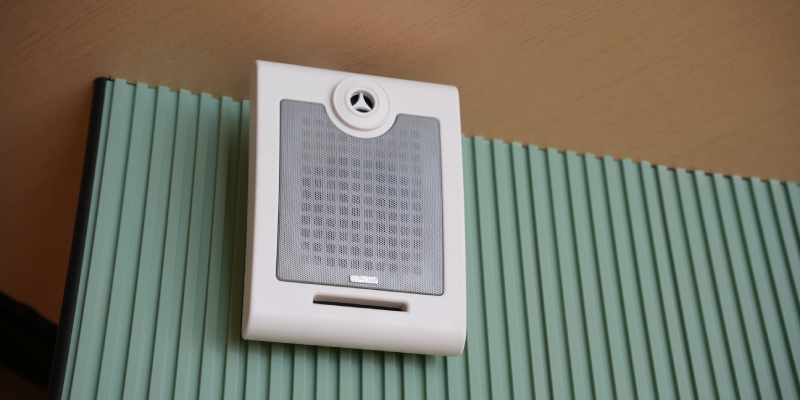
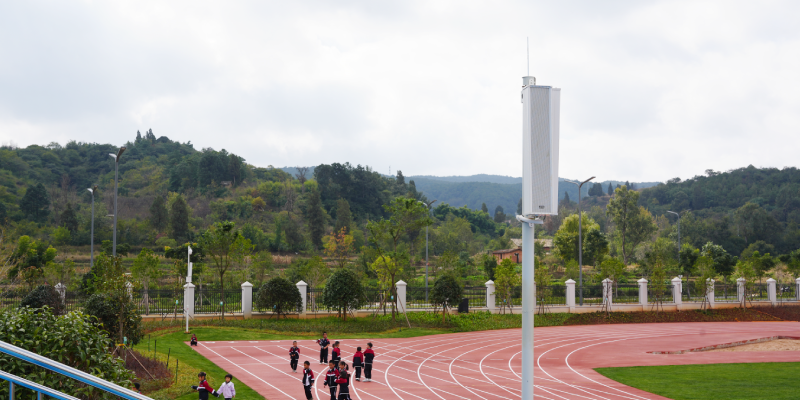
2. Outdoor Playground (Open space, noisy background)
Playgrounds are loud and open. Wind, voices, and no walls make sound harder to hear. Here, you’ll need powerful horn speakers that throw sound a long way—usually 60 to 150 watts. Mount them high and aim toward the audience to make sure announcements reach everyone.
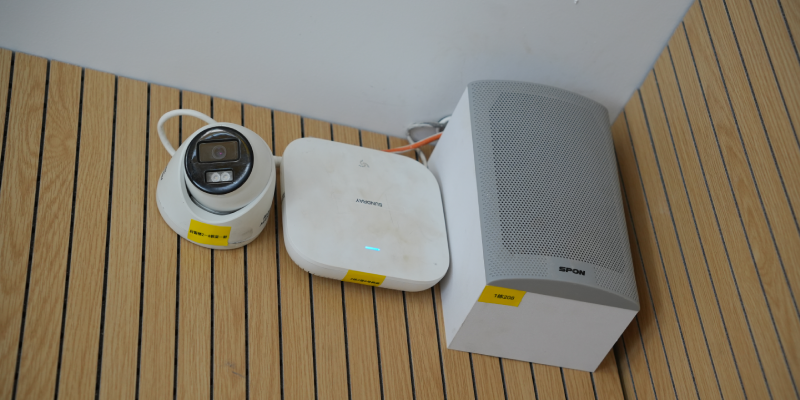
3. Cafe or Small Restaurant (Indoor, background music)
In cafes and small restaurants, sound sets the mood. You don’t want it too loud. Use low-power speakers with 10 to 40 watts and at least 85 dB sensitivity. Mount the speakers on the ceiling or walls, spaced out evenly. This helps avoid areas that are too loud or too quiet, so every customer hears soft music comfortably.
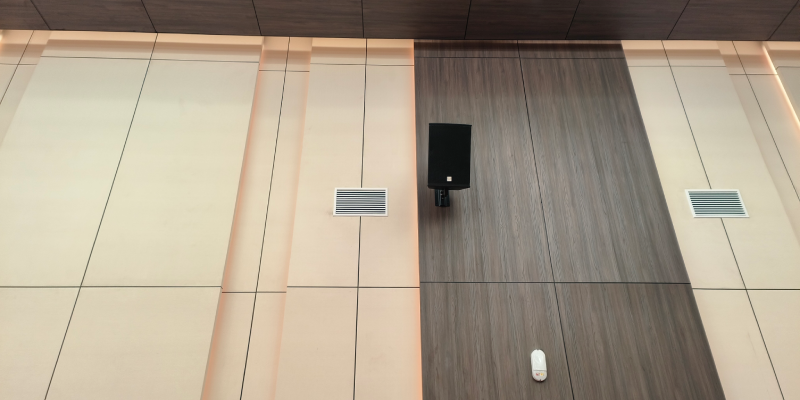
4. Shopping Mall (Crowded with moderate noise)
Malls are busy and noisy, but the indoor space helps sound travel. You don’t need very loud speakers. Use speakers with 30 to 80 watts for music, ads, and announcements. Divide the space into zones and adjust the volume in each. This helps make sure customers can hear clearly everywhere.
5. Factory (Very loud environment)
Factories have loud machines, making it hard for sound to travel. You need strong speakers to cut through the noise. Use industrial horn speakers with 100 to 200 watts and over 105 dB sensitivity. Install them above work areas, pointing toward where workers are. This setup helps make sure important messages are heard clearly and keeps everyone safe.

6. Church or House of Worship (Large space, echo problems)
Churches often have big spaces, tall ceilings, and hard walls that cause echoes. Instead of using more power, choose speakers that control sound direction. Use column or line array speakers with 30 to 100 watts and 90+ dB sensitivity. These speakers help keep voices clear and reduce echoes.
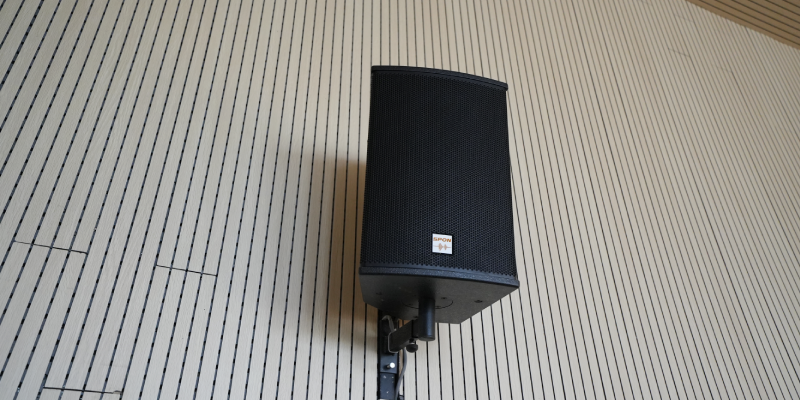
7. Conference Room (Small Space, Clear Voice)
The primary requirements for a conference room are clear speech and balanced sound distribution, with no high volume requirements. Typically, 10 to 20 watts per speaker is sufficient, and when used with high-sensitivity speakers, they can effectively cover the meeting area, ensuring that every participant can clearly hear the speaker.

8. Airport or Train Station (Large, Noisy Area)
Airports and train stations are big, crowded, and noisy. To make sure announcements like flight info or emergency alerts are heard clearly, use long-throw speakers with 150 to 300 watts of power and at least 105 dB sensitivity. Set up the speakers in zones to cover all areas. You can also add a noise detection system to adjust the volume automatically when the background noise changes.

Speaker Efficiency & Sensitivity: Why They Matter
Many people only look at power (watts) when choosing a speaker, but sensitivity is just as important. Sensitivity tells you how loud a speaker can get with a small amount of power. It’s measured in decibels (dB SPL @ 1W/1m), which means how loud the sound is when the speaker gets 1 watt of power and is measured 1 meter away.
For example:
• A speaker rated at 90 dB @ 1W/1m makes 90 dB of sound with just 1 watt.
• A speaker rated at 85 dB @ 1W/1m needs more than 3 times the power to sound as loud as the 90 dB speaker.
So, if two speakers use the same power, the one with higher sensitivity (like 95 dB) will sound much louder than one with lower sensitivity (like 85 dB).
A high-sensitivity speaker gives you the same or better performance with less power. That means you can save money, because you won’t need a bigger amplifier or a high-wattage speaker. It also uses less energy and makes less heat, which is very helpful in large systems.
Conclusion
A speaker's wattage is a measure of power that indicates how much electrical energy it can take in from an amplifier without changing the sound or breaking down due to overheating or excessive movement.
When choosing the right speakers, select an amplifier that matches the speaker's RMS rating to avoid overloading. Always check the impedance (ohms) to ensure compatibility between the amplifier and the speakers. More power isn't always better, especially in smaller rooms or speech-only environments. Choose a reliable brand for better quality and support. If you're not sure which speaker is right for your setup, feel free to contact us for assistance.


 AR
AR
 EN
EN


