Speaker Testing: 5 Common Tests Explained (2026)
Whatever the public address system or professional audio system, the stability of the speaker is essential for the whole system. But have you wondered, for high-quality speakers, what series of tests will they have been through to maintain stability after being manufactured?Before speakers can enter the market, they will take part in a series of tests, including acoustic, electrical, and environmental tests, to verify if the speaker’s performance and durability can fit the standard requirement.There are countless tests for speakers, such as acoustic testing like impedance testing and frequency response testing, long-term stability testing like aging testing, environment temperature testing for hot and cold areas, or vibration testing to see if the speaker can stay integrated during transportation.This article gives a brief guide to these five common tests and explains why they matter in real-world speaker manufacturing and quality control.
Impedance Testing
1.1 What is impedance testing?
When we do impedance testing on a speaker we want to know how much it resists the audio signal at frequencies. It is not like checking the resistance with a battery and wire. The speakers impedance changes with the frequency because of the way the parts, inside the speaker work together. This means a speaker that says it is 8 ohms does not always stay at 8 ohms when it is playing music.The impedance of a speaker is measured in ohms. We plot it against the frequency in hertz. This helps engineers see what is going on with the speaker. They can see the impedance range, the lowest impedance point and how the speaker behaves at low frequencies when we test it in a controlled way.
1.2 Standard
For loudspeakers, IEC 60268-5 is a key reference because it defines the characteristics to be specified and the relevant methods of measurement for passive loudspeakers using sinusoidal, noise, or impulsive signals. AES2 is also widely used in professional audio and sound reinforcement, especially for specifying loudspeaker drive units, including impedance, frequency response, distortion, and power handling.
1.3 How to test
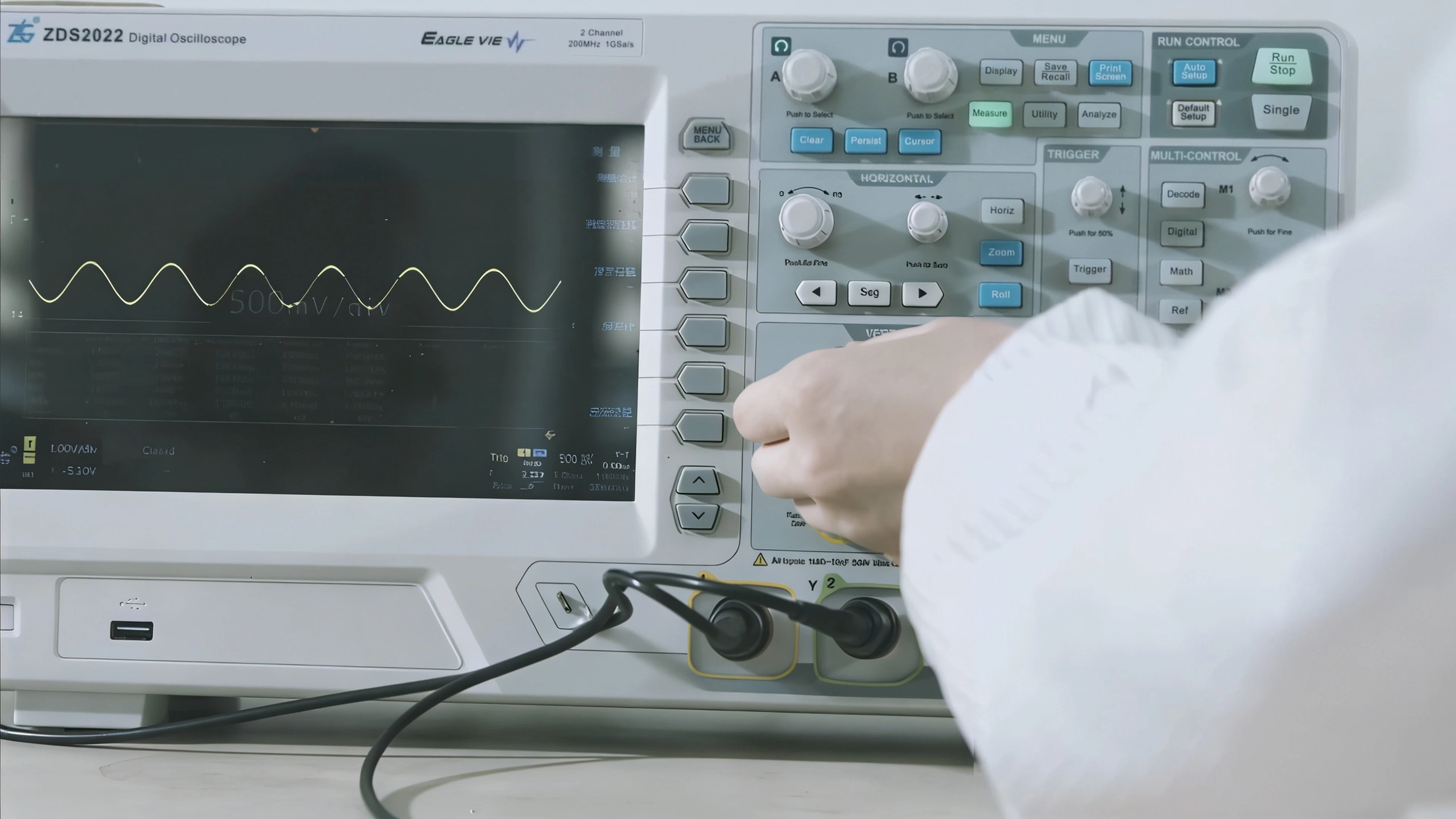
In practice, impedance testing is usually done by sweeping the speaker with a low-level signal and plotting an impedance curve against frequency. Engineers look for the nominal impedance region, the low-frequency resonance peak, and any unusual peaks or dips that may indicate a design issue, crossover problem, or assembly inconsistency. The test is often performed before and after other stress tests to see whether the speaker’s electrical behavior has shifted.
1.4 Impedance testing tools
- Impedance analyzer: used to sweep the speaker across frequency and generate the full impedance curve.
- Audio analyzer with a reference resistor: used to measure impedance indirectly by comparing voltage across the speaker and the resistor.
- LCR meter: used for quick checks of DC resistance or basic coil condition, but not for a full impedance-vs-frequency test.
- Measurement software: used to display, store, and compare impedance curves before and after other tests.
Frequency Response Testing
2.1 What is frequency response testing?
When we test the frequency response of a speaker we want to see if it can play all sounds well. The test shows if some sounds are loud too quiet or just right. This test is really important, for speakers because it affects how things sound if we can understand what is being said and if all the speakers sound the same.The frequency response test result is usually shown as a graph that compares the level in decibels to the frequency in hertz. This graph helps engineers see if the speaker is working like it is supposed to and if it is playing all the sounds it should be playing. The frequency response of a speaker is what matters here so we look at the frequency response to judge the speaker.
2.2 Standard
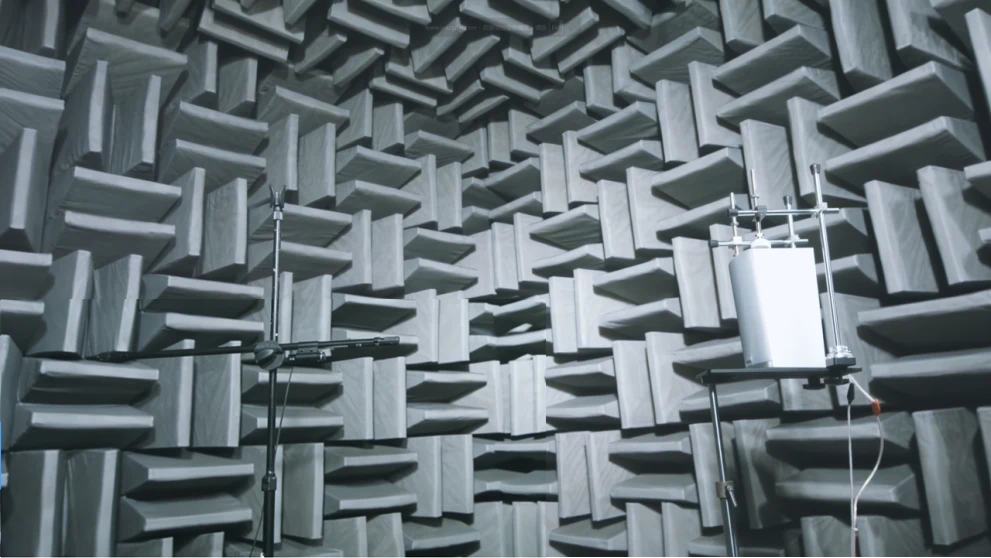
IEC 60268-5 includes frequency response as one of the loudspeaker characteristics to be specified and measured, and it defines normal measuring conditions such as the test environment, microphone positioning, reference axis, and test signal conditions. AES2 also covers frequency response specification for professional loudspeaker components.
2.3 How to test
A typical frequency response test is performed in an anechoic, semi-anechoic, or otherwise controlled acoustic environment. The speaker is fed with a sweep or test signal, and a measurement microphone captures the output on the reference axis. The result is a frequency response curve showing sound pressure level versus frequency. In production, some factories also use simplified end-of-line response checks to confirm that every unit stays within an acceptable tolerance window.
2.4 Frequency response testing tools
- Measurement microphone: used to capture the speaker’s acoustic output during the frequency response test.
- Audio analyzer or audio interface: used to generate the sweep/test signal and record the response signal.
- Power amplifier: used to drive the speaker at a controlled level during measurement.
- Measurement software: used to generate the frequency response curve and analyze SPL versus frequency.
- Microphone calibrator: used to calibrate the measurement microphone before testing for accurate results.
Aging Testing
3.1 What is aging testing?
Aging testing is done to see if a speaker still works after being used for a long time. This is usually done in factories where they make speakers. They play the speaker for an amount of time with a controlled sound and in a controlled environment. They do this to find out if the speaker will break down soon to make sure the parts that move are working properly and to check that the speaker still works as it should after being used for a time. When they do this test they usually measure how long the test lasts in hours and how power the speaker is using in watts or volts. They also check things, like how much the speaker can resist the sound how it can make different sounds or if the sound is getting distorted, to see if anything has changed after the test.
3.2 Standard
Unlike impedance or frequency response, aging testing is often more of a manufacturer-defined reliability procedure than a single universal standalone loudspeaker standard. In practice, it is usually linked to endurance, power-handling, or internal quality screening routines. AES2 includes power handling among the key performance items for professional loudspeaker drive units, and loudspeaker failure is commonly discussed in terms of thermal and excursion-related failure modes.
3.3 How to test
Aging tests are usually done by running the speaker with a defined signal for a set duration, then rechecking key parameters such as impedance, frequency response, distortion, or listening quality. Depending on the product type, the test may be mild and intended for stabilization, or more demanding and intended to reveal weak units before shipment. The main idea is not to “improve” the sound, but to verify that the product remains stable after use.
3.4 Speaker Aging Testing Tools
- Signal generator / audio source: used to provide continuous pink noise, sine sweep, or other burn-in signals.
- Power amplifier: used to drive the speaker for long-duration aging or endurance testing.
- Burn-in rack / aging rack: used to run multiple speakers continuously under controlled conditions.
- Timer or data logger: used to record the total test duration and monitor stability during the aging process.
- Audio analyzer: used to recheck key parameters such as impedance or frequency response before and after aging.
Vibration Testing
4.1 Definition of Vibration Testing
The speaker has to be able to handle vibration. Vibration testing checks if the speaker can withstand being moved or used in places where it will be shaken without falling apart or not working as well. This is important for speakers that are used in cars, factories, on street poles in stadiums or anywhere that the speaker will be shaken a lot. The vibration can cause screws to come loose damage the connections crack the outside or move the parts, inside the speaker. When people test the speakers they make the speaker go through vibrations that're like what it would really experience. They do this by setting how times the speaker is vibrated per second how fast it is vibrated and how far it is vibrated and they keep doing this for a certain amount of time. The engineers want to see if the speaker stays in one piece and sounds good when it is being vibrated over and over. The speaker has to be able to handle vibration.
4.2 Standard
A common standard used is IEC 60068. 2. 6. It says to test with vibration that has a smooth wave shape. This helps find spots in the speakers build and if it works poorly. The speaker must be turned on during the test.
4.3 Testing Procedure
In a test the speaker is attached to a special holder that mimics how its really installed. Then its put on a shaker table. The test involves shaking the speaker with vibrations or keeping it at a certain vibration for a while. During. After engineers look for damage loose parts, weird noises and changes in performance.
4.4 Vibration Testing Tools
- Vibration table / electrodynamic shaker: Employed to apply controlled vibration to the speaker or its mounting structure.
- Fixture / mounting jig: Holds the speaker like its really installed.
- Vibration controller: Sets how much and what kind of vibration to use.
- Accelerometer: Measures how much the speaker is actually shaking.
- Data acquisition system: Records the vibration data and looks for problems.
High and Low Temperature Testing
5.1 What is high and low temperature testing?
When you test a speaker in hot or very cold temperatures you want to see if it still works properly. This is really important for speakers that are used outside like PA speakers or for speakers that are used in factories or for speakers that are moved around a lot or for products that are sent to and stored in places with very bad weather.If it gets too hot or too cold it can affect the glue, the plastic, the parts around the speaker, the seals and even the electrical parts.When you do this kind of test you usually look at the temperature in degrees Celsius or degrees Fahrenheit. How long the speaker is exposed to that temperature in hours. Sometimes you also test the speaker by switching between cold temperatures many times to see how well it can handle different environments over a long time. The speaker has to go through cycles of hot and cold temperatures to make sure it will keep working properly. Temperature testing is very important for speakers, like PA speakers.
5.2 Standard
The IEC 60068 family of standards is used here. It covers tests, for hot and changing temperatures. These tests see if equipment can handle being stored, used or moved in temperatures.
5.3 How to test
The speaker is put in a temperature chamber. Its exposed to high or low temperatures for a set time. In some tests the speaker is moved between hot and cold. Afterward its checked for damage. If it still works right. Important measurements might be taken again.
5.4 High and Low Temperature Testing Tools
- Temperature chamber: used to expose the speaker to specified hot or cold conditions for a defined period.
- Thermal cycling chamber: used to repeatedly switch between high and low temperatures during cycling tests.
- Thermocouples / temperature sensors: used to monitor the actual temperature around or on the speaker during testing.
- Data logger: used to record temperature history and exposure time throughout the test.
- Audio analyzer: used to verify whether the speaker’s electrical or acoustic performance changes after temperature testing.
What Tests Are Commonly Applied to Professional PA Speakers?
For PA speakers testing is not just about how they sound. Speakers that are used in schools, factories or outside have to be able to withstand being moved installed and used for a long time. That is why manufacturers do a lot of tests including electrical tests, acoustic tests and environmental tests.First impedance testing is done to make sure the speakers electrical characteristics are normal and stable. Then frequency response testing is done to make sure the speaker sounds good and has the tone. After that aging testing is done to see if the speaker will still work properly after it has been used for a time. Vibration testing is also done to make sure the speaker can withstand being moved without getting damaged. Finally high and low temperature testing is done to make sure the speaker can withstand being in hot or very cold places.All of these tests help manufacturers make sure their speakers are reliable and will work properly in situations. Vibration testing and high and low temperature testing are especially important, for PA speakers that are used in harsh environments.stable electrical behaviorconsistent acoustic performancereduced risk of early-life failurestronger structural reliability during transportbetter environmental adaptabilityFor PA projects, this matters because reliability is often just as important as sound. A speaker that performs well in a lab but cannot remain stable after shipping, installation, or seasonal temperature changes will create extra maintenance work in the field. That is why these tests are commonly used as part of quality control for professional speaker products.
Conclusion
The five tests mentioned cover the common quality checks for loudspeakers: impedance, frequency response, aging, vibration and high/low temperature.These tests evaluate how well a speaker works electrically how consistent it sounds how stable it is over time how well it handles being moved and how well it works in different temperatures.In quality control these tests are useful not for doing them but for understanding what the results mean.For example if the impedance test shows that the speakers electrical behavior is normal it means the impedance and overall impedance curve are within the range.The frequency response test is also important.If it shows that the speakers output level stays within the target range across the intended frequency range it generally means the speaker sounds balanced and consistent.The aging test checks if a speaker can work for a time without any problems.If it shows that the speaker can operate without changes in impedance, response or audible defects it suggests that the speaker is stable over time and less likely to fail early.The vibration test checks if a speaker can handle being movedIf it shows no loosening, abnormal noise or major performance change after vibration it indicates that the speaker is mechanically reliable for transportation and service.The high and low temperature test checks if a speaker can work in temperatures.If it shows that the speaker still works correctly and its key parameters remain within specification after exposure or cycling it means the product can adapt to different environments.A speaker is considered reliable not because it passes one test but because its key performance values, such as impedance, frequency response and stability remain within the required limits across multiple test conditions, like impedance frequency response, aging, vibration and high/low temperature.This means that a reliable speaker is one that can handle tests, including impedance, frequency response, aging, vibration and high/low temperature and still work well.



 2026-04-02
 Author: Michael
 Page view: 3588


 AR
AR
 EN
EN


