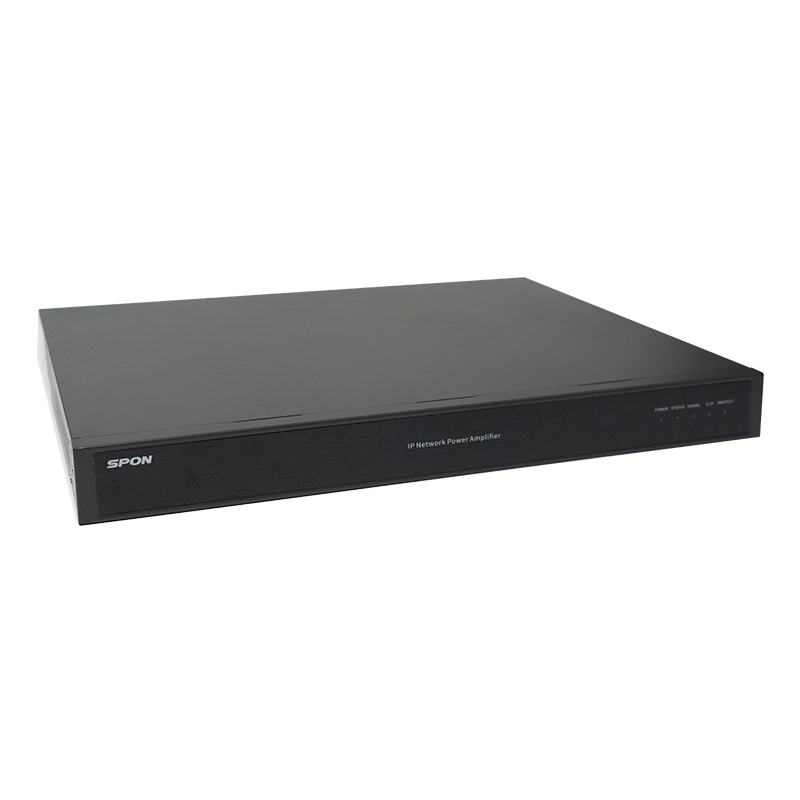
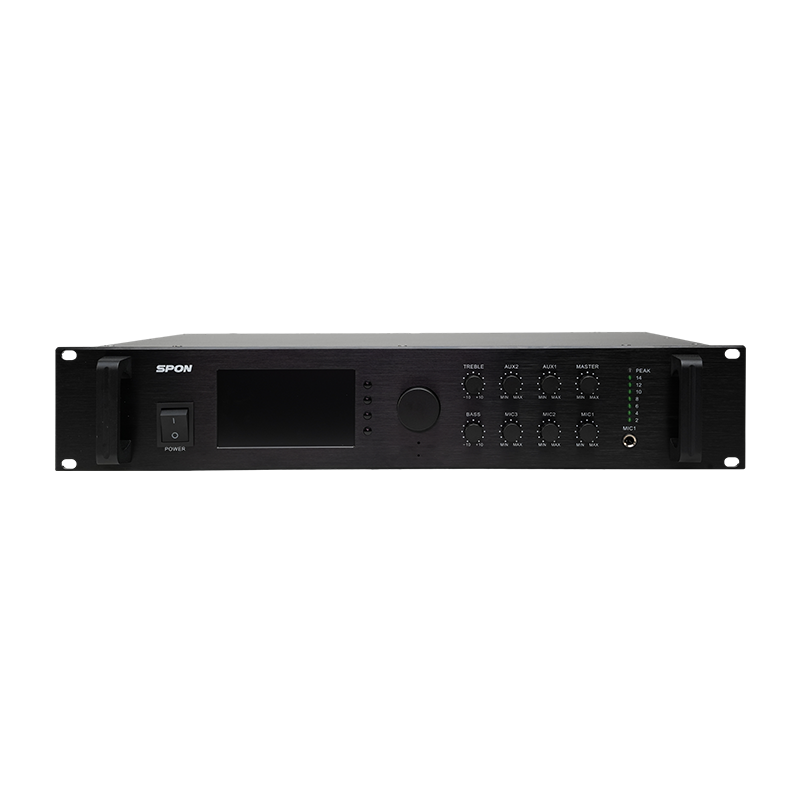
Power Amplifier Protection: 5 Types Explained
A power amplifier is a basic equipment in audio systems. It drives speakers by increasing signal power. Power amplifiers are commonly utilized in public address systems, conference systems, IP audio systems, emergency evacuation systems, and industrial audio applications.However, frequently operate in challenging electrical settings, with significant loads and extended operating hours. They are susceptible to speaker problems, overheating, overload, and short circuits if they are not properly protected. These issues may result in equipment damage, system failure, or even safety hazards.Modern professional amplifiers integrate multiple protection mechanisms. These protections ensure stable operation, protect internal circuits, and prevent damage to connected speakers.This blog explains the main types of power amplifier protection, including:Overload protection,Short circuit protection,Thermal protection,Overcurrent protection,DC protection.
Why Power Amplifier Protection Is Critical
Unlike small consumer audio devices, professional power amplifiers often operate:
- At high output power
- With long speaker cables
- In harsh environments (heat, dust, humidity)
- With multiple speakers connected in parallel
Any abnormal condition can quickly damage output transistors, power supplies, or loudspeakers. Protection circuits act as a safety barrier between faults and permanent damage.Good protection design offers:
- Longer amplifier lifespan
- Lower maintenance cost
- Safer operation
- Better system reliability
From an engineering and commercial point of view, protection quality directly reflects the amplifier’s design level.
Overload Protection in Power Amplifiers
What is Power Amplifier?
When a power amplifier is run over its rated output capacity for a lengthy period, overload protection is a critical safety feature that protects it from injury. It guarantees the longevity of the amplifier and the accompanying audio equipment by serving as a continuous monitor.
What Causes Overload?
An amplifier typically enters an overload state when the demands placed on its internal circuitry exceed its design limits. Common triggers include:
- Excessive Input Levels: Sending a signal that is too "hot" for the amplifier to handle properly.
- Improper Loading: Connecting too many speakers or utilizing speakers with impedance below the amplifier's rated specification.
- Extreme Usage: Operating the system at maximum volume for prolonged periods.
When an overload occurs, the output devices generate excessive heat, and the audio signal begins to distort rapidly, which can be heard as "clipping."
How Overload Protection Works
To avoid hardware failure, the protection system continuously checks the amplifier's output current, voltage, and total power levels. When these parameters exceed a safe threshold, the amplifier will interfere in one of the following ways:
- Gain Reduction (Limiting): Automatically lowering the volume to a safe level.
- Signal Compression: Smoothing out signal peaks to prevent clipping.
- Muting or Shutdown: Temporarily cutting the audio output or shutting down the unit entirely to prevent permanent thermal damage.
While classic analog limiters and current-limiting circuits remain effective, newer IP and digital amplifiers rely mostly on DSP-based protection. DSP (Digital Signal Processing) is the industry standard today because it is extremely accurate and can be precisely tuned to meet individual performance requirements.
Why It Matters
Overload protection is the final line of defense for your audio system. Without it, the consequences can be costly:
- Internal Component Failure: Output transistors may burn out, and power supply components can overheat.
- Speaker Damage: Distorted signals and power surges can easily blow out voice coils in connected loudspeakers.
Finally, a strong overload protection mechanism ensures that your equipment stays dependable, safeguarding your investment and producing high-quality sound even under extreme situations.
Short Circuit Protection in Power Amplifiers
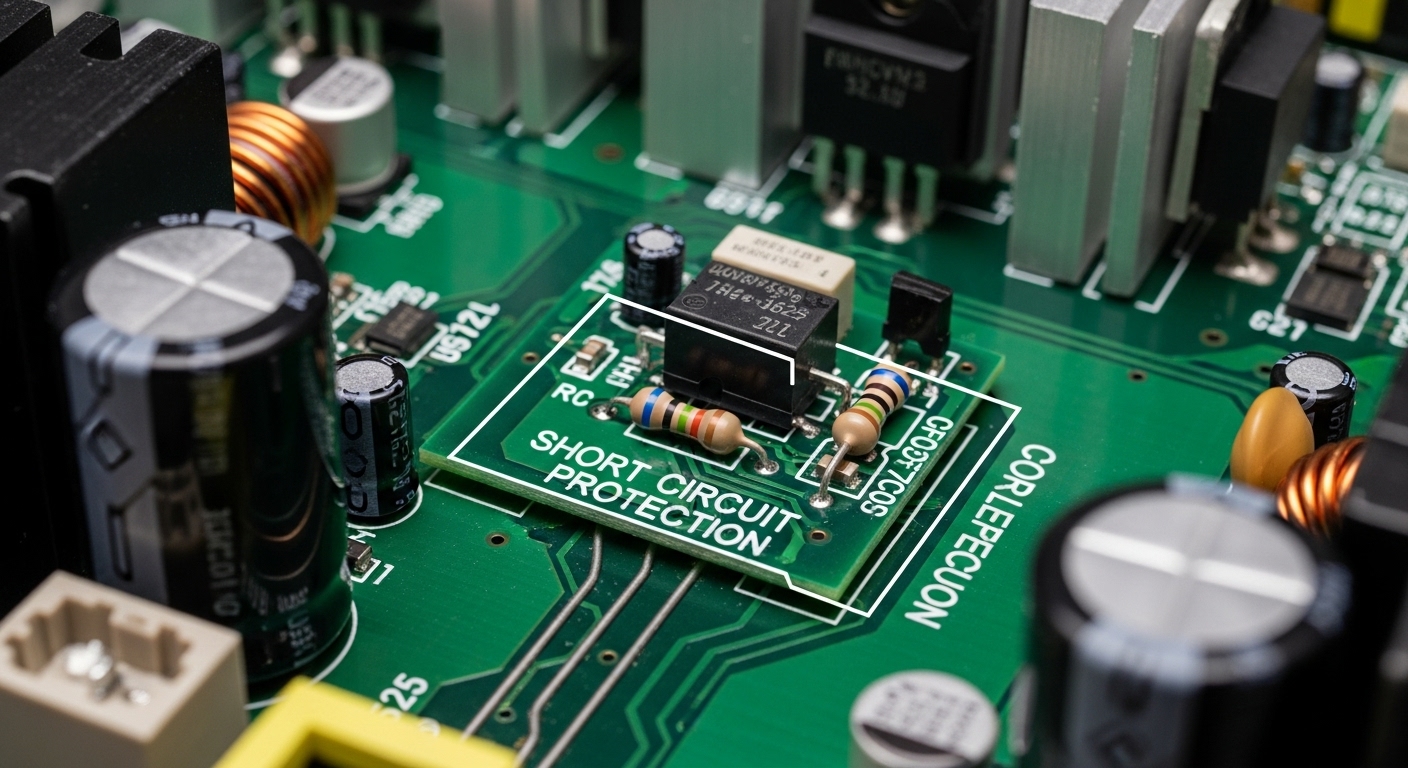
In audio engineering, short circuit protection is probably the most important safety element of a power amplifier. Because a short circuit can cause catastrophic failure in a fraction of a second, the equipment's survival depends on a strong defense system.
What is a Short Circuit?
A short circuit occurs when a low-resistance path is created that allows electricity to bypass the intended load (the speaker). Common causes include:
- Wiring Issues: Speaker cable strands touching each other or incorrect wiring at the terminals.
- Physical Damage: Compromised or frayed cable insulation.
- Environmental Factors: Moisture or debris creating conductive paths between terminals.
When a short happens, the resistance drops toward zero, causing the output current to spike instantly to destructive levels.
How the Protection System Responds
To prevent the amplifier from essentially "self-destructing," the protection system must act with extreme speed. It typically utilizes fast current sensing and hardware-level shutdown protocols. The moment a short is detected, the amplifier takes immediate action:
- Cutting Output: The drive signal is killed instantly to stop the current flow.
- Physical Disconnection: Internal speaker relays trip to physically isolate the speakers from the amplifier's circuitry.
- Protection Mode: The unit enters a "Protect" state to prevent further operation.
Depending on the amplifier's design, the system may offer auto-recovery once the short is cleared, or it may require a manual reset to ensure the user has inspected the wiring.
Why Speed is Essential
The primary reason this protection is so vital is the sheer speed of electrical damage. Without it, the following can occur in milliseconds:
- Total Component Failure: Output transistors and Power MOSFETs can be permanently destroyed by the heat of the current surge.
- Power Supply Damage: The sudden demand for current can overstress and blow power supply components.
Because hardware damage occurs faster than a human can react, an automated, high-speed protection circuit is the only way to ensure the amplifier lives to play another day.
Thermal Protection in Power Amplifiers
What is Thermal Protection?
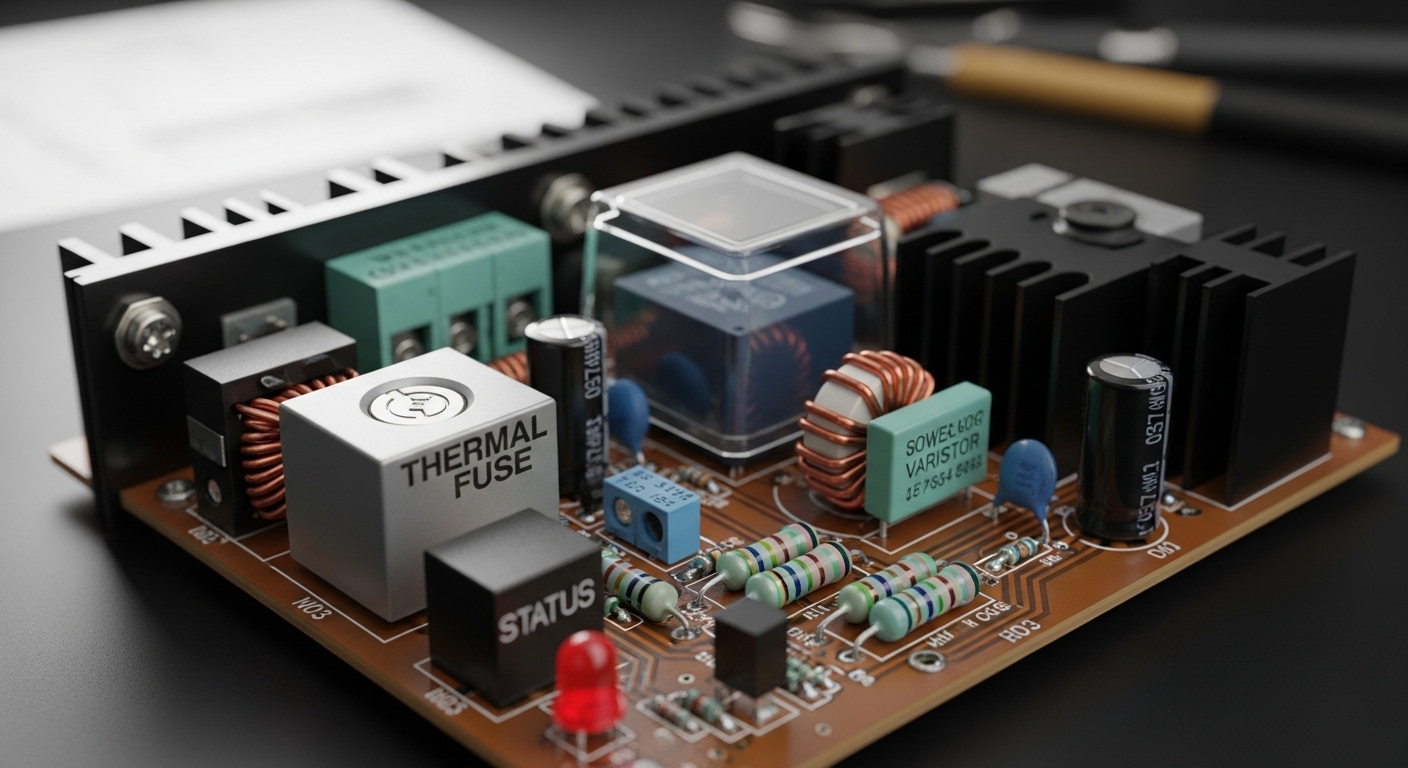
Thermal protection is an important safeguard that prevents a power amplifier from sustaining damage owing to high internal temperatures. Heat is an unavoidable result of power conversion in every high-performance audio system; thermal protection ensures that this heat does not reach levels that jeopardize the circuitry's integrity.
What Causes Overheating?
An amplifier's temperature is a balance between the heat it generates and the heat it can dissipate. Overheating typically occurs when this balance is disrupted by:
- Persistent High Demand: Operating at continuous high power levels for extended periods.
- Environmental Obstacles: Poor ventilation or high ambient temperatures in the equipment rack or room.
- Maintenance Issues: A failure of internal cooling fans or a significant buildup of dust, which acts as an insulator and blocks vital airflow.
How Thermal Protection Works
To manage internal temperatures, the amplifier utilizes high-precision thermal sensors strategically placed on heat sinks, output transistors, and power supply modules. These sensors provide real-time data to the protection circuitry. When the temperature exceeds safe operating limits, the amplifier responds in stages:
- Active Cooling: The system automatically triggers or increases the speed of internal cooling fans.
- Thermal Throttling: The amplifier may reduce its output power (gain) to lower heat generation without cutting the audio entirely.
- Temporary Shutdown: If temperatures reach a critical threshold, the amplifier will shut down to allow the components to cool, preventing permanent failure.
Advanced designs often feature multi-stage thermal protection, which allows the system to adjust performance dynamically to avoid a total shutdown whenever possible.
The Benefits of Thermal Management
Integrating a sophisticated thermal protection system offers several long-term advantages for the user:
- Prevention of Permanent Damage: It keeps delicate semiconductors and capacitors from reaching their melting point.
- Extended Component Lifespan: By keeping the unit within its optimal temperature range, it reduces the "thermal stress" that causes components to age prematurely.
- Long-Term Stability: It ensures the system remains reliable and consistent, even during demanding events or in high-duty-cycle installations.
Overcurrent Protection in Power Amplifiers
What is Overcurrent protection?
Overcurrent protection is a critical safety mechanism designed to intervene when the electrical current flowing through the amplifier's output stage exceeds safe operational limits. While it is often confused with overload protection, the two serve different roles: overload protection is typically power-related and deals with gradual heat buildup, whereas overcurrent protection is current-specific and often responds to sudden, sharp spikes in electrical flow.
What Causes Overcurrent?
Overcurrent conditions are usually triggered by an abrupt change in the electrical path or the load connected to the amplifier. Primary causes include:
- Low Impedance Loads: Connecting speakers with an impedance lower than what the amplifier is rated to handle (e.g., a 2-ohm load on a 4-ohm rated channel).
- Short Circuits: Direct contact between positive and negative speaker wires.
- Speaker Faults: Internal failures within the loudspeaker’s voice coil or crossover that cause a sudden drop in resistance.
How Overcurrent Protection Works
To prevent the output transistors from being overwhelmed by a surge of electrons, the amplifier utilizes high-speed monitoring and limiting techniques:
- Current Sensing Resistors: The system uses precision, low-value resistors to monitor the exact amount of current flowing to the speakers in real-time.
- Electronic Current Limiting: Once the current hits a dangerous threshold, the circuitry electronically clamps the output, preventing any further increase regardless of the input signal.
- Foldback Circuits: Advanced designs use "foldback" current limiting, which not only stops the current from rising but actually reduces it as the load resistance drops, providing an extra layer of safety for the output stage.
Integration with Short Circuit Protection
In practice, overcurrent protection often functions as the primary "engine" for short circuit protection. Because a short circuit is essentially an extreme overcurrent event, these two systems work in tandem. The overcurrent circuit detects the massive surge instantly, allowing the short circuit protection to then disconnect the relays or shut down the power supply before permanent damage can occur.
DC Protection: Safeguarding the Loudspeaker
What is DC Protection?
DC protection is a specialized fail-safe designed to prevent direct current (DC) from reaching the loudspeakers. While amplifiers are designed to output alternating current (AC) to produce sound, internal component failures can sometimes cause dangerous levels of DC to "leak" into the output stage. This protection acts as a final barrier to ensure your speakers are never exposed to these destructive voltages.
Why DC is Dangerous to Speakers
Loudspeakers are engineered to handle AC signals, where the electrical current constantly reverses direction, allowing the voice coil to move back and forth to create sound waves. DC, however, is a constant, one-way flow of electricity. When DC enters a speaker, it causes:
- Voice Coil Overheating: Because the coil is held in a fixed, displaced position rather than moving (which provides natural air cooling), it acts like an electric heater, quickly melting the insulation and burning the wire.
- Mechanical Damage: The constant current forces the speaker cone to its physical limit (either fully pushed out or pulled in), which can tear the suspension (spider) or the surround.
- Immediate Failure: Even a small amount of DC voltage can destroy a high-quality driver in seconds, long before a user has time to react.
How DC Protection Works
To mitigate this risk, the amplifier continuously monitors the output for a "DC offset." If the circuitry detects a DC voltage that exceeds a safe threshold (usually around 0.6V to 2V), the protection system initiates an immediate response:
- DC Offset Detection: Highly sensitive circuits distinguish between low-frequency audio signals and actual direct current.
- Speaker Relay Disconnection: Most professional amplifiers use a mechanical or solid-state relay that physically "breaks" the connection between the amplifier and the speaker terminals.
- Output Muting: The signal path is instantly muted to prevent further energy from reaching the faulty output stage.
Conclusion
The design of the power amplifier's protection is a key sign of how good the device is. A power amplifier that is well-protected will have a steady output, last a long time, and be safe to use.SPON's Network Mixer Amplifier has several protections, including overload and short-circuit protection, and supports multi-channel output.If you are seeking for a power amplifier, try SPON products.
FAQS
Q1: What is a Class D power amplifier? 

A Class D power amplifier is a high-efficiency power amplifier that uses switching technology to amplify audio signals.The output devices switch on and off at high speed, then a filter converts the signal back to audio.
Q2: When is a power amplifier used?
When the audio signal power is insufficient to directly drive the speaker, a power amplifier is needed. It is commonly used in public broadcasting systems, meeting rooms.
Q3: Will the digital amplifier damage the speakers?
No. As long as it is used correctly, digital amplifiers (Class D) will not damage the speakers. Speaker damage usually occurs due to: excessive power, overload clipping, or incorrect impedance matching. As long as the power amplifier has overload, short circuit, overvoltage and DC protection functions, and is properly matched with the speakers, the digital power amplifier is safe and reliable.



 2026-01-22
 Author: cora
 Page view: 5023




 AR
AR
 EN
EN