


 2025-08-29
 Author: Michael
 Page view: 1603
In modern days, conference rooms are becoming more and more intelligent due to the technology upgrading of the conference system. Right now, wired microphones are no longer the only option when you’re building a conference system for your conference room; there are also countless types of wireless conference microphones available that can make your conference room look clean and less messy. But with all these types of wireless conference systems, how do I know which one is the best one for me? Well, in this article, we’ll be diving deep into the basics and pros and cons of the most popular types of wireless conference systems: UHF wireless conference systems, Wi-Fi wireless conference systems, and infrared wireless conference systems. So by the end of this article, you’ll have a better understanding of these systems and thus select the most suitable system for your specific requirement.
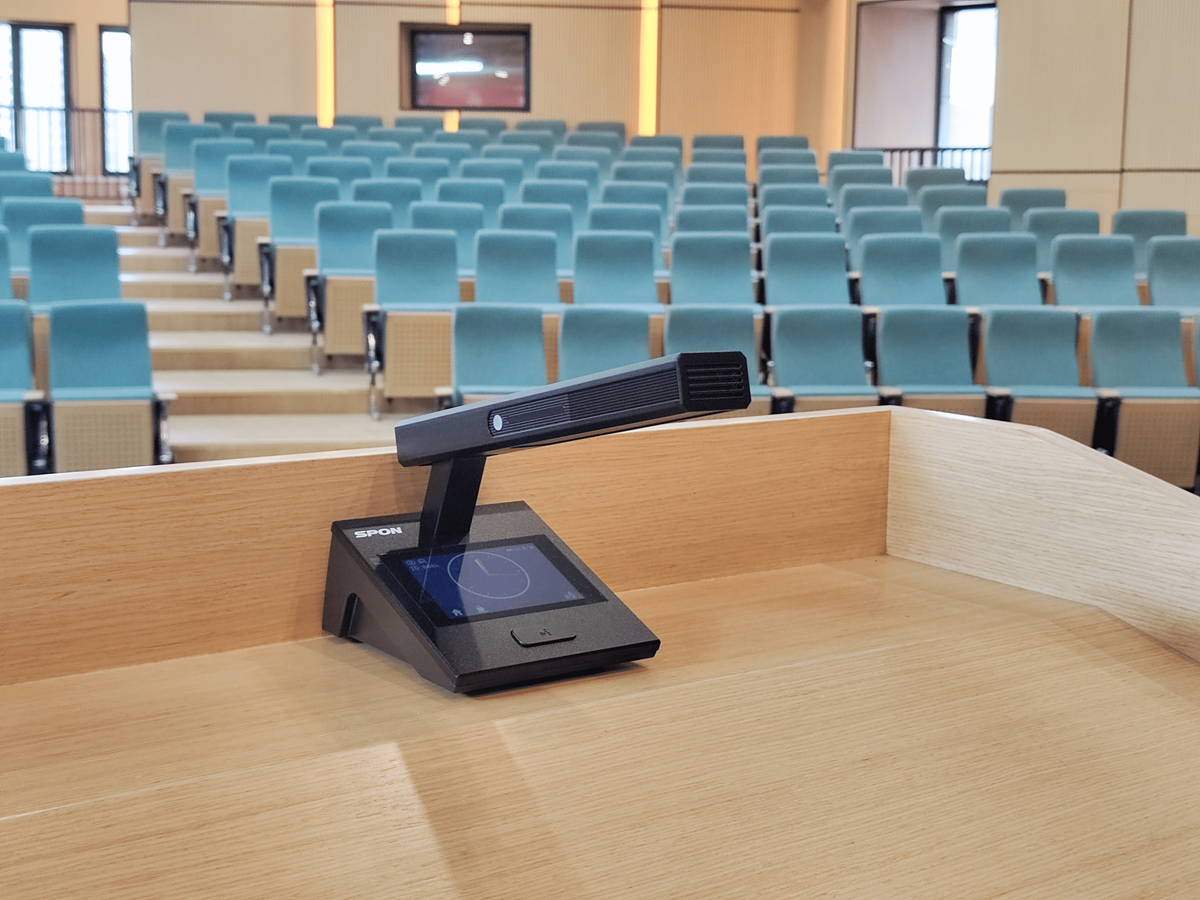
WIFI Wireless Conference System
How do they work?
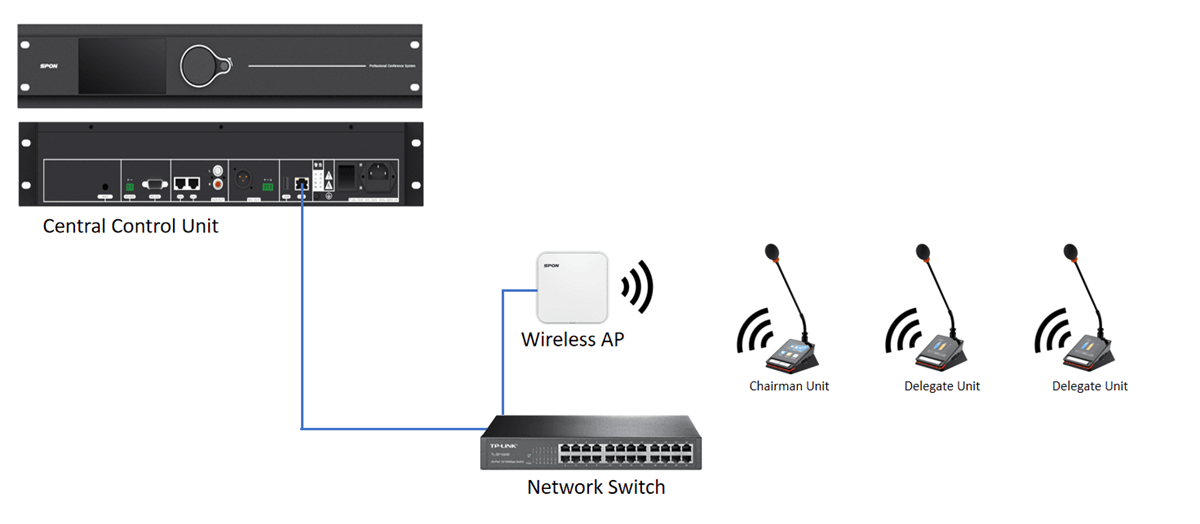
WIFI or a 2.4 GHz/5.8 GHz wireless conference system is based on the WLAN network protocol, which is IEEE 802.11. In this system, all the microphones and the conference main control unit are connected in the same LAN network. When the microphone speaks, the audio data signals are transmitted over this network and sent to the wireless AP (access point), then to the conference control unit, which is the “receiver.”
Advantages
The WIFI conference system offers a very simple system for setting up: plug in the RJ45 cable to the network, connect to the WIFI, and your system is good to go. Also, the WLAN encryption protocol can also work wonders for the system, such as WEP, WPA, WPA2, and WPA3, from weakest to strongest based on your need. And unlike the UHF, you don’t need an extra license for the system to work in different regions, and there is also no risk of broadcasting on illegal frequencies. Plus, additional AP is always available when you need to extend the coverage.
Disadvantages
On the downside of the WIFI conference system, since it’s a digital system, it’s not very tolerant of bad wireless signals or dropouts. A small signal dropout could lead to seconds or longer to re-establish, which might leave you with no audio in the middle of the meeting. And as we all know, more and more devices are now using 2.4 GHz or 5.8 GHz WiFi; the system shares bandwidth with all other technology using these wireless frequencies, including WiFi and Bluetooth. If the bandwidth runs out, the microphone has some change that won’t pair. This is more likely to happen in WiFi-congested locations like hotels, conference centers, etc. Also, since 2.4 GHz/5 GHz has a shorter wavelength, when it comes to obstacles in the meeting room, the signal cannot penetrate through very well. That being said, it means the system requires the installation of multiple access points and potentially more advanced equipment when there’s a large meeting room. Another thing that is worth mentioning is the microphones are usually using internal, non-replaceable rechargeable batteries—this might not be ideal for professional workflows where long use and quick swaps are required.
Suitable Application Scenarios
WIFI wireless conference systems are good for meeting rooms that are low on budget or meeting environments that don’t require the highest stability but do need a bit more security, like meeting rooms in corporate offices. These systems can also provide good WIFI coverage in these scenarios.

UHF Wireless Conference System
How do they work?
Next, the UHF wireless conference system. UHF, which stands for “Ultra-High Frequency,” operates in the frequency between 300 MHz and 3 GHz. This system’s function is very similar to the AM/FM radio that you’re using daily. There should always be one or multiple “transmitters” that are sending the audio signals, which can be the radio tower outside your home, and also a “receiver” to receive the signal, which is the AM/FM radio in your house or your car.
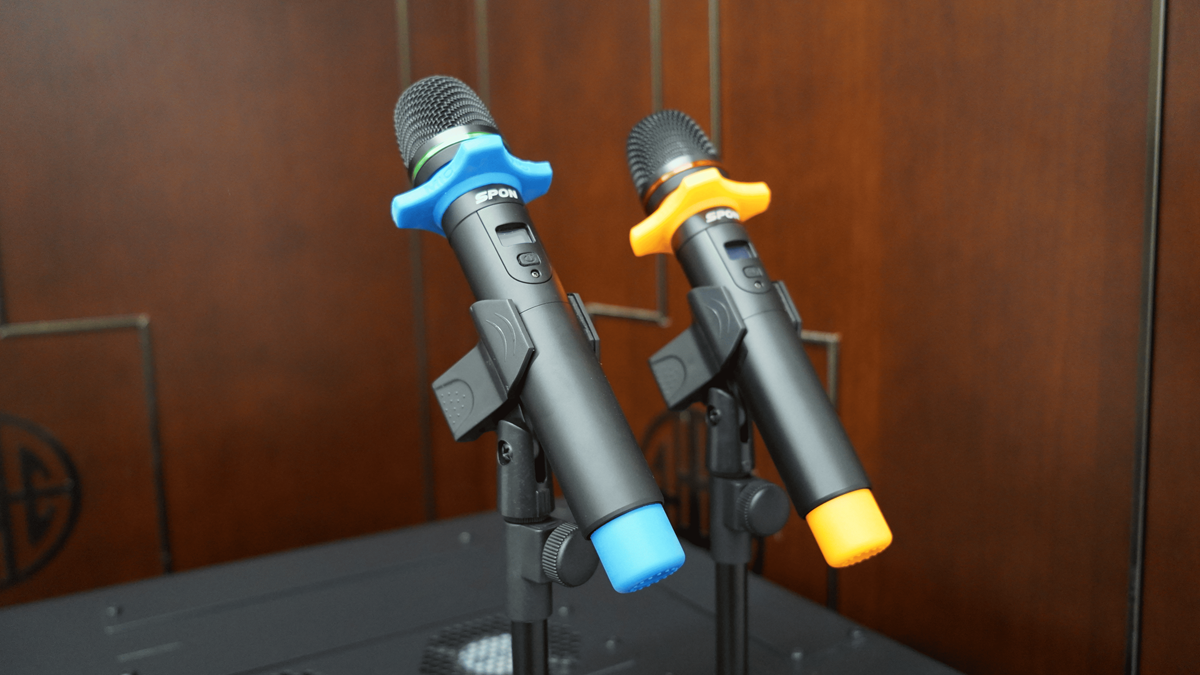
In the UHF wireless conference system, the microphone is playing the “transmitter” role, and the microphone receiver is the “receiver.” Basically, when the microphone receives audio from the speaker, it sends the signal to the transmitter inside the microphone, then to the antenna, and the antenna will broadcast the signal in the air, and lastly, it will be picked up by the receiver, who is tuned in to the same frequency as the microphone.
Advantages
The UHF wireless system provides higher reliability than other systems.
First of all, the bad signal or dropouts will affect the quality, but it’s uncommon to see any occasion that the entire recording gets cut off.
Second, the radio waves in the UHF band are less prone to interference from common household devices, providing a reliable connection. Plus, most countries have frequency bands you can license, ensuring zero chance of interference from other sources.
Unlike the WiFi wireless system, the UHF has a longer wavelength that can easily penetrate objects and bounce around in corners.
They commonly use replaceable AA batteries, or for some microphones, they can also work with rechargeable lithium batteries. For meetings that may last for 6-8 hours, you can easily change the batteries during the meeting without having to put them on charge for several hours.
Lastly, due to the fact that there is usually no encryption in the UHF system, you can easily mix and match different manufacturers’ receivers and transmitters together.
Disadvantages
However, UHF technology also has its drawbacks. First of all, there are only limited frequency bands available for free use; others may often be shared by other things like TV broadcasts, walkie-talkie, etc. And due to this reason, the wide range of frequency has a higher chance of frequency interference and cross-talk by that equipment.
Also, like we mentioned before, since the UHF often does not have encryption, it makes the signals easier to intercept by others, making them less secure in situations where confidentiality matters.
Suitable Application Scenarios
So where should you use a UHF wireless conference system? The high stability and transmission ability of the UHF wireless system are most suitable for medium- to large-sized indoor conference rooms, seminars, or workshops where speakers might need to move around in the room. They are also your perfect choice for long-duration events or meetings that require a reliable connection and working duration, while security is not at the highest priority, like public lectures or product launches.
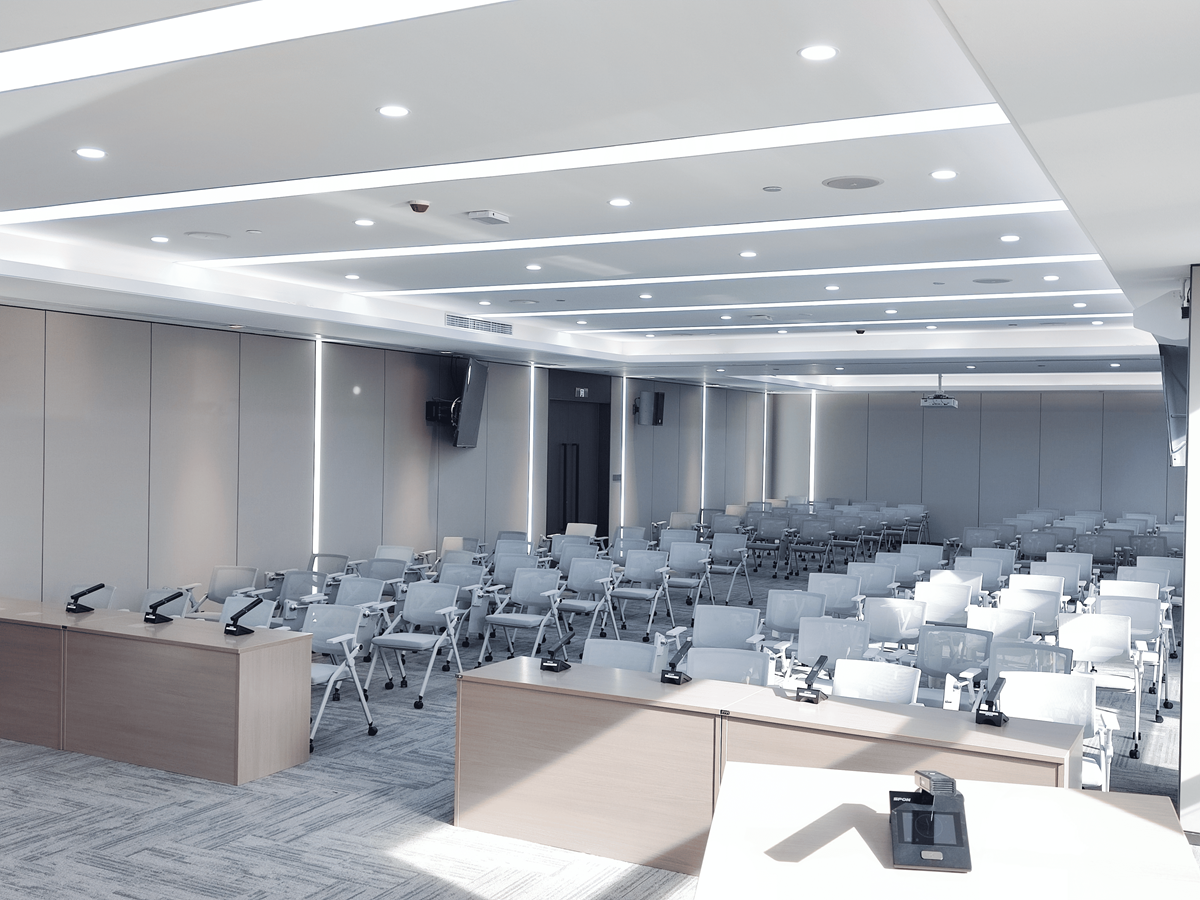
Infrared Wireless Conference System
How do they work?
The infrared wireless conference system works similarly to the WiFi wireless system, with 1 conference control unit that controls all the microphones, 1 infrared transmitter/receiver that manages the audio signal, and IR microphones.
The difference is they utilize infrared light to transmit the signals. When the microphone speaks, the electrical pulses of the audio will be converted into infrared light pulses and then transmitted through air.
And the transmitter/receiver converts the signal back into electrical pulses again to the control unit.
Advantages
The main reason for people to choose infrared systems is because of their high level of security.
Since infrared signals cannot penetrate obstacles, that means whatever conference information is shared in the conference room stays in that room, greatly reducing the risk of eavesdropping.
Also, the quick installation ability of the system vastly lowers the overall cost of the system.
Disadvantages
And just like other systems, the infrared system also has some limitations. First is the transmission distance; the distance between the devices and the infrared signal is relatively short, making the speaker or participants unable to move around. Also, as we mentioned before, the signals cannot penetrate objects very well; they can be easily blocked by obstacles like furniture, people, or walls, which also leads to possible communication blockage.
Moreover, the infrared systems cannot operate in outdoor venues, as the sunlight can interfere with the infrared signals.
Suitable Application Scenarios
Since the infrared wireless conference system has the best security among all other systems, places where confidentiality is the top priority, such as government offices, legal firms, or corporate boardrooms, can be the ideal choice.
Comparison and Differentiation
Now that we’ve given you a brief overview about the working principle and pros and cons of these 3 conference systems, it’s time for us to summarize the differences between them.
| Wireless System | Range | Speed | Stability | Interference Resistance | Security | Overall Cost |
| UHF System | Around 80-100 Meters in open space | Fast | Highest | High | Lowest | Medium |
| WiFi System | Around 50 Meters without extra AP | Fastest | Medium | Medium | High | Low |
| Infrared System | Around 10 Meters | Slightly Slower | Medium | Highest | Highest | Low |
Range
When it comes to signal transmission range, UHF wireless conference systems take the cake by offering a relatively long distance. Although Wi-Fi systems have a certain indoor coverage range and can be extended with additional access points, they are still limited compared to UHF in open spaces. Infrared systems have the shortest range, as their signals are easily blocked by objects.
Speed
For transmission speed, WiFi wireless conference systems are usually the fastest.
It’s capable of handling large amounts of data in the shortest time, which is essential for high-quality video and audio. UHF systems come next, with a decent speed for audio transmission. Infrared systems are relatively slower, making them more suitable for basic audio communication.
Security
In terms of security, infrared systems are the most secure due to their signal-blocking feature. The signals stay within the room, minimizing the risk of interception. WIFI systems offer a good level of security with encryption measures like WPA2 or WPA3, but there is still a potential risk of hacking if the network is not properly secured. UHF systems have the lowest security among other systems, as their signals are more easily intercepted due to there being usually no encryption in the UHF frequency.
Interference Resistance
Regarding the anti-interference ability, UHF systems come at the top of the list, since the radio waves in the UHF band are usually licensed and less prone to interference from other wireless equipment, providing a reliable connection.
WiFi systems might be interfered with by the router or other wireless equipment that are using the 2.4 GHz/5.8 GHz signal, so they might have a higher potential to encounter signal dropouts.
Infrared systems are susceptible to interference from other infrared light sources, such as sunlight or certain lighting fixtures.
Conclusion
So in conclusion, all three wireless conference systems have their own unique strong suit.
UHF wireless systems offer high stability and a long range of transmission, suitable for medium- to large-sized indoor conference rooms, seminars, or workshops where the speaker needs to be constantly moving around. WiFi wireless systems provide high speed and easy installation, perfect for scenarios with lower costs. Infrared systems excel in security, making them perfect for confidential discussions in closed rooms. When choosing a wireless conference system, it is essential to consider factors such as the size of the venue, the need for mobility, the level of security required, and the type of data being transmitted. By understanding the characteristics of each system, you can select the one that best meets your specific conference needs.


 AR
AR
 EN
EN


