Cookies Setting
We use cookies to improve your browsing experience, analyze traffic, and personalize content. By using this site, you agree to our use of cookies. For more details, please check our Cookie Policy.
Home News

What Is Audio? Definition, Basics & How Sound Works

What Is Audio? Definition, Basics & How Sound Works
2026-04-27 Author: Michael Page view: 1936
For engineers, installers and end users understanding audio concepts is important.Sound quality is not determined by one factor, it depends on frequency, sound pressure level, frequency response, sensitivity, speaker design and whether the signal is analog audio or digital audio.

Table of Contents

Term What it means Common unit Why it matters
Audio Sound captured, processed, or reproduced by a system The foundation of all audio systems
Audio Frequency How fast a sound wave vibrates Hz Affects bass, midrange, and treble
SPL How loud a sound is at a given point dB Determines whether sound is loud enough for the space
Frequency Response How evenly a device reproduces different frequencies Hz / dB Affects clarity, balance, and intelligibility
Sensitivity How efficiently a speaker converts power into sound dB @ 1W/1m Affects loudness and amplifier requirements
Sampling Rate How often analog sound is measured in digital audio Hz / kHz Affects digital audio resolution and bandwidth
Mono Audio Single-channel audio Common in PA systems for consistent speech coverage
Stereo Audio Two-channel audio (left and right) Creates a wider and more immersive listening experience, especially for music and media
Lossless Audio Audio that preserves all original data after storage or compression Maintains full audio information and is useful when maximum sound quality or archival accuracy is required

What Is Audio?

Audio is the electronic representation or reproduction of sound. Sound itself is created by vibrations traveling through a medium such as air. When these vibrations reach our ears we hear them as speech, music, noise or alerts.Audio systems convert those vibrations into signals that can be amplified transmitted, stored and played back.Audio can describe sound in a room recorded sound in digital files, microphone input signals, speaker output signals and analog or digital transmission of sound.

What Is Audio Frequency?

Audio frequency describes how fast a sound wave vibrates, it is measured in hertz (Hz). Low frequencies sound deep while high frequencies sound sharp. The audio frequency range for hearing is approximately 20 Hz to 20,000 Hz. Low audio frequency usually refers to bass, mid frequencies are where much of speech information exists, high audio frequency affects clarity and brightness.

What Is SPL in Audio?

SPL stands for Sound Pressure Level, and the SPL is how loud a sound is at a point.SPL is measured in decibels. It is really important when you are checking out a speaker or sound system.It shows you how much sound a loudspeaker can make and if that sound is good for the room it's in.

Sound Pressure Level definition

Sound Pressure Level is when you compare the sound pressure you measure to a standard pressure, in the air.In a technical way it is written like this:
  • SPL = 20 log10 (p / p₀)
This is how you figure out the Sound Pressure Level or SPL.

How is sound pressure level measured?

It is usually measured with:
  • an SPL meter
  • a measurement microphone
  • audio analysis software
This matters because an audio system that is too quiet cannot cover the space, while one that is too loud may become uncomfortable, distorted, or unsafe.

What Is Frequency Response?

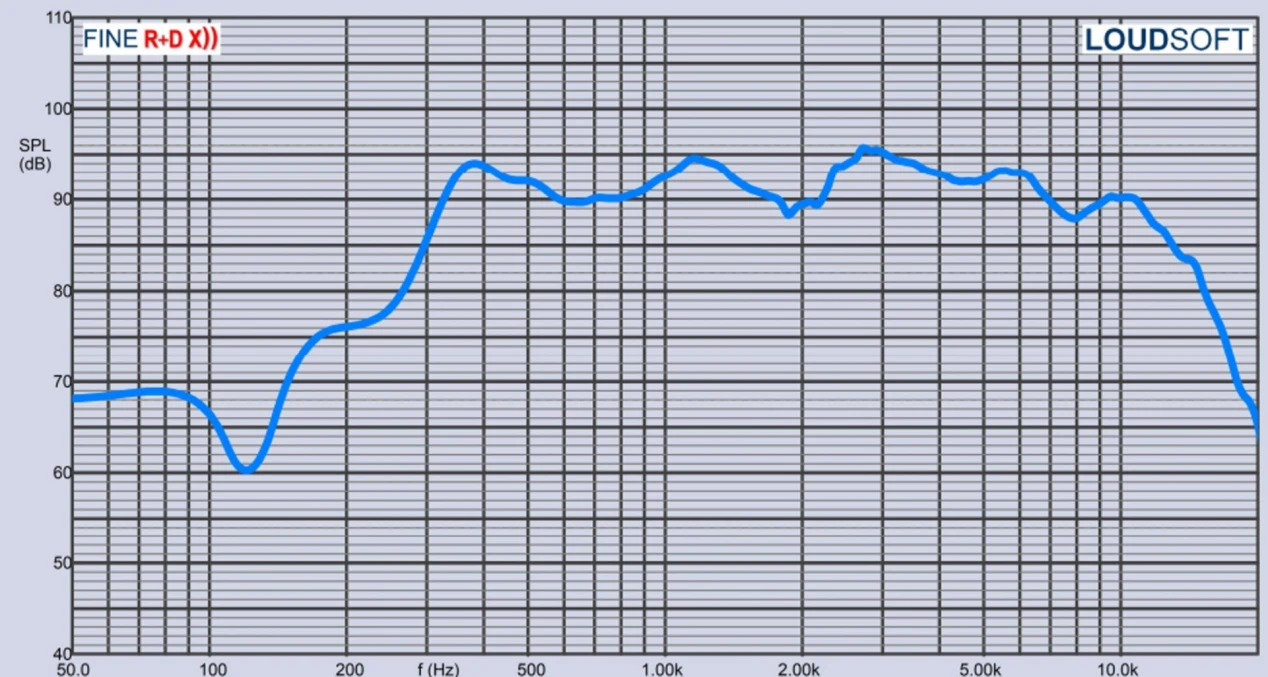
Frequency response tells us how a speaker or microphone handles sounds. It shows if a device plays low mid and high sounds evenly or not.A graph of frequency response usually has:
  • Frequency in Hertz on the axis
  • Loudness in decibels on the vertical axis
For a speaker the graph shows how loud it plays at each sound. For a microphone it shows how well it picks up sounds.

Why frequency response matters

A speaker with a frequency response can sound:
  • Too thin
  • Too harsh
  • Too muddy
  • Unclear for speech
That is why frequency response of a loudspeaker and frequency response of speakers are important when choosing a product. For systems used for speech like PA systems, a smooth midrange sound is often more important, than low bass.

What Is Sensitivity in Audio?

Sensitivity or audio sensitivity tells us how efficiently a speaker converts electrical power into acoustic output. In loudspeakers, sensitivity is usually expressed as:dB @ 1W/1m or dB @ 2.83V/1mThis means the sound pressure level measured at 1 meter when a standard signal is applied.

Why sensitivity matters

A speaker with higher sensitivity will produce more SPL with the same amplifier power. This is very important in PA system design, because it affects:
  • required amplifier size
  • number of speakers needed
  • achievable coverage and loudness
For example, two speakers may both be rated at 30W, but the more sensitive one may sound significantly louder.

Analog Audio vs Digital Audio

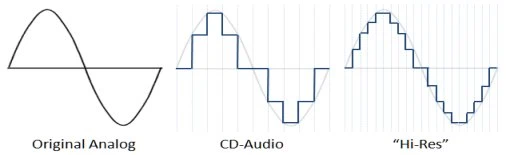
A common question is analog audio vs digital audio. Both are used to represent sound, but they do so differently.

Analog audio

Analog audio is a continuous electrical signal that directly follows the waveform of the original sound. Traditional microphones, mixers, and amplifiers often work with analog signals internally or at the input/output stage.

Digital audio

Digital audio converts sound into numerical data using sampling and quantization. This makes it easier to:
  • store audio files
  • transmit audio over networks
  • process sound with DSP
  • maintain stable quality over long distances

Analog vs digital audio: which is better?

Neither is “better” in every situation.Analog audio is simple and direct, while digital audio is more flexible, easier to store, and more suitable for networked and modern systems.In today’s PA and professional audio systems, both are still important. Many systems capture or route audio in analog form, then convert it to digital for processing or network transmission.

What Is Sampling Rate in Audio?

When we talk about audio the sampling rate is a really important thing to consider.The sampling rate is how times per second we measure and convert an analog sound wave into digital data. We measure this in Hz or kHz.Some common sampling rates for audio are:44.1 kHz,48 kHz,96 kHz

What is sample rate in audio?

So what is the sample rate in audio?If someone asks you what is sampling rate or what is the sample rate for audio you can tell them that the sampling rate is how often we capture the original sound per second when we change analog audio into digital audio.If we use a sampling rate we can capture higher frequencies and get more data to work with but it also makes the file size bigger and uses more system resources.

What is the best sample rate for audio?

There is no one sample rate that works for every situation.For music playback 44.1 kHz is pretty common.For video and professional audio 48 kHz is often used.Sometimes 96 kHz is used in certain production workflows.For a lot of applications, like public address systems and speeches 48 kHz is already good enough.

What Is Mono Audio? What Is Stereo Audio? What Is Lossless Audio?

What is mono audio?

Mono audio is when you hear sound through one channel. It does not make you think the sound is coming from the left or the right like stereo does.. It is still really good for things like speeches or announcements over a loudspeaker.A lot of public address systems use mono audio because:
  • The sound is the same everywhere
  • The system is not too complicated
  • The main thing is that you can understand what is being said, not that it sounds like it is coming from directions

What is stereo audio?

Stereo audio is a way of listening to music and things that uses two sounds, one for the left and one for the right. This makes music and videos sound like they are around us. It feels more real.Stereo audio is different from mono audio. Mono audio uses one sound and stereo audio uses two sounds. Stereo audio makes music and videos sound better and more realistic.In many places where people talk to a crowd like at meetings or speeches mono audio is still used. This is because mono audio sounds the same everywhere in the room. It is easier to hear what people are saying when it is, in mono.

What is lossless audio?

Lossless audio is when audio keeps all of its information even after it has been compressed or stored. This is different from audio which gets rid of some of the information to make the file smaller.For people who really care about quality or for keeping audio files forever lossless audio is important.. For most public address systems that are used for talking what matters most is that you can understand what is being said and that it comes through clearly not that it sounds perfect. Mono audio is often used for this. Lossless audio is not always necessary, for speech systems mono audio is usually enough.

How Speaker Design Affects Audio Performance

Speaker design has a direct impact on how audio sounds and behaves in real applications. It affects:frequency responseSPL capabilitycoverage anglesensitivityenclosure resonancelow-frequency extensionA speaker is not just a cone in a box. Its final performance depends on the combination of:
  • Driver size
  • Enclosure design
  • Horn or waveguide structure
  • Crossover network
  • Cabinet material
  • Installation condition
This is why two speakers with similar wattage may perform very differently in the field. Proper speaker design is always connected to the intended application—indoor speech, outdoor announcements, music playback, emergency voice alarm, and so on.

Why These Audio Basics Matter in Real Systems

It is easy to treat terms like SPL, frequency response, sampling rate, and sensitivity as just technical vocabulary. But in real projects, these values determine whether a system actually works.For example:If SPL is too low, the audience cannot hear clearly.If frequency response is poor, speech may sound muddy or harsh.If sensitivity is low, more amplifier power may be needed.If sampling rate is mismatched, digital system integration may become more complicated.If the wrong speaker design is chosen, coverage and intelligibility may suffer.Understanding audio basics helps users make better product choices and helps engineers design more reliable systems.

Conclusion

Audio is more than sound. It is a field that uses measurable concepts like audio frequency, sound pressure level, frequency response sampling rate and sensitivity. These basic ideas help us understand why one audio system sounds clear and another does not no matter if the system is analog or digital or if it is used for music, speech or public address.Understanding audio and how its key parts work together helps you choose speakers, microphones and sound systems with confidence. For those working with systems, public address systems or communication systems knowing these basics is crucial for better design and results.
FAQS
Q1: What is SPL in audio?
SPL stands for Sound Pressure Level. It measures how loud a sound is. It is measured in decibels.
Q2: What is audio frequency?
Audio frequency is how fast a sound vibrates. It is measured in Hz. People can usually hear sounds from 20 Hz to 20 kHz.
Q3: What is frequency response in speakers?
Frequency response shows how well a speaker plays sounds across its range.
Q4: What is sample rate in audio?
Sample rate is how many times per second an analog signal is measured and turned into audio.
Q5: Analog audio vs audio: what is the difference?
Analog audio is a signal. Digital audio turns sound into data using sampling and conversion.
Q6: What is mono audio?
Mono audio uses one channel. It is often used in paging and public address systems where clear speech's more important, than stereo sound.