


 2024-06-12
 Author:
 Page view: 3286
Advanced Classroom Audio System
What is the sound field system in the classroom?
A sound field system in a classroom is a special speaker setup that helps spread the teacher's voice evenly throughout the room. This system makes sure that every student can hear the teacher clearly, no matter where they are sitting. It uses microphones and speakers placed around the classroom to make the teacher's voice louder and clearer. This helps students in the back of the room hear just as well as those in the front. The sound field system also reduces the need for the teacher to shout, protecting their voice and making it easier for them to teach.

Components of a Classroom Sound Field System.
A traditional classroom sound system mainly includes a microphone, amplifier, speakers, and a controller:

2、Easy Control Management Server & Paging Microphone in Central Room
Microphone:
Wired Microphone: Teachers use a wired microphone to talk.
Wireless Microphone: Allows teachers to move freely around the classroom.
Amplifier:
Used to make the microphone and other sound sources louder.
Speakers:
Ceiling Speakers: Installed in the classroom ceiling to spread sound.
Wall Speakers: Installed on the classroom walls to help spread sound.
Portable speakers: Used for temporary or small classrooms to spread sound.
Control Panel:
Volume Control: Adjusts the volume of the microphone and other sound sources.
Input Selection: Chooses different sound inputs (like microphone or computer).
Wiring:
Audio Cables: Connect the microphone, amplifier, and speakers.
Power Cables: Provide power to the audio equipment.
The Importance of Classroom Audio Systems
Teachers and students are the most important individuals in a classroom. Teachers convey knowledge to students through sound and other forms, with sound being the primary means of knowledge transmission, making the Classroom Audio System particularly important.
However, traditional classroom sound systems still have many drawbacks:

Uneven sound coverage:
Traditional audio systems may not evenly cover the entire classroom, causing some students in certain areas to have difficulty hearing. Students near the teacher may experience hearing loss due to prolonged exposure to high decibel environments.
Teacher health issues:
Because traditional systems cannot effectively amplify sound, teachers may need to speak loudly for long periods, leading to vocal cord damage and affecting their teaching effectiveness and personal health.
In conclusion, improving and upgrading classroom audio systems is essential for enhancing teaching quality and protecting the health of teachers and students.
How does a soundfield system work?
A soundfield system works by evenly distributing sound throughout a room using strategically placed speakers. These speakers are typically installed in the ceiling or on walls and are connected to an amplifier and audio source.
When a teacher speaks into a microphone, the sound is picked up by the microphone and transmitted to the amplifier. The amplifier then boosts the signal and sends it to the speakers, which reproduce the sound and evenly distribute it throughout the room. This ensures that every student can hear the teacher clearly, regardless of where they are seated in the classroom.
Soundfield systems often include additional features such as volume control and input selection, allowing teachers to adjust the sound levels and choose between different audio sources. Overall, soundfield systems improve the learning environment by enhancing communication and reducing the strain on teachers' voices.
SPON's New Technology in Classroom Sound Systems
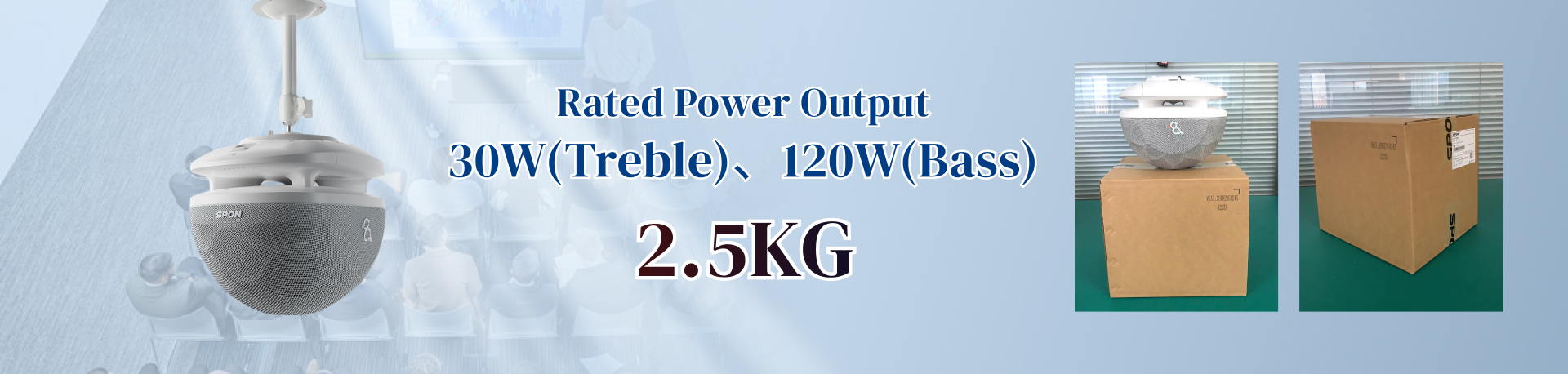
To address the drawbacks of traditional Classroom Soundfield systems, SPON has developed a new Audio System for Classrooms. The SPON Classroom Sound System consists of just a hanging Network Equisound Speaker and a wireless microphone. Together, they create an even sound field in the classroom.

Even Sound Field
Traditional classroom audio systems can have uneven sound. Students at the front hear well, but students at the back might not. SPON's speaker design and technology ensure that all students hear the same clear sound no matter where they sit.
Network Management
The system can be controlled and managed over a network. This means you can adjust settings, monitor the system, and update software remotely, making maintenance easy.
High Integration
With the amplifier and decoder inside the speaker, there’s no need for extra equipment. This reduces installation complexity and maintenance costs.
Built-in EQ Adjustment
With built-in EQ adjustment, various sound effect modes are preset to suit different classroom environments.
The Features of Network Equisound Speaker
Acoustic Patent Honeycomb Design
Unlike traditional amplification methods, the SPON Network Equisound Speaker features an innovative honeycomb cavity design. It is embedded with eight full-range units arranged in a line array curved distribution, compactly positioned to resemble a honeycomb. This curved speaker array ensures excellent sound directionality in both horizontal and vertical directions.
The device is installed in the center of the classroom, effectively covering the entire space. It reduces sound scattering to the walls and ceiling, minimizing interference from reverberation. This ensures that all students can hear the teacher's voice clearly and directly.

Standalone Speaker System
The product features a built-in 6-channel independent speaker system. It combines 8 full-range units and 2 tweeters into 6 independently controlled channels. By finely tuning the signal of each speaker channel, the curved speaker array radiates sound towards the student area in a near-plane wave form. This ensures wide angle coverage and uniform sound distribution, maintaining the same volume level in all corners of the classroom so that every student can hear clearly.


High-Quality Sound Delivery
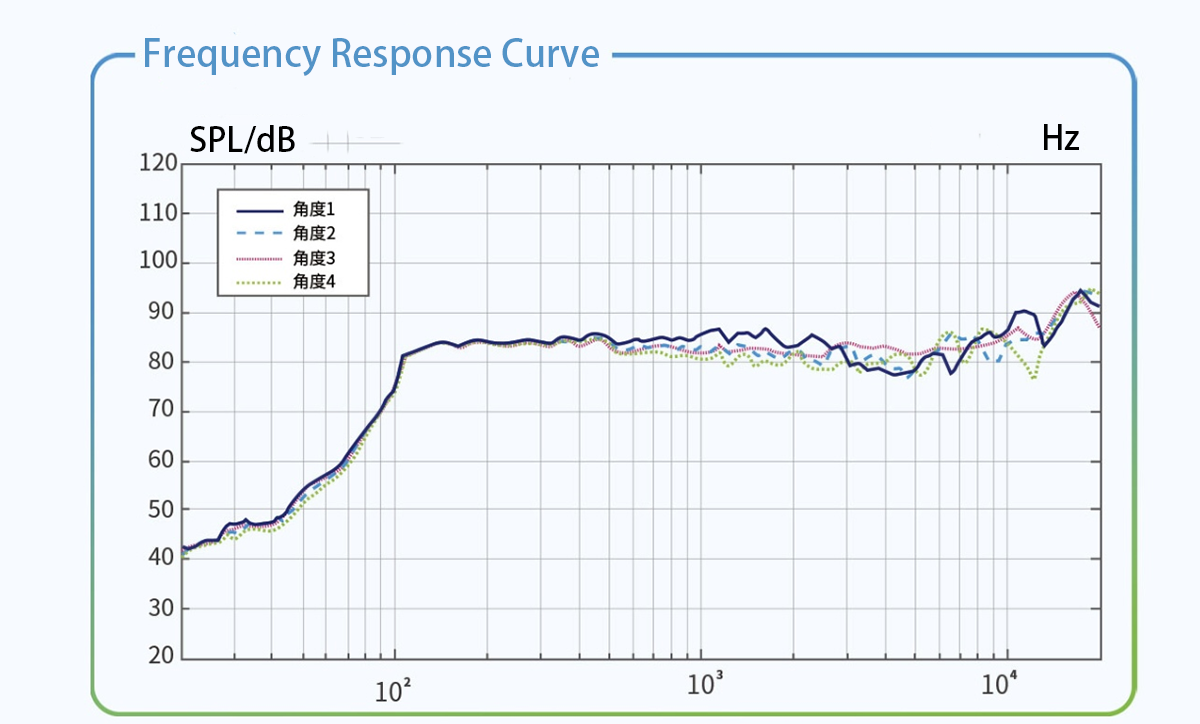
As a speaker product, sound quality is the most direct experience. SPON strives for excellence by using a crossover design. It pairs 8 full-range units with tweeters to enhance high-frequency signals.
The advantage of the crossover design is that it optimizes sound performance across different frequency bands. It offers fine-tuned handling of both high and low frequencies. Additionally, the funnel-shaped guide tube design increases low-frequency extension, making high frequencies clearer and low frequencies richer. This provides listeners with a more pleasant and outstanding auditory experience.


 AR
AR
 EN
EN


