


 2024-09-18
 Author: SPON COMM
 Page view: 2032
In 2004, four young engineers founded Changsha SPON Communication Co., Ltd. in Changsha. They pioneered digital language learning systems and IP campus public addressing products, quickly gaining a foothold in the market.
In 2007, SPON implemented its brand strategy and gained recognition through its two-way network PA technology.
In 2008, SPON led a new trend in communication security by launching its IP intercom system.
In 2009, the company introduced an innovative IP voice alarm system for the Chinese banking industry, enhancing bank security services.
By 2012, SPON expanded its office space and introduced new production lines, showcasing a refreshed corporate image.
In 2015, the company initiated the construction of the "SPON Hi-Tech Industrial Park," laying the foundation for future growth.
In 2016, SPON launched XCoIP technology, further advancing intelligent network audio products.
In 2017, the company fully commenced production in its new facilities, marking the operational launch of the industrial park.
In 2019, SPON collaborated with Japan’s TOA to launch high-end public address systems.
In 2020, SPON introduced the XC-Cloud intelligent cloud PA system, ushering in a new era of cloud PA.
In 2021, SPON was recognized as a "Specialized and Innovative" national-level enterprise.
In 2022, the company launched its IP conference system, further diversifying its product line.
From its early days as a campus PA system to today’s intelligent conferencing systems, SPON has continually led the industry with innovation, writing its own brand legend.

SPON's factory consists of six production lines. According to different product types, the assembly workshop is equipped with corresponding assembly lines, such as dedicated lines for speakers, surveillance microphones, amplifiers, intercom panels, and Industrial server. For small-batch, multi-variety production demands, the factory features multiple flexible and modular lean production lines. The factory is equipped with the company’s self-developed MES intelligent manufacturing execution system. Production is managed according to five major management systems, with a focus on safe production.
The factory boasts top-notch production equipment, including PCB automatic loading, solder paste printers, SPI optical detectors, automatic placement machines, reflow ovens, 2D AOI detectors, X-ray automatic inspection equipment, first-piece testers, and C01 automatic soldering robots.
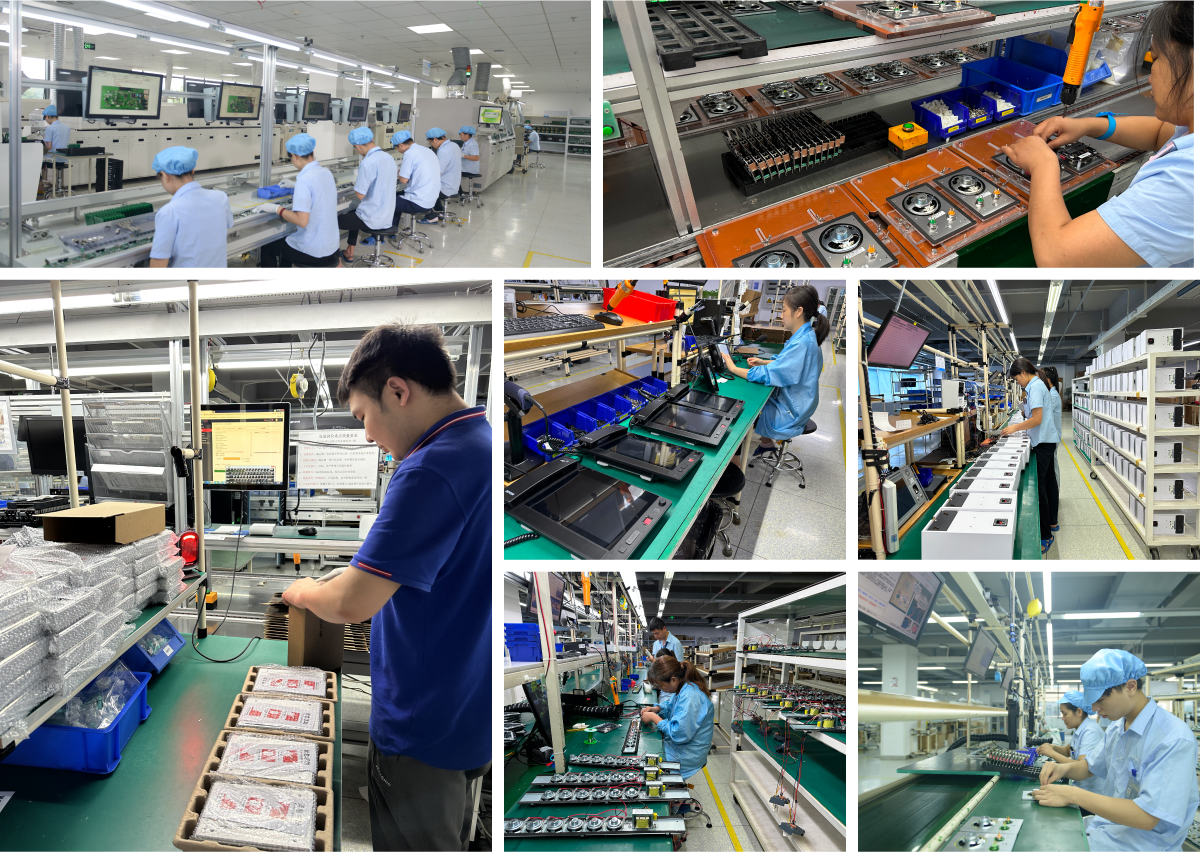
SPON has invested heavily not only in production but also in testing equipment. These advanced testing devices play a crucial role in ensuring high product quality and reliability, further enhancing SPON’s brand image and market competitiveness.
● Waterproof and Salt Spray Testing Room: Used to test the waterproof rating and corrosion resistance of products designed for outdoor or industrial environments.
● Electrostatic Testing Station: Conducts electrostatic discharge tests to check if static electricity affects terminal performance.
● Lightning Surge Testing: Tests the ability of terminal power protection devices to absorb surge pulses and includes safety regulation tests to ensure product safety and reliability.
● Batch Stability Testing Room: Primarily verifies the stability of terminal functions during long-term operation.
● Environmental Testing Room: Conducts high and low temperature, constant humidity and heat, vibration, and drop tests to verify product adaptability in various environments for storage, transportation, and use.
● Acoustic Lab: Recognized by the Hunan Provincial Institute of Metrology and Testing, this state-of-the-art anechoic chamber provides an ideal sound field for acoustic research and calibration tasks. It enables rigorous testing of the acoustic performance of various products.
● Darkroom: Mainly used to test cameras for gray-scale resolution, clarity, and color reproduction.

SPON boasts a research team led by Ph.D. and Master’s degree holders. The team is divided into the Basic Development Department, Product Development Department, Testing Department, and Industry Expansion Department. The Basic Development Department is responsible for fundamental research and core technology development, while the Product Development Department encompasses software, hardware, structural, and product teams. R&D personnel account for over 50% of the company's total staff.
SPON is committed to self-developed products, with an annual R&D investment exceeding 10%, and possesses leading core technologies in the industry.

Thanks to continuous innovation by SPON’s R&D team, SPON now holds over 200 intellectual property rights, including 36 invention patents.
To meet the diverse needs of clients in their projects, we offer rapid response and first-time communication to understand specific requirements, supporting both software and hardware customization services. Typically, we support customization of software interfaces (customer logos, languages, page styles, etc.), functionality, device configuration pages (logos, languages, page styles), hardware interface functions, and device packaging. The customization period depends on the complexity of the content, generally ranging from 5 days to 1 month.
Customization Process (for product functions as an example):
1.Sales and technical teams understand the client's needs and provide feedback to the Product Manager.
2.The Product Manager determines the customization period and costs after consulting with the development team.
3.Sales relays the relevant information back to the client.
4.Once customization is confirmed, the technical team initiates the customization process, which the Product Manager reviews and then hands over to the R&D department.
5.The R&D department develops the customized program, and the Testing Department performs functional tests.
6.After passing the tests, the new model is released, and sales selects the model for ordering and shipping.
In 2004, SPON launched its self-developed IP PA system, addressing the challenges of implementing zone broadcasting with analog systems and the inconvenience of wiring.
In 2008, SPON integrated IP PA and IP Intercom systems, redefining industry standards and solving the issue of information silos between systems.
In 2016, SPON launched the new XCoIP technology platform based on the SIP protocol, integrating PA, intercom, audio monitoring, and conferencing systems with fully open API interfaces, further enhancing system integration.
After 20 years of research in audio technology, SPON has become a leader in the IP audio field. Partnering with TOA to establish a joint venture, SPON is dedicated to developing products that deliver unparalleled sound quality to the world.
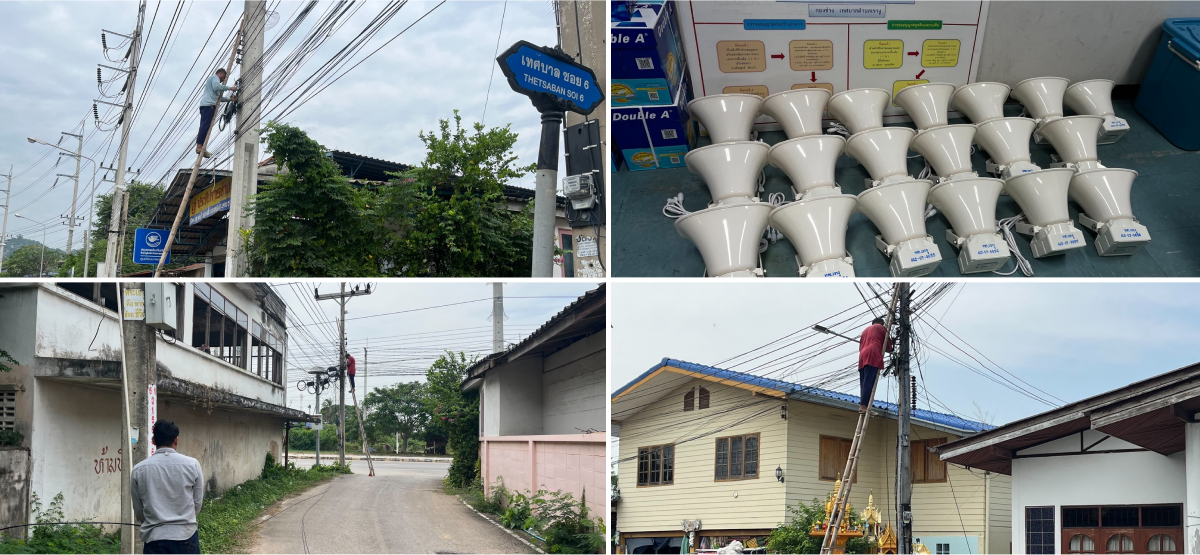
The Village Broadband Project is a local government initiative aimed at developing rural communication infrastructure. The primary goal is to provide internet and communication services to remote rural and island areas in Thailand and the Philippines, bridging the digital divide between urban and rural areas and promoting socio-economic development.
In this project, SPON supplied IP PA systems to several villages in Thailand and Philippines. This system enables villagers to receive important notifications and information in real-time, significantly enhancing information dissemination efficiency and community communication.
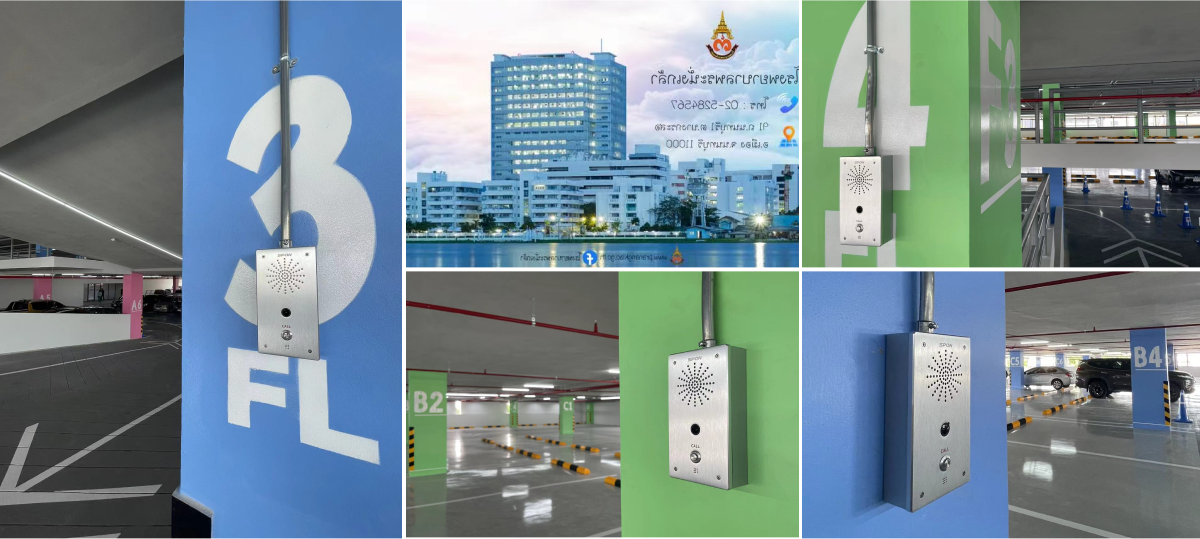
Phra Nang Klao Hospital, located in Nonthaburi Province, Thailand, is a public hospital that offers a wide range of medical services to local residents, including emergency care, internal medicine, surgery, obstetrics, and gynecology. It is part of Thailand's healthcare system, dedicated to providing high-quality medical care to the community.
As part of its facility upgrade this year, SPON installed an IP intercom system in the hospital's parking lot. This system features a one-touch assistance function, significantly enhancing the safety and emergency response capabilities of the parking area.
Hamdan Bin Zayed School, located in the UAE, is named after a member of the UAE royal family, Hamdan Bin Zayed Al Nahyan. The school likely offers educational services from kindergarten through secondary school, dedicated to providing high-quality education and comprehensive development opportunities for students.
SPON provided the school with an IP PA System solution that includes features such as scheduled bell ringing, background music playback, daily notifications, and classroom amplification.

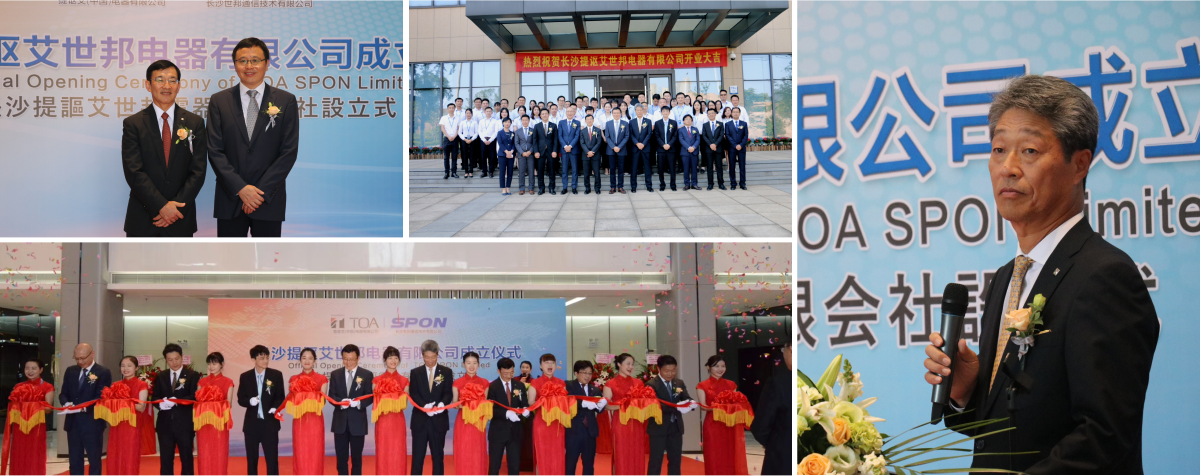
On September 23, 2019, amidst the sound of celebratory cannon fire and a sky full of fireworks, SPON officially announced the establishment of its new joint venture.
This new company is a collaboration between TOA (China) Electric Co., Ltd. (referred to as "TOA China") and Changsha SPON Communication Technology Co., Ltd. (referred to as "SPON"). Both companies are industry leaders with years of deep experience in the domestic audio field. This partnership represents a powerful alliance aimed at better serving domestic customers with high-quality equipment, advanced solutions, and excellent service quality.
SPON’s pre-sales team is certified in communication technology and offers 24/7 pre-sales support, receiving unanimous praise from customers.
Solution Design: After thoroughly communicating with clients to understand their needs, SPON’s pre-sales team designs systems that comply with national standards and meet user requirements. This approach has garnered consistent positive feedback from clients.
To ensure prompt deployment after clients receive their products, SPON’s after-sales technical support strives to provide optimal and rapid service to ensure the stable operation of products and systems, protecting client interests.
Typically, SPON’s after-sales technical support provides remote guidance for clients to configure their equipment. This includes real-time assistance with configuration and explanations to help clients gain a basic understanding of the system and product setup. Once the initial setup is complete, detailed materials such as manuals and product configuration videos are sent to clients for further learning.
During subsequent use, SPON’s after-sales support performs remote troubleshooting to address any issues clients encounter:
● For configuration errors preventing functionality, clients are promptly informed of the correct configuration methods.
● For issues related to product or system vulnerabilities, environmental compatibility, or new feature requirements, the support team replicates the issue internally or forwards information to the R&D team for software updates or new features.
● For hardware issues or products not functioning due to external factors, the support team collects information on the problem, collaborates with hardware engineers for diagnosis, and, if confirmed as a hardware issue, promptly coordinates with sales for hardware or component replacements.
SPON’s after-sales technical support also provides quick and effective consultation through phone, email, online chat, or social media, offering 24/7 support or assistance when clients need it most.
In terms of after-sales technical training, SPON focuses on the following aspects:
1. Identifying Training Needs: Sales teams liaise with clients to gather their needs and expectations regarding the system and products, and relay these to the after-sales technical support.
2. Training Course Design: Courses are designed based on client needs and expectations, covering both theoretical knowledge and practical skills.
3. Training Materials: Currently, training is primarily provided through video tutorials.
4. Training Method: Online meetings are used for training sessions.
5. Interactive Participation: Participants are encouraged to ask questions during the training, which are answered in real-time.
6. Client Feedback: After training, client feedback is collected to continuously improve training content and methods.


 AR
AR
 EN
EN


