


 2025-03-24
 Author: SPON
 Page view: 1110
In the age of Educational Informatization 2.0, traditional analog broadcasting can no longer meet the needs of modern campuses. It faces problems like weak signals, limited functions, and difficult maintenance. IP system, with its digital and network advantages, is now the top choice for campus upgrades. This blog will explain the basics of this technology, its key benefits, and how it is changing the way schools share information.
What is IP system?
IP system is a digital broadcasting system based on IP network. It converts audio signals into digital data packets and realizes efficient transmission over campus LANs or the Internet. Its core lies in networking and intelligence. It supports the integrated transmission of audio, video, and control signals, and can be seamlessly connected with other campus systems, such as security, fire protection, and access control, to create a unified digital management platform.
Watch the video of IP system components:
What is traditional analog broadcasting?
Traditional analog broadcasting is an audio broadcasting system based on analog signal transmission, which transmits audio signals from a control center to terminal speakers through dedicated lines, such as copper cables. Its core characteristics are physical line dependence, one-way transmission, and a single function. It was once the standard broadcasting solution in environments such as school, factory, and shopping mall.
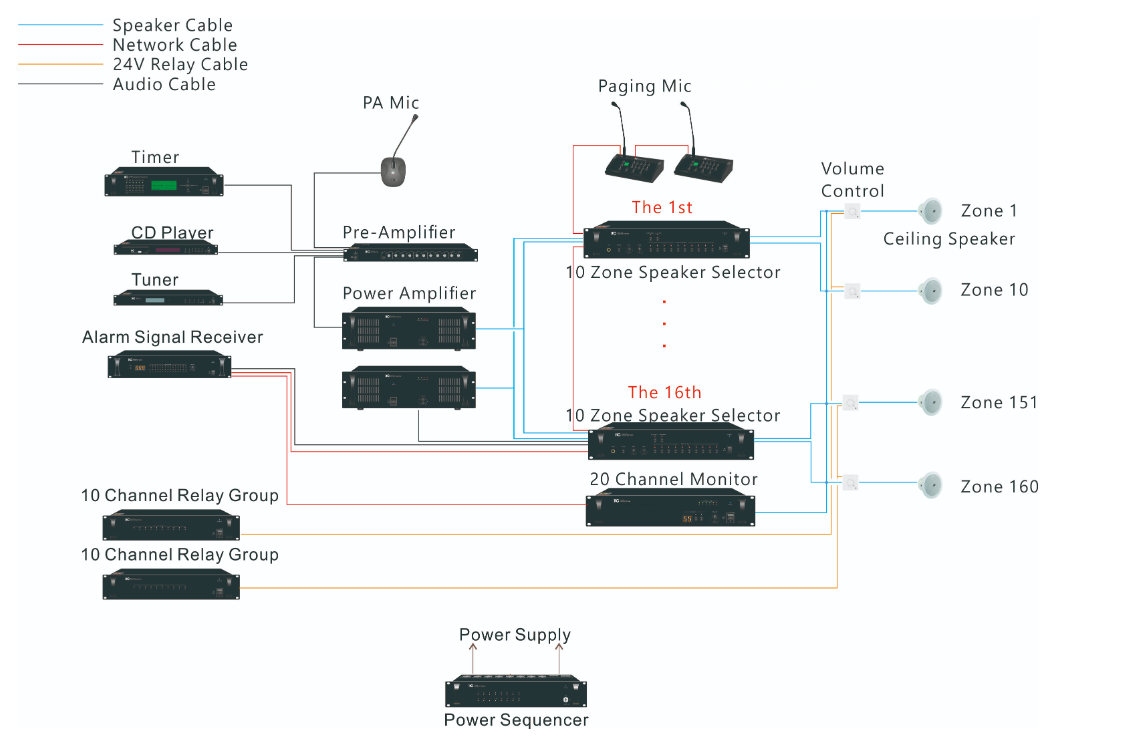
Three fatal flaws of traditional analog broadcasting
Severe signal attenuation
Physical Line Dependence: When the transmission distance of a copper cable exceeds 500 meters, the sound quality distortion rate surpasses 30% (data from a third-party testing agency).
Scenario pain point: Due to the large distance between teaching buildings in a mountainous middle school, the volume of the playground broadcast is only 50% of that in the classroom, and students cannot hear the instructions clearly during the break.
Centralized Oversight and Command
Limitations of one-way transmission: It only supports voice playback and cannot be integrated with electronic class signs or monitoring screens to display graphic notifications.
Case comparison: During the epidemic prevention period at a primary school, traditional broadcasting required manual notification of each class, which took 2 hours; while IP broadcasting can simultaneously deliver both voice and text to the class screen and complete school-wide coverage in just 10 minutes.
High operation and maintenance costs
Labor Cost: A full-time broadcaster is required, with an average annual labor cost is approximately US$11,000 to US$14,000.
Maintenance Costs: Due to aging lines, the average annual maintenance cost is 15% of the construction cost (a vocational school's maintenance expenses exceeded US$28,000 in three years).
Comparison between IP broadcasting and traditional analog broadcasting
| Contrast Dimensions | Traditional Analog Broadcasting | IP Broadcast |
| Transmission Medium | Special speaker cable(copper cable) | Reuse existing network(network cable/opticalfiber/Wi-Fi) |
| Signal Type | Analog signal(susceptible tointerference) | Digital signal(anti-interference) |
| Coverage | Limited by line length(usually ≤1km) | No distance limit(extended by network) |
| Scalability | New areas need to be rewired | Plug and play,expansion only requires adding terminals |
| Function Ceiling | One-way audio playback | Support audio,video,two-way intercom,and intelligent linkage |
| Sound Quality Performance | 8-16kHz sampling rate(telephone-level soundquality) | 48kHz sampling rate(CD quality) |
| Operation and maintenance complexity | Faults need to be manually checked section by section | Remote monitoring +automatic alarm |
| Security | Physical isolation (high security) | AES256 encryption +hardware firewall |
| Typical Application Scenarios | Simple notification,background music | Emergency command,multilingual examination,intelligent security linkage |
| Future Compatibility | Not compatible with IoT devices | Support API connection(access control,monitoring,AI analysis) |
Why use IP broadcasting?
Improving teaching quality is a must
When setting up standard exam rooms, IP system is very useful because it delivers clear sound. After a middle school started using IP system, the listening test audio freeze rate dropped from 15% to just 0.3%. This made the test fairer. Teachers can also send their voice directly to classroom speakers, allowing one teacher to teach many classes at the same time.
Demand for campus safety upgrade
Emergency broadcasting helps keep schools safe. The IP system works with the fire alarm system. When a smoke sensor detects danger, the system starts emergency mode. It stops all other broadcasts and plays evacuation instructions for each area. A university test shows that the IP system is 40% faster than old systems. This gives people more time to escape safely.
The need for doubled management efficiency
Traditional broadcasting necessitates a dedicated person person be on duty in the control room, room, but remote management function function IP broadcasting have completely changed model. The principal can directly directly a school-wide broadcast broadcast a mobile phone phone APP, and class teachers can manage class notifications directly from their devices. After a primary school applied applied it, efficiency of administrative notification transmission increased by 60%, truly truly realizing time difference in information and ensuring no blind spots in management.
What are the five disruptive advantages of IP system?
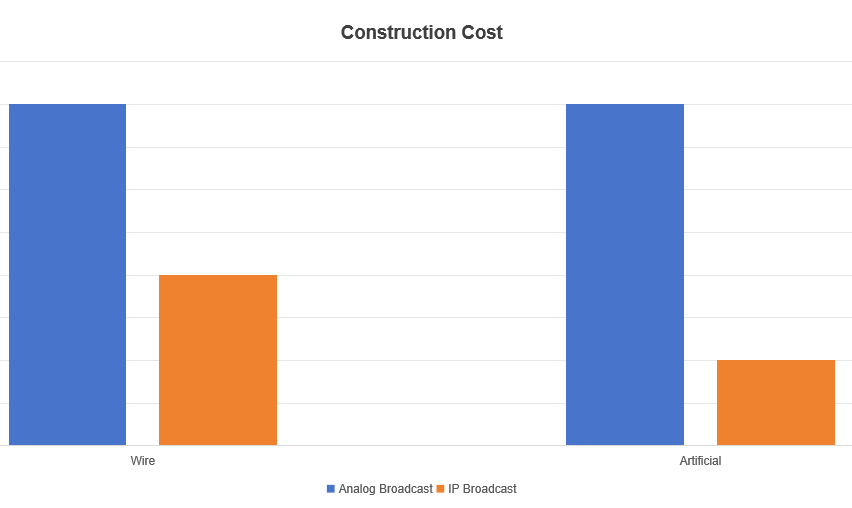
Simple deployment: Network reuse reduces construction costs by 80%
No need for repeated wiring: Directly utilize the existing campus network and save the complicated audio line laying of traditional broadcasting. A middle school renovation case showed that the cost of wires was saved by more than 17,000 US dollars.
Plug-and-Play Expansion: To add a new classroom or functional area, you only need to connect it to the network, and the terminal device will automatically identify and configure it, and the new area can be covered within 1 hour.
Inter-Campus Interconnection: This feature supports interconnection of multiple campuses through the Internet, realizing unified broadcast management from the main campus to its branch campuses. It is particularly suitable for group-based educational institutions.
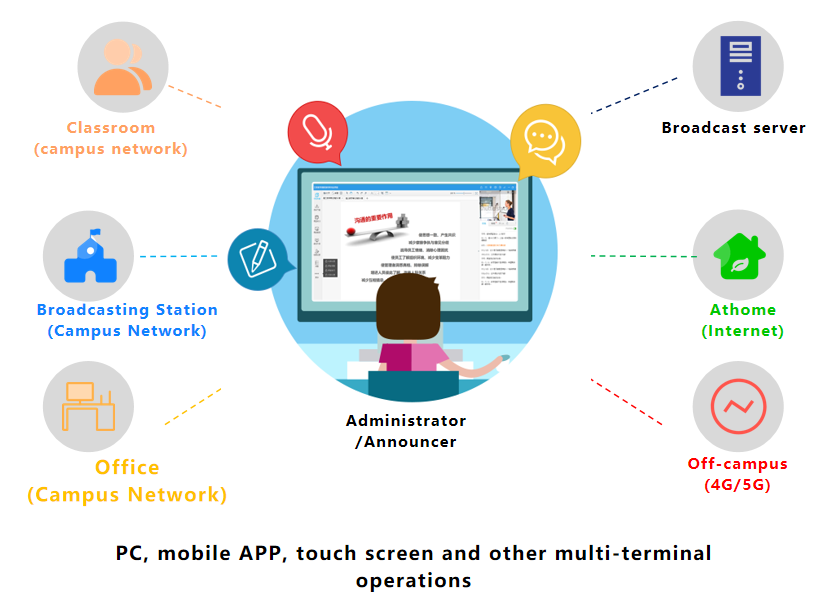
Easy operation: intelligent interaction improves user experience
Multi-terminal control: Supports multi-terminal operations such as PC, mobile APP, touch screen, etc. Physical education teachers can directly play music for break exercises through handheld devices on the playground.
Automated task management: preset timed tasks, such as get out of class dismissal bells, eye exercises, and listening, and the system automatically executes them. As a result, a middle school reduced the number of staff on duty in the broadcasting room by 3.
Multi-scene parallel: Different areas can operate independently at the same time, such as playing course audio in the teaching building and broadcasting sports games on the playground, to accommodate diverse needs.
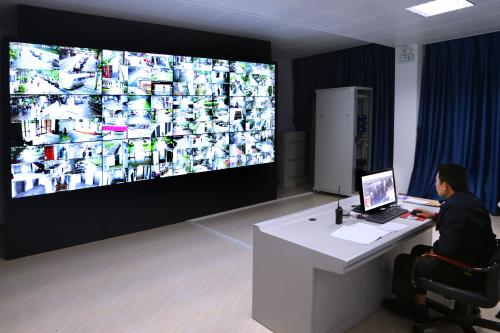
Simple maintenance: Remote operation and maintenance reduces the failure rate by 90%
Real-Time Status Monitoring: The system's background displays the online status, volume, and playback content of all terminals in real time, and automatically warns of faulty equipment, allowing the operation and maintenance team at a certain university to reduce on-site inspections by 70%.
Intelligent Self-Healing Mechanism: Automatically switches to a backup line when the network is interrupted to ensure that the broadcast of key scenarios such as examinations is not interrupted. One test site successfully completed the stable broadcast of the listening test when the network failure.
Cloud Firmware Upgrade: Device firmware can be upgraded remotely in batches without manual intervention, ensuring that the system consistently maintains optimal performance.
Diversified functions: enabling campus scene innovation
Two-way intercom: Real-time conversations between classrooms and broadcasting rooms, and between classrooms to improve emergency response speed.
Multimedia converged applications: support mixed transmission of audio, video, and text, such as simultaneous display of text prompts during broadcast notifications.
Intelligent scene linkage: Linked with access control and monitoring systems, for example, automatically triggering an alarm broadcast after identifying abnormal sounds.
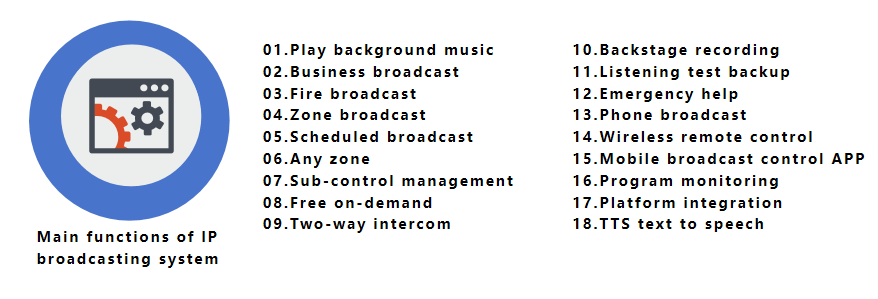
Wide coverage: full coverage ensures information reach
Signal coverage without blind spots: Through network extension, it can encompass all areas, including teaching buildings, playgrounds, dormitories, canteens.
Lossless sound quality transmission: Using AES encryption for data transmission and implementing QoS traffic management technology, it can maintain CD-level sound quality even in complex network environments, thereby meeting the high sound quality requirements of examination rooms, auditoriums.

Conclusion: Building a new smart campus ecosystem based on IP system
IP system improves school management. It is easy to set up, simple to use, and works well. It helps schools share information quickly. From exam rooms to smart campuses, from daily use to emergencies, the IP system is changing school broadcasting.
As schools go digital, choosing the IP system means better management, a safer campus, and smarter teaching. Let’s use this system to make schools more connected and clear, and help education grow.


 AR
AR
 EN
EN


