


 2025-01-03
 Author: cora
 Page view: 4921
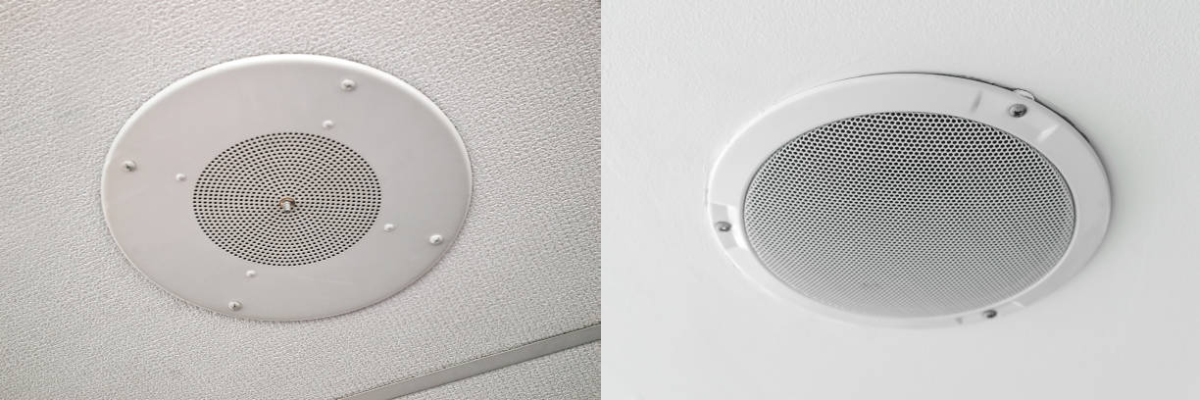
Ceiling speakers are audio devices that are installed in the ceiling. There are two main types: active and passive ceiling speakers. These speakers help spread sound evenly across a room, improving the listening experience while keeping the space neat. Their simple design lets them blend into any room, making the sound and the look better. In this article, I’ll explain everything you need to know about ceiling speakers.
Ceiling speakers are designed to be installed on the ceiling, offering clear, high-quality sound while staying hidden and compact. They are ideal for spaces where wall-mounted speakers aren't practical or don't look good. These speakers deliver even, beautiful sound, making them perfect for background music, public address systems, and home theaters.
1. Space Efficiency
Ceiling speakers are built into the ceiling, saving wall space and reducing clutter.
2. Even Sound Distribution
The placement of ceiling speakers helps spread sound evenly across the room, avoiding the "hot spots" or uneven audio areas common with wall-mounted speakers.
3. Seamless Design
Ceiling speakers blend smoothly with the ceiling, keeping the look clean and simple.
4. Cost-Effective and Convenient
Ceiling speakers are a more affordable and convenient option for large or high-ceilinged spaces. Unlike traditional speakers, they don’t need extra mounts or complicated wiring.
Ceiling speakers come in different types to suit various needs and environments:
1. Passive Ceiling Speakers
These speakers cannot be directly linked to audio equipment; instead, they require an additional amplifier for power. Because you may select the appropriate amplifier to fit, they are therefore perfect for bigger commercial areas or locations that demand high-quality sound.
2. Active Ceiling Speakers
All you have to do is connect the active ceiling speakers to an audio source because they come with an integrated amplifier. They work well for background music or smaller locations with a tight budget, and they are simple to install.
3. Full-Range Ceiling Speakers
These speakers provide a full sound experience by covering a broad frequency range, from low to high. They are ideal for medium-sized venues where additional bass subwoofers are not required, such as restaurants or conference rooms.
4. Subwoofer Ceiling Speakers
These focus on low-frequency sounds, enhancing the bass. They are typically used alongside full-range speakers in places like home theaters, concert venues, or large commercial spaces to provide deep bass effects.
5. Two-Way or Three-Way Ceiling Speakers
These speakers have different drivers for different sounds. Two-way speakers have one for bass and one for treble. Three-way speakers add a middle-range driver for clearer sound, especially in the mid and high tones.
6. Waterproof Ceiling Speakers
These speakers can handle moisture, making them great for bathrooms, pools, and outdoor spaces. They’re built with special materials to keep water out and keep working in damp areas.
7. Integrated Audio System Ceiling Speakers
These speakers work with smart audio systems, offering features like Bluetooth, WiFi, and tuning systems. They are perfect for modern homes, smart offices, and retail spaces.
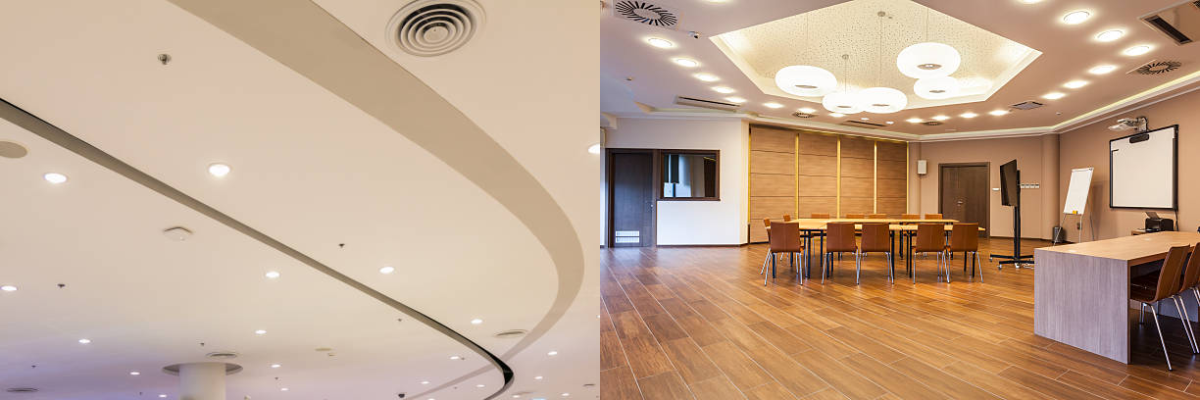
Ceiling speakers, they receive and amplify audio signals, which makes the speaker produce sound that spreads evenly through the room. Here's how they work:
1. Receiving Audio Signals
Audio signals come from devices like sound systems, mixers, or amplifiers. There are two types:
♦ Active Speakers: The audio signal goes directly into the speaker's amplifier, which boosts the sound.
♦ Passive Speakers: The audio signal goes to an external amplifier first. The amplifier boosts the signal and sends it to the speaker.
2. Amplifying the Signal
♦ In passive ceiling speakers, the external amplifier boosts the signal and powers the speaker.
♦ In active ceiling speakers, the built-in amplifier boosts the signal, so no extra amplifier is needed.
3. Moving the Driver
The signal moves to the speaker's driver. The driver has a coil that creates a magnetic field. This moves the diaphragm, pushing the air and creating sound waves.
4. Handling Different Sounds
Two-way or three-way ceiling speakers have different drivers for different sounds. They use bass, treble, and midrange drivers to make the sound clearer.
5. Spreading the Sound
The diaphragm moves, creating sound waves. Ceiling speakers send the sound downward, covering the room or area.
Some expensive ceiling speakers allow you to change the direction of the sound. This is helpful in settings where accurate sound is required, such as conference rooms or theaters.
Smart ceiling speakers, in place of older models, connect wirelessly via Bluetooth or Wi-Fi. other, some models come with integrated tuning systems that enhance the entire audio experience by automatically adjusting the sound quality according to the acoustics of the room.
Installing a ceiling speaker requires choosing a suitable location, cutting the ceiling, wiring, fixing the speaker unit, and adjusting the sound quality.
1. Pick the Right Spot
First, find a spot on the ceiling where you want the speaker. Make sure there are no wires, pipes, or beams in the way. Also, keep a little space from the walls.
2. Cut the Hole in the Ceiling
You need to use a drill and the right tools to cut a hole in the ceiling. Make sure the hole is the right size for the speaker to fit.
3. Wiring
♦ If you're using passive speakers, you’ll need to run a speaker cable from the amplifier to the speaker.
♦ If you're using active speakers, you’ll need to connect both the power cable and the audio cable.
4. Install the Speaker
♦ Mount the Bracket: If your speaker has a bracket or frame, attach it to the ceiling securely.
♦ Hook Up the Cables: Plug in the audio and power cables. For active speakers, don’t forget the power cable. For passive speakers, connect the speaker cable to the amplifier.
♦ Put the Speaker in Place: Slide the speaker into the hole and secure it with screws, clips, or spring clips (depends on the model). Some speakers just snap into place with spring clips.
5. Test the Sound
Connect your audio source (like an amp or Bluetooth device) to the speaker. Play something and test the sound. It should be clear with no buzzing or distortion.
6. Finish Up
♦ Cover the Edges: If the hole doesn’t look perfect, cover it with trim or a decorative panel.
♦ Grilles: Many speakers have grilles that you can paint to match your ceiling, so they blend in.
The table provides a reference for selecting speakers of different sizes based on room size and audio requirements.
| Room Size |
Speaker Size |
Applicable Scenarios |
Audio Requirements |
| Small Room (10-20㎡) | 6-8 inches (15-20 cm) | Background music, voice announcements, general audio needs |
Clear audio output, suitable for everyday use |
| Medium Room (20-40㎡) | 8-10 inches (20-25 cm) | Home entertainment, meeting rooms, retail spaces, general home theater |
Medium volume, suitable for normal audio quality |
| Large Room (40㎡ and above) | 10 inches (25 cm) and above | High-quality audio systems, home theaters, large meeting rooms, shopping malls |
Powerful audio output, suitable for high audio quality and deep bass |
| Low-Bass Enhancement | 10 inches (25 cm) and above | Home theater, large entertainment venues, stage sound systems, bass-heavy audio needs |
Deep bass and high volume requirements |
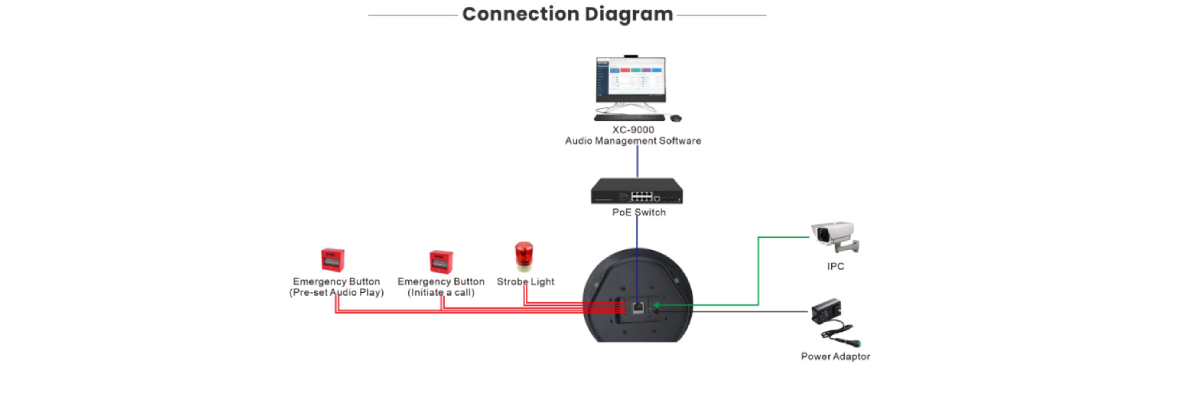
SPON’s IP PoE Ceiling Speaker is a smart, all-in-one speaker that’s easy to install and packed with features. It combines a network audio decoder, a digital amplifier, and a microphone all in one unit. It’s perfect for offices, schools, and public spaces that need modern audio setups.
Thanks to PoE (Power over Ethernet), it only uses one cable to power the speaker and send audio, making installation simpler. It delivers a clear sound with a maximum volume of 100 dB. The built-in reverse tube boosts the bass, making the sound fuller. Plus, it takes up less space and lowers distortion, so you get better sound quality.
This speaker also supports two-way communication, making it great for intercoms or PA systems. It’s a reliable and efficient audio solution for setting up a meeting room, a store, or any other business space.
The unique installation method of ceiling speakers makes the sound coverage more uniform, avoiding the uneven sound quality or interference that traditional speakers may bring. SPON's IP PoE ceiling speakers package advanced technology into a design that is easy to install while providing high-quality sound. If you have any questions about ceiling speakers, you can contact us and our professional engineers will answer your questions for free.
How to connect ceiling speakers ?
To connect ceiling speakers, simply plug an Ethernet cable from the PoE switch to the ceiling speaker, which will supply both power and audio signal.
How much do ceiling speakers cost ?
An IP PoE ceiling speaker with a built-in network audio decoder, digital amplifier, and microphone is approximately 140 USD.


 AR
AR
 EN
EN


